13 years building RepCount. Here's why I'm just getting started.
By Simon, founder and developer of RepCount
In 2013, I had just started a new job. I'd been hired for my mobile development expertise. I have a Master of Science in Computer Engineering and had spent my whole career building mobile apps. But somehow I ended up contracted for a corporate backend project. It was fine work. It wasn't my work.
Around the same time, two things happened. I read The Lean Startup by Eric Ries, which rewired how I thought about building products. And the workout tracker I'd been using to track my own workouts, Gym Buddy, got abandoned by its developer.
I needed a replacement workout tracker. But when I looked at what was available, nothing fit. Most workout apps at the time gave you one screen per exercise. That didn't match how I think about training. I wanted something that felt like a notebook, but better. Something where you could see your whole workout at a glance and the app would automatically show what you did last time, so you knew what you had to beat.
Nobody was building that strength training app. So I did.
The sound of crickets
I built the first version of RepCount in a couple of months and released it on the App Store as a paid app at $1. Then I waited.
Nothing happened.
No downloads. No reviews. No hockey-stick moment. Just silence.
But I liked the app. I used it every day. And the Lean Startup had taught me to ship fast and iterate, so that's what I did. For the first year, I averaged one release every ten days. App review took about seven days at the time, so I typically had the next version ready before Apple had finished approving the previous one.
Still, almost nobody was downloading it. This was a side project built on nights and weekends while I worked my day job. It would have been easy to stop.
The Swedish breakthrough
Then I translated the app to Swedish, and a few months later I got a review that changed everything. Someone wrote that RepCount was the best app on their phone. I started getting support emails, and I built what people asked for, fast.
One day, I saw a huge spike in Swedish downloads. A fitness influencer had mentioned the app in a blog post and RepCount had hit the Swedish top charts. For the first time, I felt like I was onto something.
The American mystery
I kept building. Then one day, something crazy happened: a massive spike in US downloads. Out of nowhere.
It took me a month to figure out what caused it. Finally, one American review said "thank you to The Online Coach." I had no idea what that meant, so I started digging. It turned out that The Online Coach, Raymond Querido, an American bodybuilder and coach, had posted about RepCount on YouTube, recommending it to his audience.
I found him on Instagram and realized I probably needed an Instagram account myself. I knew absolutely nothing about marketing. But I created an account and started posting about the app and my own training.
After a while, I bought a couple of t-shirts from Raymond's store. They arrived with a handwritten note about how much he loved the app and how it would be great to meet someday. We started chatting on Instagram, and he wanted to help the app grow. We put together a deal where he'd get a percentage of revenue, with a guaranteed minimum per month.
Raymond started posting about RepCount to his audience, personal trainers and serious lifters, and it had a snowball effect. I even flew to the United States to be featured in one of his videos. This wasn't a polished influencer marketing campaign. It was two people who genuinely liked each other's work figuring it out as they went.
"ANDROID!"
As my Instagram following grew, every single post had the same comment: Android! People wanted RepCount on Android, and they weren't shy about it.
I resisted for a long time. I was one person with a day job, already stretched thin maintaining the iOS workout tracker. But I eventually gave in. I'd worked as a contractor building Android apps before, so I knew the platform well. I built RepCount for Android from scratch in Kotlin and charged for it from day one, just to test whether people would actually pay. Beta users got it at $3 per year. It was a beta, after all.
I dragged that beta on way too long. It wasn't until 2019 that I finally released it to the public. For a long time, I thought building the Android app was a mistake. It took forever while juggling a full-time job and the iOS version. It didn't pay for itself for years.
But now I'm glad I did it. It helps word of mouth (training partners don't all use the same phone), and there are very few workout trackers that are fully native on both iOS and Android. A lot of trackers either skip Android, do a half-hearted port, or use a cross-platform framework. RepCount is built in Swift on iOS and Kotlin on Android because lifters notice when an app doesn't feel right on their phone.
The long middle
Revenue kept improving, slowly, every year. But it still wasn't enough to live on. I loved what I was building, but I had to keep my day job. RepCount consumed my nights and weekends.
In 2016, I took a leave of absence and spent six months working as a digital nomad, traveling the world and building the app full-time. It was incredible. Then I came home, ran out of money, and went back to my day job. I told myself it was the last contract I'd take.
It wasn't the last contract I'd take.
The metric that changed everything
In 2019, I joined YC's Startup School. The first lesson: pick a primary metric. I chose Monthly Active Users. Then in the next lesson, Michael Seibel said something like, "Unless you're trying to be Facebook, don't pick MAU. Pick something closer to revenue."
So I looked at revenue. Around that time, one of my competitors, Strong, had switched to a subscription model at a price point much higher than anything else in the space. I thought, "Either they're going to drive all their users to competitors, or they're going to get rich."
They got rich.
I realized that if I wanted to do this full-time, if I wanted to build the best workout tracker in the world as my actual job, I needed recurring revenue. I switched RepCount to a subscription model in late 2019.
YC Startup School also gave me the kick I needed to finally release the Android app out of beta. No more hiding behind "it's not ready yet."
The numbers started looking promising. For the first time, I could see a path to quitting my job for good. So I did.
Then COVID happened.
Timing
I had just quit my day job to go full-time on a gym app, and gyms around the world were closing. You can't make that timing up.
So I adapted. I made RepCount more complete for home workouts. I raised the price a little (I'd always undercharged). And I kept building. That year, I finally paid myself for the first time: minimum wage. The company still ran at a loss and I covered the rest from savings.
Then in 2021, something magical happened. The world reopened. Everyone needed to get back in shape. I got help from an agency with App Store Optimization, and the app exploded. That year, RepCount made more than my regular job ever had.
After eight years, the strength training app finally worked.
Simple is hard
Over thirteen years, I've made hundreds of updates to RepCount. Custom chart algorithms, a superset feature, enhanced functionality across the board. But the core philosophy has never changed: make the app as simple as it can be while offering the flexibility you need to track your workout. That's a harder balancing act than it sounds.
Take the superset feature. On the surface, it looks simple. But it works fundamentally differently from how competitors handle it, and I spent a huge amount of time reworking the design. Making something that feels effortless to use but handles the complexity of real training can take months to get right, and most people will never know how much work went into it.
I originally built RepCount with advanced lifters in mind. I didn't add stock exercise images, social features, or flashy extras. Just a clean, fast tool for tracking your training. But something surprising happened: the simplicity that appealed to serious lifters turned out to appeal to everyone. Men, women, teenagers, retirees: all kinds of people who shared one thing in common. They wanted to get more out of their strength training, and they didn't want an app that got in the way.
A team of two
In 2023, I was living my dream, but it was becoming overwhelming for one person. Everything (iOS, Android, backend, support, marketing, business) was on me.
One of my longest-running users, someone I'd been chatting with for nearly ten years, mentioned he was going to leave his job. I half-joked: "Maybe you should come work for me."
That was John. He's now been with me for over two years, handling iOS development. RepCount's team grew by 100%, from one person to two.
Still here, still building
Today, RepCount has over two million downloads, a 4.9-star rating on the US App Store, and Apple's "Apps We Love" designation. We're still a tiny team competing against apps with large, well-resourced teams. We get new competitors every day. I've been offered money to sell the company, and I've said no every time.
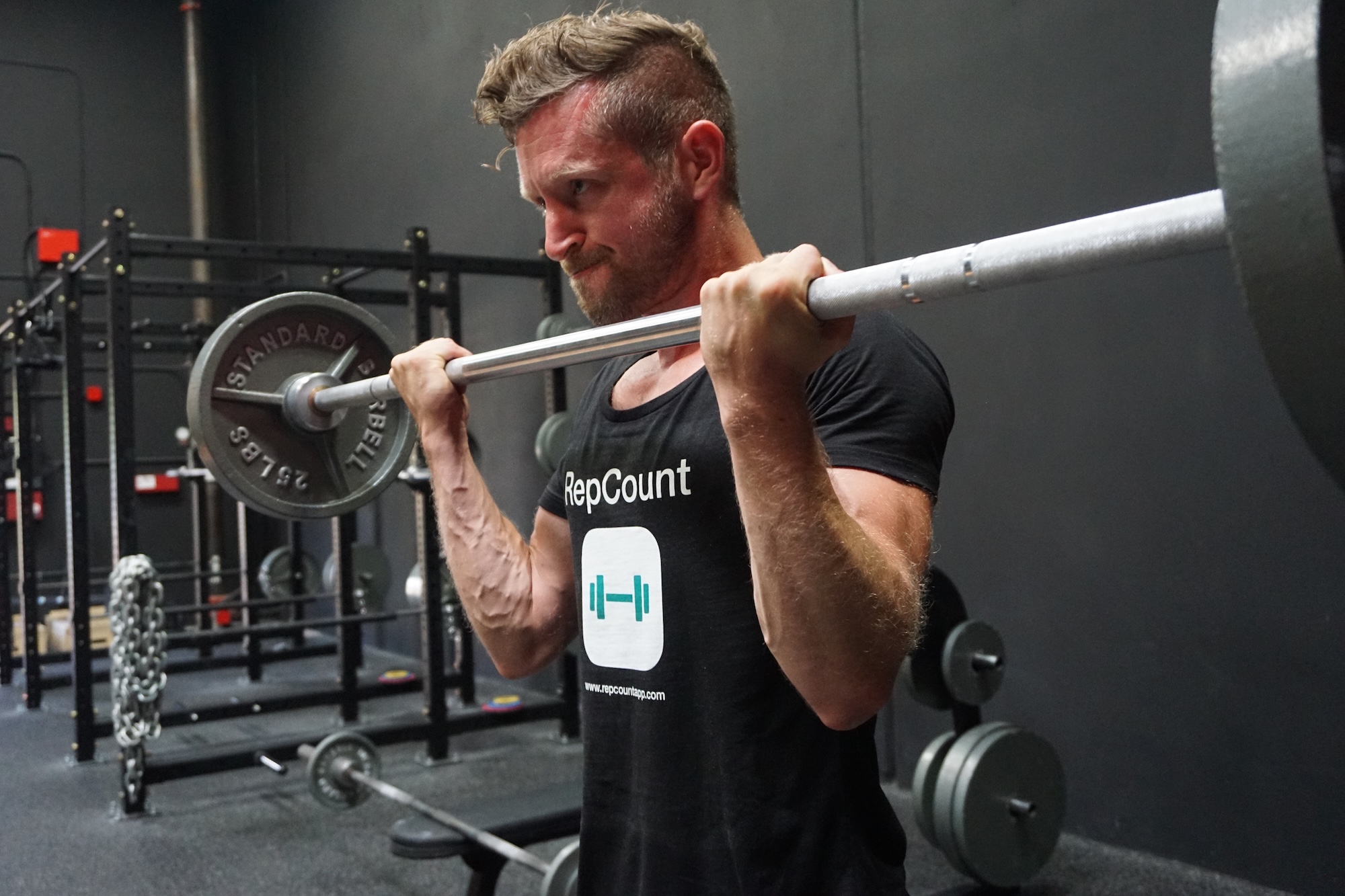
Here's what I've learned competing as an indie developer for over a decade: small can be a superpower. I can ship an update in days, not quarters. When a user emails me, they're talking to the person who wrote the code. I can fix their problem and push a new build the same day. The app isn't designed by a committee. It's designed by someone who uses it under a heavy barbell every week.
And now, AI is giving small teams like ours capabilities we never had before. I can move through tasks that used to require dedicated specialists faster than ever. The gap between what an indie developer can build and what requires a funded team is shrinking fast.
I've turned down acquisition offers. I've survived crickets, empty bank accounts, a global pandemic, and a market that gets more crowded every year. I built this app because I needed it, and it turns out over two million other people did too.
I've been working on RepCount since 2013, and I'm just getting started.
RepCount is available on the App Store and Google Play. If you're a lifter looking for a tracker built by someone who actually trains, give it a try.
Frequently asked questions
What is RepCount?
RepCount is a strength training tracker for iOS and Android. It shows your previous workout automatically so you always know what you have to beat, and it's designed to be as fast and uncluttered as possible. It's been downloaded over 2 million times and has a 4.9-star rating on the US App Store.
Is RepCount available on Android?
Yes. RepCount is available on both iOS and Android. The iOS app is built in Swift and the Android app is built in Kotlin. Both are fully native apps, not a cross-platform hybrid.
Is RepCount free?
Yes. RepCount has a free tier with unlimited workouts, unlimited routines, and unlimited custom exercises. Premium adds advanced stats, supersets, drop sets, and more.
Who built RepCount?
RepCount was created by Simon Persson, a Swedish indie developer with a Master of Science in Computer Engineering. A competitive strength athlete, he reached the finals of Sweden's Fitness Five competition in 2014, squatting 1.5× his bodyweight for 25 reps and benching his bodyweight for 23 reps, both in under 100 seconds. He started building RepCount in 2013 and went full-time on it around 2019–2020. RepCount is now a team of two.
What makes RepCount different from other workout trackers?
RepCount is built to feel like a notebook: you can see your whole workout at once and it automatically shows what you did last time. Both the iOS and Android apps are fully native, which means they feel right on your phone. There are no social features or stock exercise images. Just a fast, clean logging tool built by someone who trains with a barbell every week.
How long has RepCount been around?
RepCount launched on the App Store in 2013, making it one of the longest-running indie gym tracker apps. The Android version launched in 2019. As of 2026, it has over 2 million downloads.