Machine bicep curl
Also called machine bicep curls, machine biceps curl, machine curl, lever preacher curl.
What is a machine bicep curl?
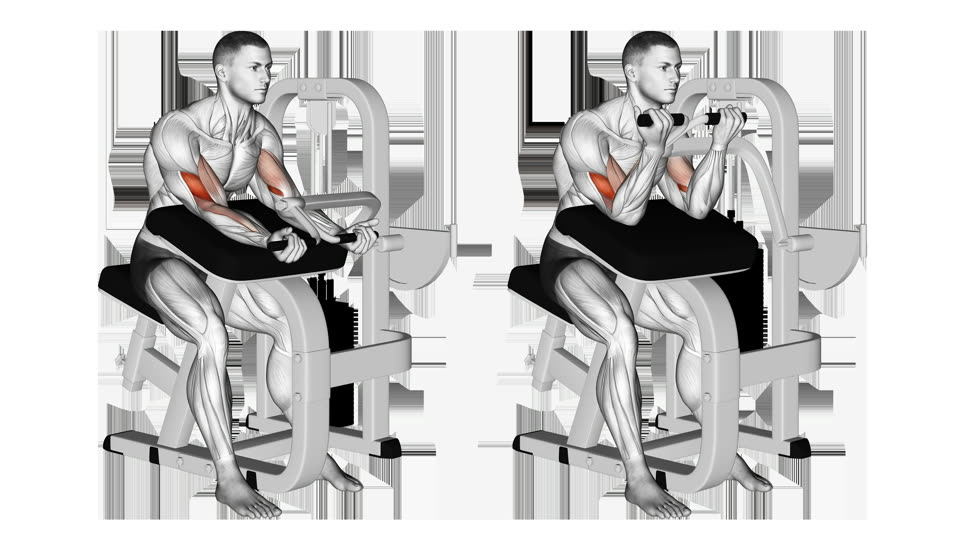
The machine bicep curl is a seated elbow-flexion exercise with the upper arms supported on a pad and the hands moving along a lever path. It mainly trains the biceps brachii, with the brachialis, brachioradialis and forearm flexors assisting.
How do you perform a machine bicep curl?
Set up
- Adjust the seat so your upper arms rest fully on the pad and your elbows line up closely with the machine's pivot.
- Take the handles with an underhand grip, sit firmly and begin with the elbows nearly straight without letting the weight stack settle.
Execution
- Curl the handles toward your shoulders while keeping your upper arms in contact with the pad.
- Stop at the end of the machine's comfortable path without lifting your shoulders or wrists to finish the rep.
- Lower under control until your elbows are nearly straight, then reverse before the plates touch down.
Common mistakes
Setting the seat too high or low
A poor pivot match makes the handles pull the elbows through an awkward arc. Recheck the seat before adding load.
Lifting the upper arms from the pad
That turns the finish into shoulder movement and removes the supported setup that defines the exercise.
Letting the stack slam down
The plates touching removes resistance and makes each new rep start abruptly. Reverse just before contact.
Where it fits in a session
Use it after compound pulling or as a stable biceps movement in an arm session.
Record the seat setting with the load so later sessions reproduce the same lever alignment and range.
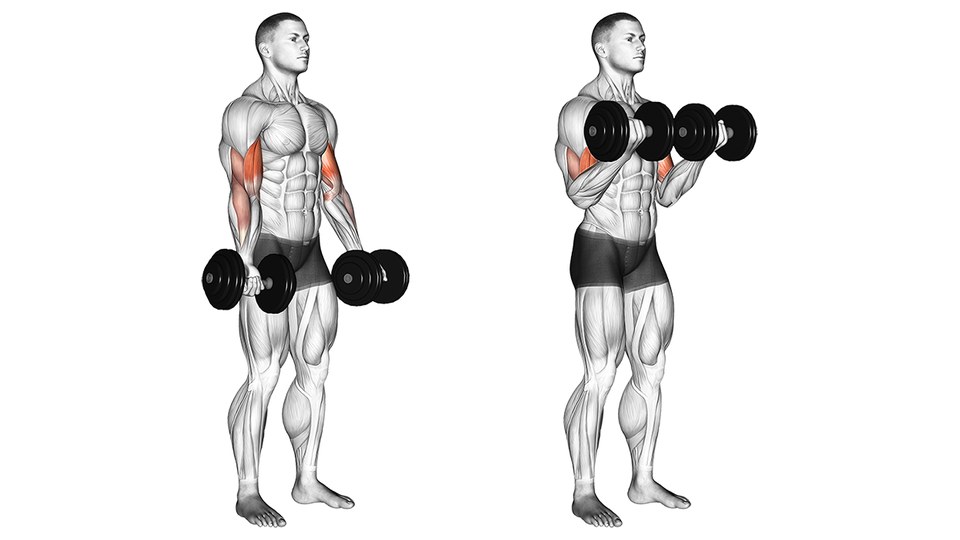
Muscles worked
Primary
Secondary
Schematic surface view. Some muscles are partly visible or not shown.
The machine supports the upper arms but does not remove the other elbow flexors; the hands and forearms also hold the handles.
Variations
Frequently asked questions
What muscles does the machine bicep curl work?
It mainly trains the biceps brachii. The brachialis and brachioradialis help bend the elbow, and the forearm flexors help hold the handles.
Where should your elbows line up on a bicep curl machine?
Set the seat so the elbows sit close to the machine's pivot while the upper arms remain supported. Exact adjustment marks vary by machine.
Should the weight stack touch down between reps?
Usually no. Lower until the elbows are nearly straight, then reverse just before the plates settle so the movement stays controlled.
Is a machine bicep curl the same as a preacher curl?
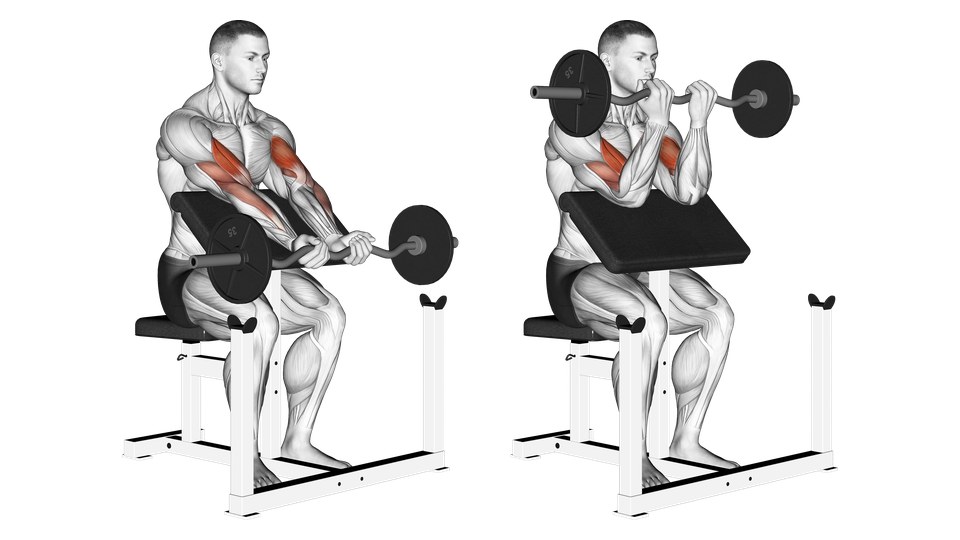
Both support the upper arms on a pad, but the machine guides a lever while a preacher curl moves a free bar or dumbbell.
Sources
- Anatomy, Shoulder and Upper Limb, Biceps Muscle. StatPearls, NCBI Bookshelf. https://www.ncbi.nlm.nih.gov/books/NBK519538/
- Plantz MA, Bordoni B. Anatomy, Shoulder and Upper Limb, Brachialis Muscle. StatPearls, NCBI Bookshelf. https://www.ncbi.nlm.nih.gov/books/NBK551630/