
Leg curl alternatives for gym and home
Seated and lying machines or a standing cable curl are practical leg curl alternatives when your usual machine is unavailable. Suspension hamstring curls and assisted Nordic curls provide knee-flexion work without a conventional leg curl station. Romanian deadlifts train the hamstrings through a hip hinge, so they are a different choice rather than a direct replacement for curling the knees.
That distinction prevents a common programming mistake. A workout containing Romanian deadlifts and leg curls has two different movements, even though both target the backs of the thighs. Replacing the curl with another hinge changes the mix.
Start with the equipment available and how much help you need to control the repetition. A machine with adjustable resistance is a different starting point from a bodyweight Nordic curl. You do not need to perform an unassisted Nordic to keep knee-flexion work in your plan.
Choose leg curl alternatives that keep knee flexion
| Your goal | Alternative | Equipment | Main tradeoff |
|---|---|---|---|
| Use a seated machine | Seated leg curl | Seated curl station | The hip position differs from lying curls |
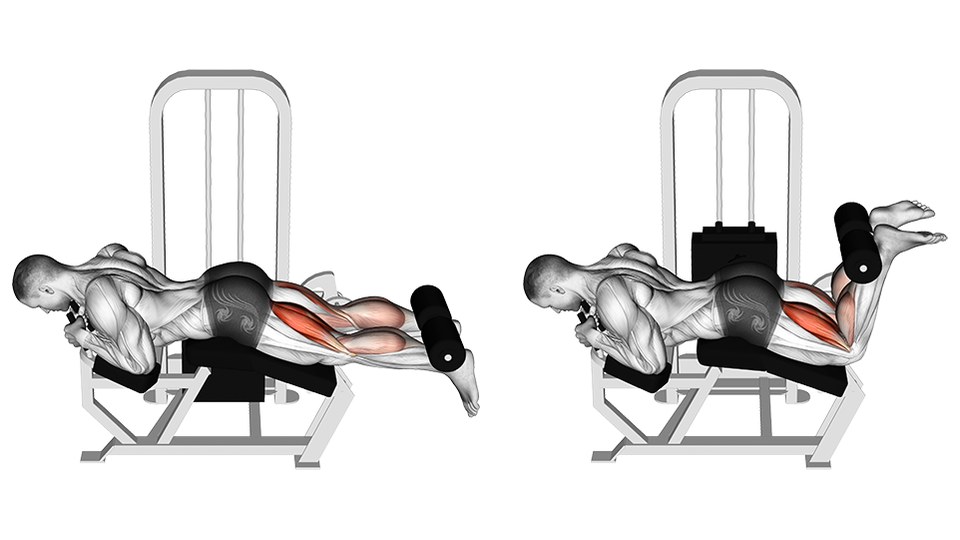
| Keep the lying setup | Lying leg curl | Prone curl station | Machine pad and roller positions vary |
| Use a standing cable | Standing leg curl | Low cable, ankle cuff and secure hand support | One leg at a time with a cable path |
| Use straps instead of a machine | Suspension hamstring curl | Secure suspension trainer | You also hold the hips above the floor |
| Use bodyweight knee-flexion work | Assisted Nordic curl | Secure ankle support and padding | Adjust assistance before attempting full reps |
Your starting point
Leg curlChoose leg curl alternatives that keep knee-flexion work, including seated machines, standing cable curls, suspension and assisted Nordic curls.
Choose by your goal and equipment
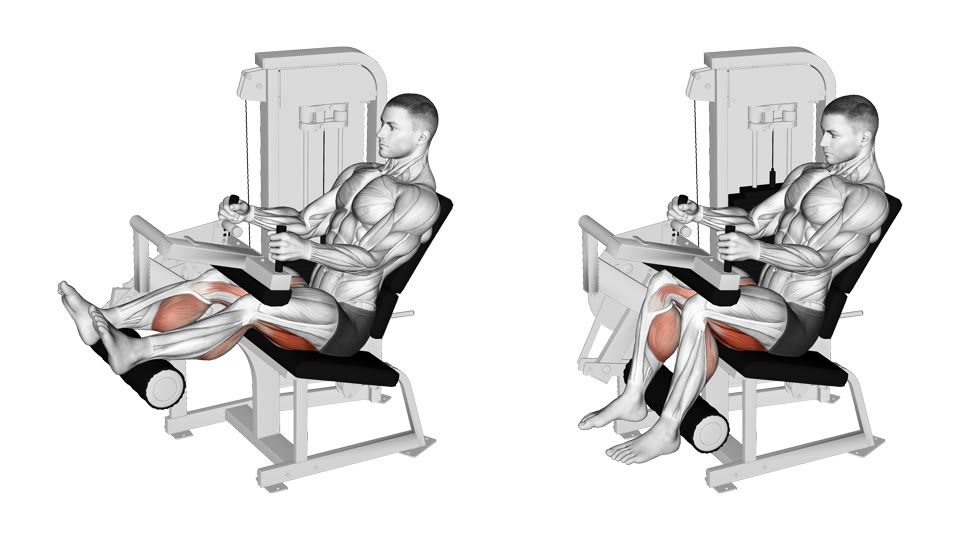
Use a seated machine
Seated leg curl
The hip position differs from lying curls
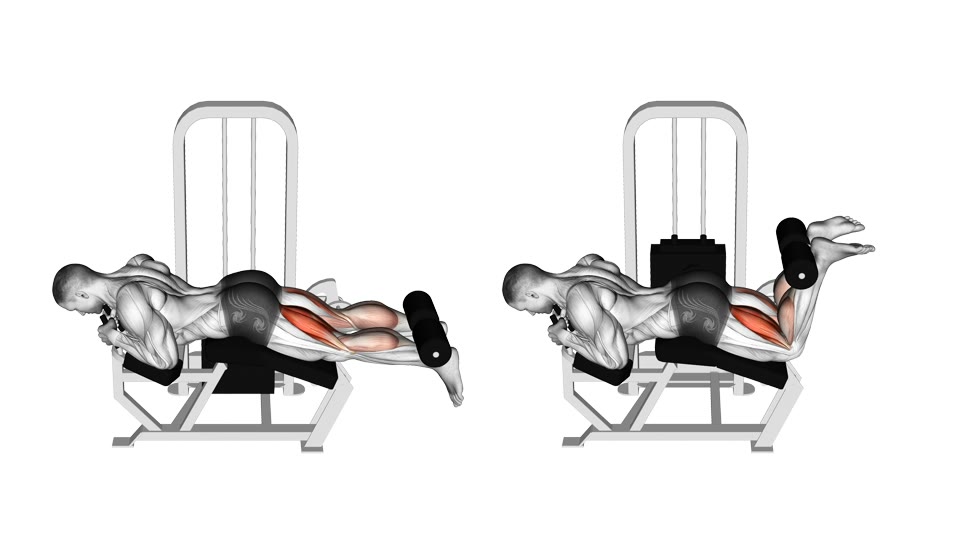
Keep the lying setup
Lying leg curl
Machine pad and roller positions vary
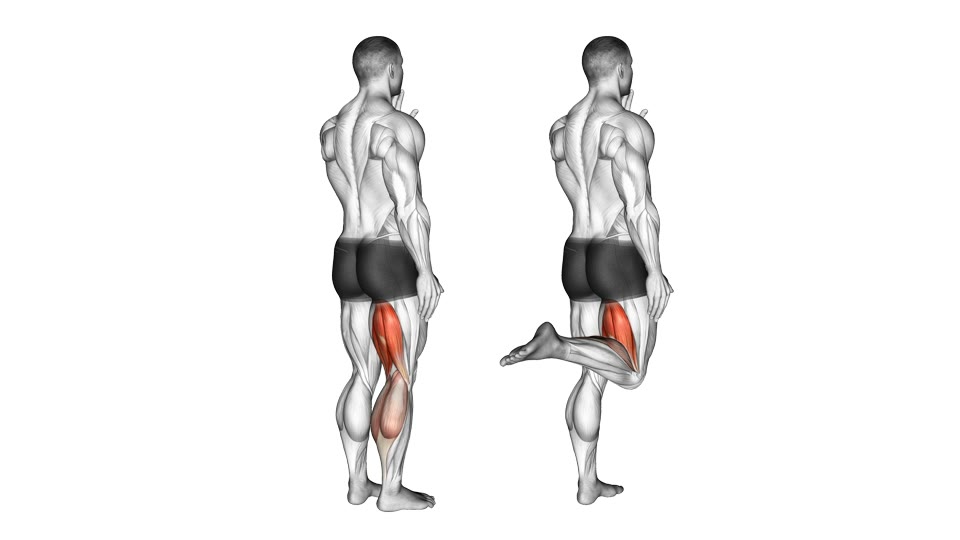
Use a standing cable
Standing leg curl
One leg at a time with a cable path
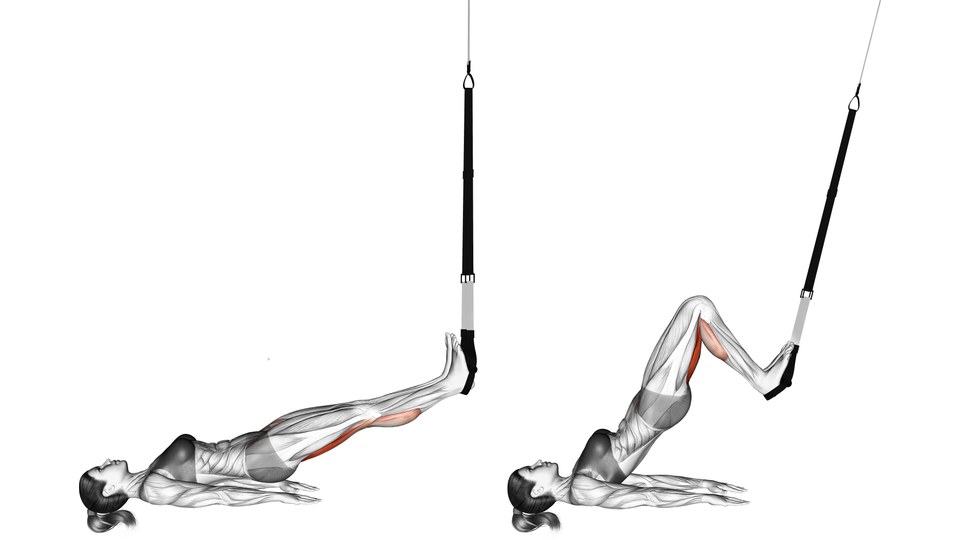
Use straps instead of a machine
Suspension hamstring curl
You also hold the hips above the floor
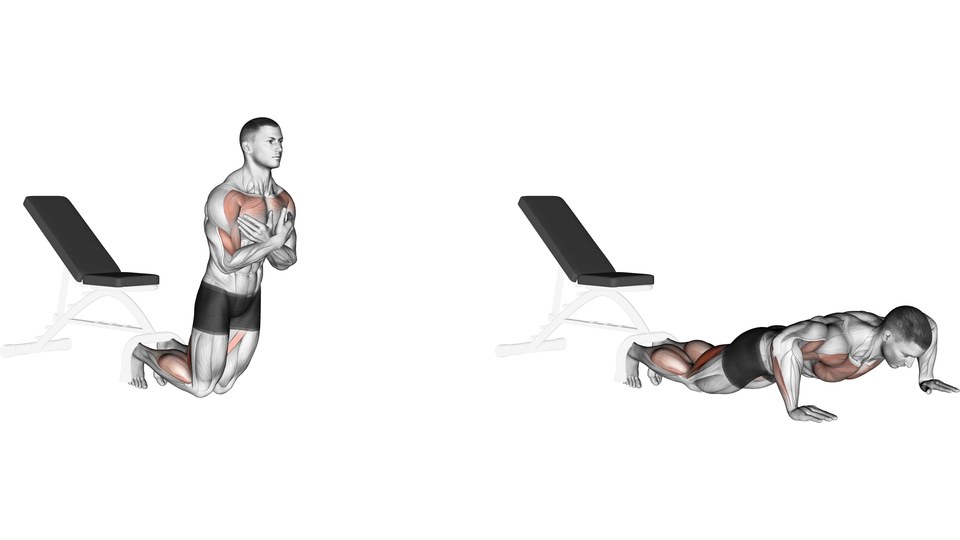
Use bodyweight knee-flexion work
Nordic hamstring curl
Adjust assistance before attempting full reps
A seated leg curl changes the hip position
A seated leg curl supports you in a seated position while the lower legs move against a padded roller. Adjust the seat, thigh restraint and roller before choosing your working load. Keep your hips against the seat through the movement.
The seated hip position differs from lying face down on a bench. Maeo and colleagues' 2021 study compared twelve weeks of seated and prone curl training in opposite legs of twenty healthy adults. The study reported greater hamstring growth with seated training, particularly for muscles crossing both the hip and knee.
That comparison supports seated curls as a useful option, but it does not rank every curl machine or home exercise. Nor does it prove that a familiar lying machine has stopped being worthwhile. Equipment fit and the ability to repeat controlled sets remain practical parts of the decision.
Lying machines and standing cables keep knee-flexion work
A lying leg curl is a straightforward replacement for another prone curl machine. Align yourself with the machine, adjust the roller against the lower legs and keep your body on the pad while bending the knees. Do not lift the hips to finish a heavier repetition.
The standing leg curl guide also allows a low cable and ankle cuff. Attach the cuff securely, stand on the other leg and hold a fixed support for balance. Bend the working knee while keeping the thighs beside each other, without swinging the thigh or arching to raise the heel farther.
Record the station and settings, including cable height and cuff position for the standing version. Two sets per leg means two for each side. A cable-stack number does not convert directly from a bilateral lying machine, so establish a new working load.
Suspension curls add the task of holding the hips up
A suspension hamstring curl uses the heels in suspension straps while you lie on your back. Raise the hips into a controlled position, bend the knees to draw the heels inward and extend the legs again without letting the movement become a drop to the floor.
Check the anchor and straps before beginning. They must be suitable for the exercise and remain secure under load. Set both straps to the same length and make sure the heels stay supported throughout the repetition.
This is knee-flexion work with an additional hip-position demand. If you can curl the heels only by changing the hip height dramatically, choose an easier range or assistance. Record strap height and your chosen execution rather than treating all suspension curls as identical.
Nordic curls need secure support and suitable assistance
A Nordic hamstring curl starts kneeling with the ankles securely restrained. Lower the body forward while keeping the hips aligned, and use your hands or other appropriate assistance to control the movement. An unsecured piece of furniture is not a suitable substitute for the ankle restraint.
Bodyweight can already be a demanding load. Start with assistance and a range you can control instead of assuming you must reach the floor without using your hands. Plan how to stop the descent before attempting the set.
The exercise does not have the same adjustable stack as a seated curl. Progress may mean using less assistance or controlling a larger range, rather than holding an added plate. Keep those details in your log so a change in assistance does not masquerade as unchanged training.
Sliding curls can work at home when the surface is suitable
A sliding hamstring curl uses the heels on sliders or a suitable smooth surface while you lie on your back. Raise the hips, draw the heels toward you and return under control. The floor and slider material are part of the resistance, so test them before a set.
Use space where the feet can move freely without catching on an edge. Keep the movement manageable and stop if the heels repeatedly slip off the sliders. A smoother surface may make movement easier to initiate, but it does not guarantee an easier complete repetition.
This option is described here without a separate linked guide. It is useful as a home setup, not evidence that every bodyweight curl supplies the same training stimulus as a machine. Choose a version you can repeat and progress deliberately.
Keep hinges and curls separate in the workout
If your program calls for a leg curl, replacing it with another curl preserves the knee-flexion movement. A Romanian deadlift can add hamstring work, but its main visible movement occurs at the hips with the knees kept slightly bent.
That does not make the hinge a worse exercise. It means the choice depends on which movement the session needs. If you already have an RDL before the curl, adding a second RDL may duplicate the hinge slot while removing direct knee-flexion work.
Use the first sessions to learn the alternative's setup. Keep the amount of work manageable and leave some controlled reps available. For unfamiliar Nordic or suspension curls, changing assistance and range can be more appropriate than forcing the former machine's rep target immediately.
Compare the muscle maps without treating them as scores
The muscle maps show the anatomical targets listed in the linked guides. Primary and secondary labels describe those guide roles, not measured muscle activation or predicted growth. A highlighted region does not establish that one alternative is better than another.
Use the maps to locate muscles, then choose the exercise by its movement, support and available equipment. These are practical comparisons, not a trial ranking every replacement.
Explore the muscle maps
Leg curl
Primary
Secondary
Schematic surface view. Some muscles are partly visible or not shown.
| Exercise | Primary | Secondary |
|---|---|---|
| Leg curl | biceps femoris (long head), biceps femoris (short head), semitendinosus, semimembranosus | gastrocnemius |
| Seated leg curl | hamstrings | None listed in this guide |
| Lying leg curl | hamstrings | None listed in this guide |
| Standing leg curl | biceps femoris (long head), biceps femoris (short head), semitendinosus, semimembranosus | gastrocnemius |
| Suspension hamstring curl | hamstrings | gluteus maximus |
| Nordic hamstring curl | hamstrings | None listed in this guide |
Log the new curl rather than converting the old weight
Find a starting load from the replacement's own warm-up sets. There is no dependable conversion between the stack on a seated curl, another machine and a bodyweight exercise. Assistance, limb position and equipment all affect what you are doing.
Record settings for machines and assistance for bodyweight versions. Keep hip position and range steady when comparing sessions. A heavier number with a lifted torso or sharply shortened return is a different repetition.
RepCount lets you log sets, reps and weight and review previous workouts. Save each curl variant separately and add a note about the machine or assistance. Download RepCount for Android if that is your training phone.
Frequently asked questions
What is a direct alternative to a leg curl?
Another knee-flexion exercise, such as a seated, lying or standing leg curl, preserves the main movement of a leg curl. Suspension curls and assisted Nordic curls also bend the knees against resistance, with different support and loading.
Can Romanian deadlifts replace leg curls?
Romanian deadlifts train the hamstrings through hip extension, while leg curls train knee flexion. An RDL can provide hamstring work, but replacing a curl with one changes the movement mix in the program.
What can replace a leg curl machine at home?
Suspension hamstring curls with a secure anchor, sliding curls on a suitable surface, and assisted Nordic curls with secure ankle restraint are possible home options. Choose a version you can control and record its assistance or setup.
Are seated leg curls better than lying curls?
A twelve-week study in twenty healthy adults reported greater hamstring growth after seated than prone curl training. That specific result does not rank every machine or mean lying curls are ineffective; equipment fit and consistent execution still matter.