Hip thrust alternatives for gym and home
A floor glute bridge is a practical hip thrust alternative when the bench is the problem. A dumbbell bridge or single-leg bridge works with limited home equipment, while Romanian deadlifts and squats can provide glute training through different movements. Choose according to the role of the original hip thrust rather than expecting an identical exercise.
The hip thrust raises the hips with the upper back resting on a bench and the knees bent. That support allows a different bottom position from a floor bridge. Replacing the bench changes the movement even when the same muscles are involved.
Decide whether you want to keep a bent-knee hip-extension exercise, remove a difficult setup, or reorganize your lower-body workout. Those decisions lead to different replacements. A barbell and bench taking too long to arrange does not automatically mean you need another demanding standing lift.
Choose hip thrust alternatives by the setup you want to change
| Your goal | Alternative | Equipment | Main tradeoff |
|---|---|---|---|
| Remove the bench | Barbell glute bridge | Barbell, padding and floor | Less movement available beneath the hips |
| Train at home with one weight | Dumbbell glute bridge | Dumbbell and floor | Available weight can limit progression |
| Train one side at a time | Single-leg glute bridge | Floor | Different balance and per-side loading |
| Keep standing hip-extension work | Romanian deadlift | Barbell or dumbbells | A hinge with a different knee position |
| Combine knee and hip extension | Squat | Barbell and rack | More than a direct swap for a glute accessory |

Your starting point
Barbell hip thrustCompare hip thrust alternatives by equipment and training goal, from floor glute bridges to hinges and squats, without assuming identical results.
Choose by your goal and equipment
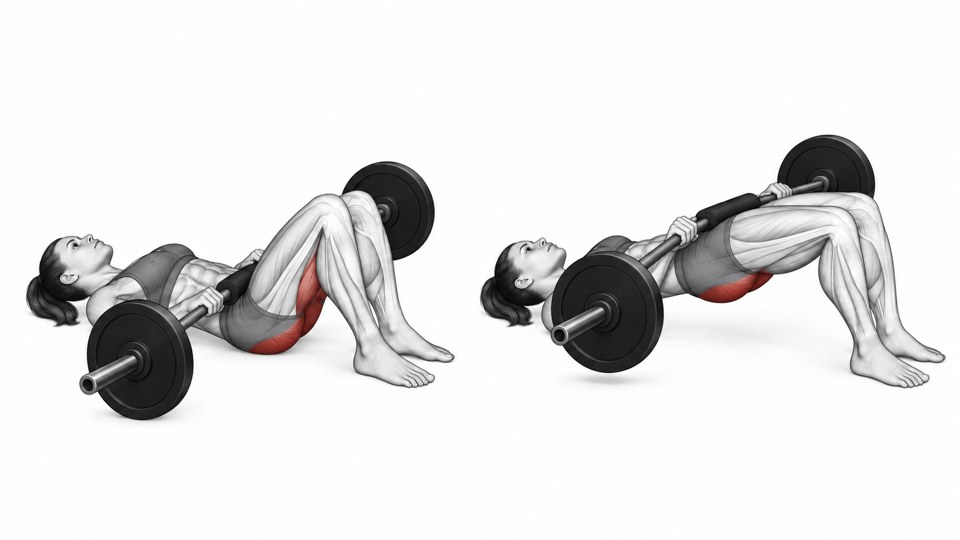
Remove the bench
Barbell glute bridge
Less movement available beneath the hips
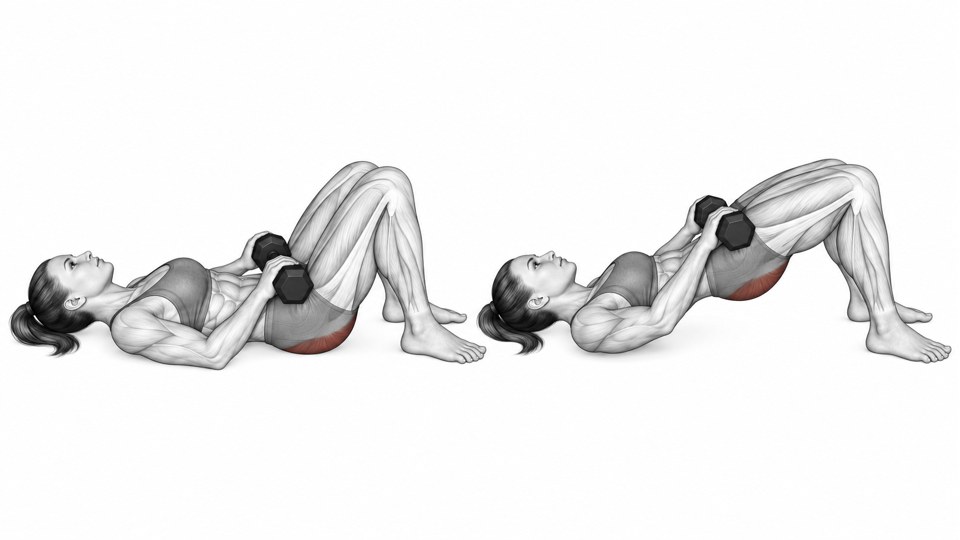
Train at home with one weight
Dumbbell glute bridge
Available weight can limit progression
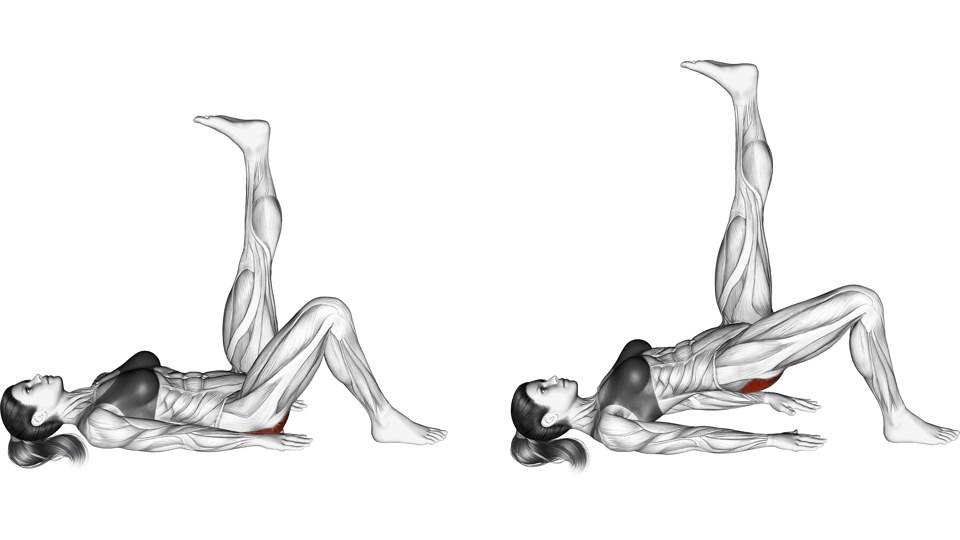
Train one side at a time
Single-leg glute bridge
Different balance and per-side loading
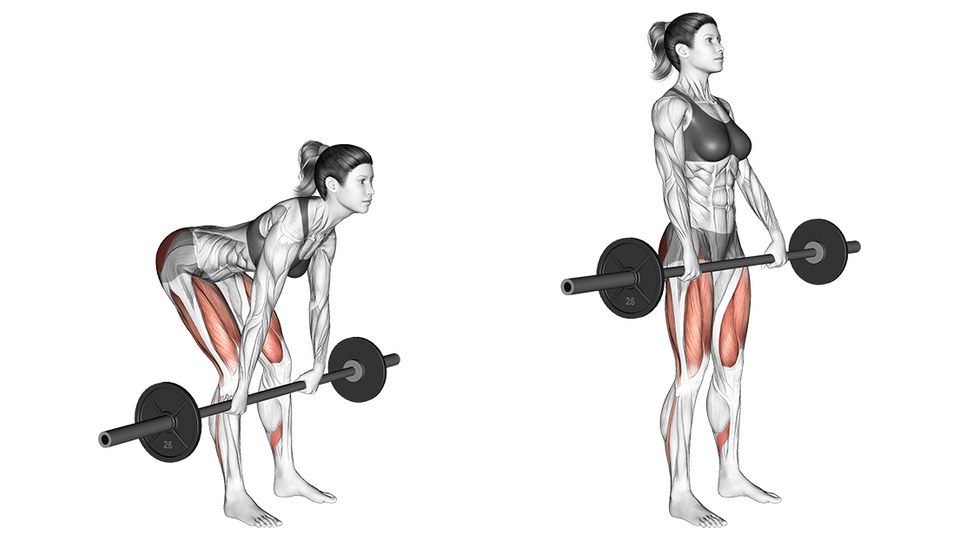
Keep standing hip-extension work
Romanian deadlift
A hinge with a different knee position
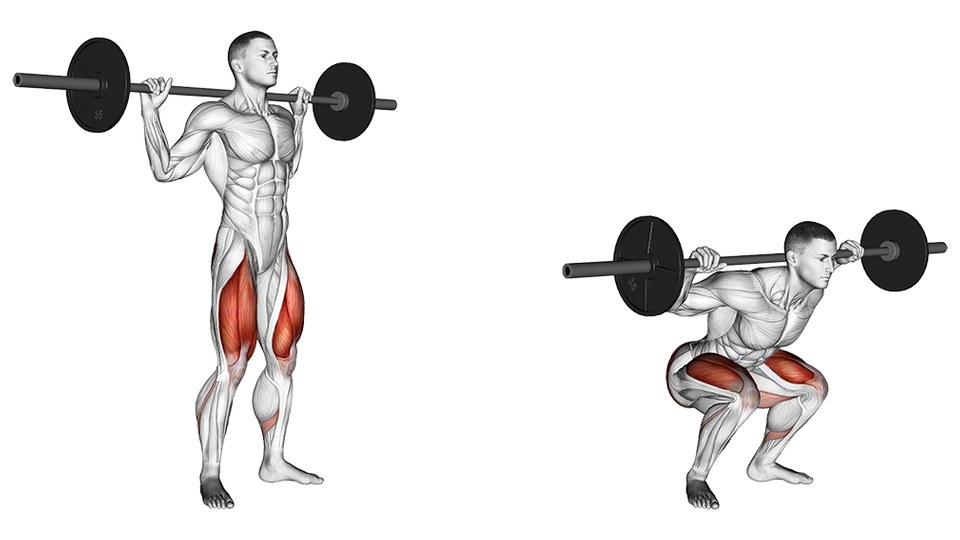
Combine knee and hip extension
Barbell back squat
More than a direct swap for a glute accessory
A floor glute bridge removes the bench
The barbell glute bridge is the most direct setup change here. Your upper back rests on the floor, and you lift a padded bar across the hips by extending them. The floor limits how far the hips can lower between reps.
Arrange the bar and padding before loading heavily. Keep both feet planted and hold the bar so it cannot roll. Raise the hips to a controlled finish without turning the repetition into a backward arch through the lower back.
Because the movement starts and ends differently, do not assume a bridge and hip thrust share the same working weight. Practise a few warm-up sets and record the floor version separately. The missing bench is a useful equipment change, not proof of equivalent training in every respect.
Dumbbell bridges make the home setup simpler
A dumbbell glute bridge lets you use one available weight instead of arranging a barbell. Secure it across your hips with your hands, using comfortable padding where needed. Choose a position where it stays steady throughout the repetition.
Keep your foot position and movement consistent. If the dumbbell shifts or feels awkward to hold, its nominal weight is not the only consideration. A smaller load you can position well is a better starting point than one that needs constant adjustment.
Bodyweight bridges can help you learn that pattern, but a set ending simply because you have counted many easy reps does not demonstrate that the available resistance suits your goal. If the load becomes too limited, consider another option rather than claiming the floor bridge must always be enough.
Single-leg bridges change the loading and the balance
A single-leg glute bridge works one side at a time. It may be useful when a bilateral bridge is easy with the weight available, but it also asks you to keep the pelvis steady while one foot supplies the support.
Begin with a range you can control. Stop lifting when you cannot keep the pelvis from rolling or when reaching higher requires an exaggerated arch. The height reached is less useful than a finish you can repeat on both sides.
Record reps and sets for each leg. Two sets per side means two for the left and two for the right. Do not compare a single-leg bridge load directly with a bilateral hip thrust: the body position and distribution of work have changed.
Romanian deadlifts provide a standing hinge
A Romanian deadlift is an alternative for broader hip-hinge work, rather than a floor bridge performed upright. Start standing, move the hips backward and lower with a small knee bend. Keep the weight near the legs and end the descent where the position remains controlled.
RDLs involve the hamstrings as well as the glutes and require you to hold the load in your hands. That is a different demand from a padded bar across the hips. If your workout already includes RDLs, adding another set of them as a substitute increases the existing hinge work.
At home, dumbbells are a straightforward loading option. Keep the same weights, range and grip when comparing sessions. More depth is not automatically progress if it comes from losing the original position.
Squats can train the glutes without copying the hip thrust
A squat trains through movement at both the hips and knees. It can make sense when your goal is general lower-body training and you have a rack, but it changes more of the session than replacing a bench-supported hip thrust with a floor bridge.
Plotkin and colleagues' 2023 trial found similar gluteal growth after nine weeks of squat or hip thrust training in previously untrained young adults. Squat training produced more thigh growth, while strength gains favored the exercise practised.
The study does not establish that every squat and hip thrust program is interchangeable. Its results also did not follow reliably from the initial muscle-activity measurements. A higher acute EMG signal is not a direct ranking of future muscle growth.
Compare the muscle maps without treating them as scores
The muscle maps show the anatomical targets listed in the linked guides. Primary and secondary labels describe those guide roles, not measured muscle activation or predicted growth. A highlighted region does not establish that one alternative is better than another.
Use the maps to locate muscles, then choose the exercise by its movement, support and available equipment. These are practical comparisons, not a trial ranking every replacement.
Explore the muscle maps
Barbell hip thrust
Primary
Secondary
Schematic surface view. Some muscles are partly visible or not shown.
| Exercise | Primary | Secondary |
|---|---|---|
| Barbell hip thrust | gluteus maximus | hamstrings, quadriceps femoris |
| Barbell glute bridge | gluteus maximus | None listed in this guide |
| Dumbbell glute bridge | gluteus maximus | None listed in this guide |
| Single-leg glute bridge | gluteus maximus | None listed in this guide |
| Romanian deadlift | hamstrings (biceps femoris long head, semitendinosus, semimembranosus), gluteus maximus | erector spinae, adductor magnus, forearm flexors (grip) |
| Barbell back squat | quadriceps — vastus lateralis, vastus intermedius, vastus medialis, gluteus maximus, adductor group | hamstrings, rectus femoris |
Choose one replacement and keep its setup repeatable
If you want to remove a bench while retaining bent-knee hip-extension work, start with a floor bridge. If your available weight is limited, assess a single-leg version. If the aim is reorganizing the whole lower-body session, consider whether a hinge or squat belongs in that slot.
Test the replacement before adding your former hip thrust load. There is no dependable conversion from the original movement to a different exercise. Keep the early sets controlled, with a few good repetitions still available, while you establish the setup.
Record the chosen exercise under its own name. Notes about padding, foot position and equipment are more useful than a claim that the movement felt exactly as hard as another one. Consistency gives your later entries something meaningful to compare.
RepCount lets you record sets, reps and weight and review earlier sessions. Download it for Android as well, and use your first controlled session as the starting record for the new exercise.
Frequently asked questions
What is the closest hip thrust alternative without a bench?
A floor glute bridge retains bent-knee hip extension while removing the bench. The floor limits the bottom position, so treat the bridge as a distinct exercise rather than assuming the same range and load.
Can squats replace hip thrusts for glute training?
Squats can provide glute training, but they also involve substantial knee-extension work and change the session more than a floor bridge. Choose according to the role of the hip thrust and the exercises already in the program.
Are Romanian deadlifts the same as hip thrusts?
Romanian deadlifts are standing hip hinges with the weight held in the hands. Hip thrusts use upper-back support and a bent-knee setup with weight across the hips. Both involve hip extension, but their setups and other demands differ.
Can I use the same weight for hip thrusts and glute bridges?
There is no reliable weight conversion between hip thrusts and floor glute bridges. Establish a manageable load through warm-up sets and record each exercise separately.