
Single-leg glute bridge
Also called one-leg glute bridge, single-leg hip bridge.
What is a single-leg glute bridge?
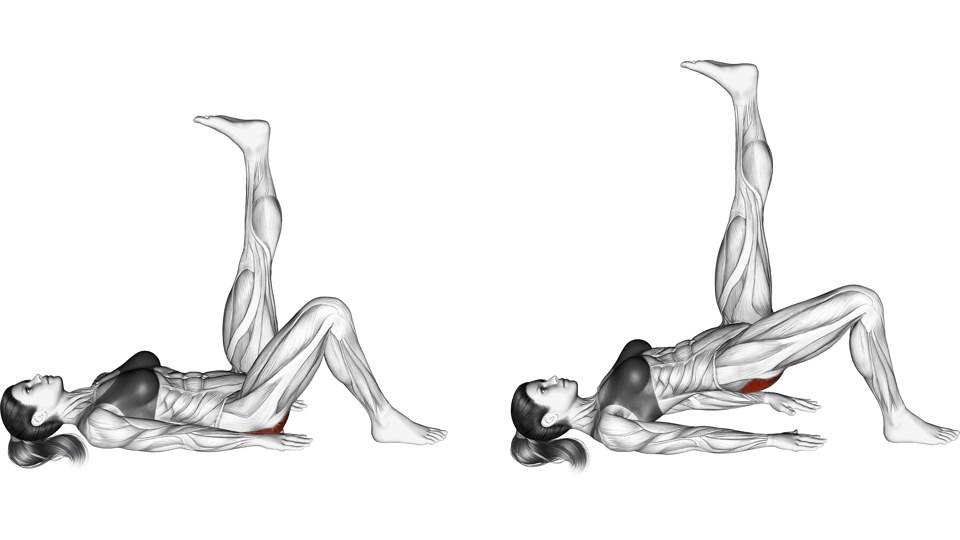
A single-leg glute bridge is a floor bridge performed with only one foot planted. Raise and lower your hips while holding the other leg off the floor. This guide keeps the raised leg straight.
How do you perform a single-leg glute bridge?
Set up
- Lie on your back with one foot flat on the floor and that knee bent. Rest your arms alongside you.
- Raise the other leg toward the ceiling and keep that knee straight without forcing it. Keep your hips level before starting.
Execution
- Press through the planted foot and raise your hips, leaving your shoulders and head on the floor.
- Stop when the working thigh and torso form a line, without tipping the pelvis or arching your back.
- Lower your hips under control. Keep the other foot lifted through the repetitions, then lower it and change sides.
Common mistakes
Turning the pelvis as you lift
Lower the height until you can keep both hips facing upward.
Pushing through the lifted foot between repetitions
Keep that foot clear of the floor until the set ends; use a two-leg bridge if needed.
Where it fits in a session
Include this movement where it fits your planned lower-body or home session.
Record repetitions for each side and keep the range consistent between sessions.
Muscles worked
Primary
Secondary
- None listed in this guide
Schematic surface view. Some muscles are partly visible or not shown.
The gluteus maximus is the main target. Other muscles help maintain the position.
Variations
Frequently asked questions
Can I bend the raised knee?
Yes. The raised leg may be held straight or bent according to preference. This illustration and the steps use a straight knee; keep your chosen position consistent.
Is this the same as a single-leg hip thrust?
No. In this floor bridge the shoulders stay on the floor. A hip thrust places the upper back on an elevated support.