A 3-day barbell workout plan for beginners
Written by Simon, who owns RepCount. Competitor claims checked .
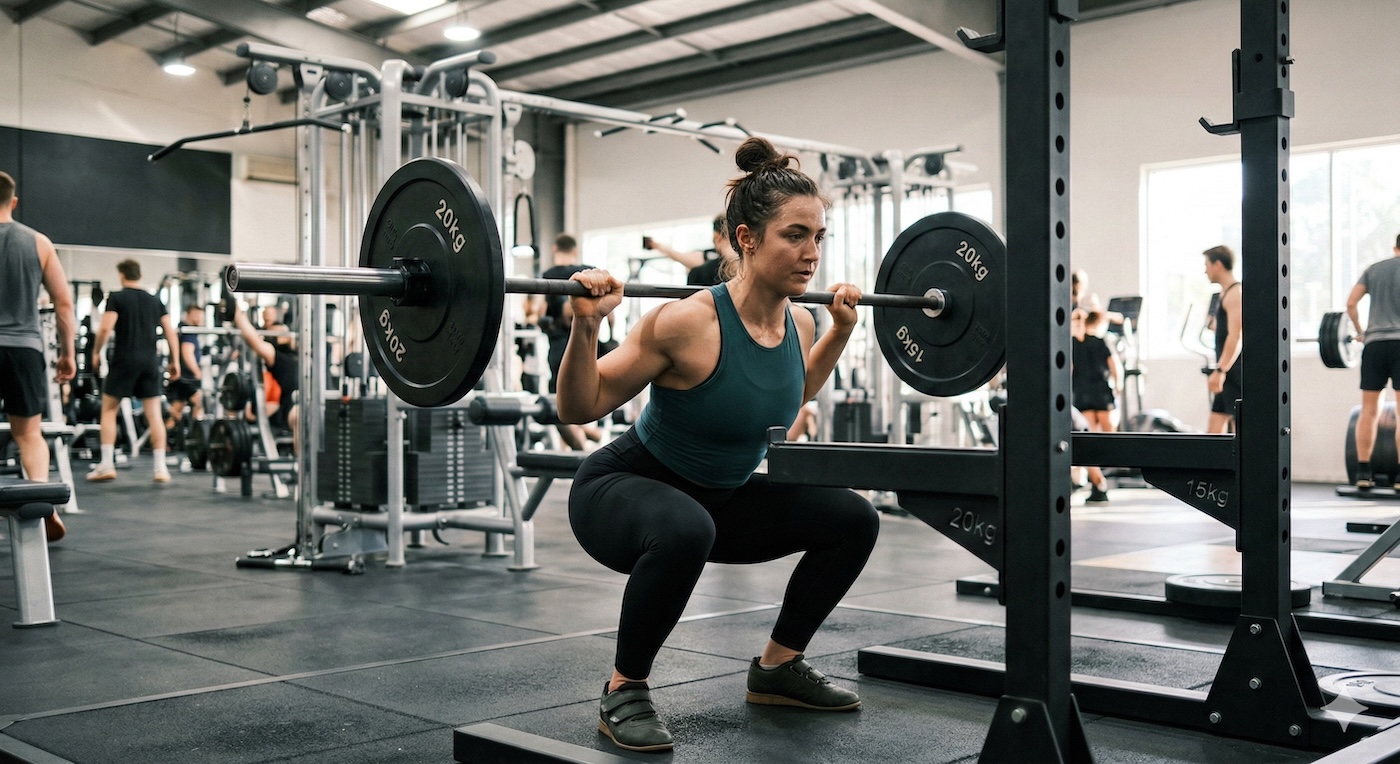
This 3-day barbell workout plan for beginners uses two routines: squat, bench press, and row in A; squat, overhead press, and deadlift in B. Alternate A-B-A one week and B-A-B the next. This plan gives each lift a clear working-set target and tells you when to add weight.
You'll need a barbell, plates, a rack with safeties, and a flat bench. The core workouts use no cables, machines, or dumbbells. If that's the equipment you train with, you can follow the tables directly without rebuilding a commercial-gym plan around substitutions.
It's for beginners who can already perform the chosen lifts with consistent technique and want a simple strength plan. If a lift is new to you, learn it with a manageable weight before following the working-set targets. Start with the core workouts; the accessories below are optional. If you want a wider choice of movements, our three-day gym plan includes machines and dumbbells too.
Alternate two routines across three training days
Train on three nonconsecutive days where your schedule allows. Monday, Wednesday, and Friday is one example. Keep the A/B sequence running from one week to the next.
| Week | First session | Second session | Third session |
|---|---|---|---|
| 1 | Barbell A | Barbell B | Barbell A |
| 2 | Barbell B | Barbell A | Barbell B |
| 3 | Barbell A | Barbell B | Barbell A |
| 4 | Barbell B | Barbell A | Barbell B |
The weeks show the order, not a deadline for increasing weight. If you miss a B session, do B next time you train. Don't restart with A just because it's Monday, and don't combine both workouts to catch up.
You only need to save two routines. The third training day repeats the next workout in the sequence; it doesn't need its own template.
Barbell A: squat, bench press, and row
Do these exercises in table order. The listed sets are working sets, with warm-ups added separately. Use the same working weight across an exercise's sets.
| Exercise | Working sets | Reps per set | Rest between sets |
|---|---|---|---|
| Barbell squat | 3 | 5 | 2-3 minutes |
| Bench press | 3 | 5 | 2-3 minutes |
| Barbell row | 3 | 6-8 | 2 minutes |
For squat and bench press, complete all three sets of five before considering a weight increase. For the row, build toward three sets of eight first. A shorter movement or a heave with the torso doesn't count as earning the next weight.
The row gives A a horizontal pull alongside its squat and press. Keep the row setup consistent, including your torso position, so the numbers describe the same exercise each session.
Barbell B: squat, overhead press, and deadlift
B uses fewer squat sets and one deadlift working set. That's the prescription for this template, rather than a rule that every barbell program needs the same amount of work.
| Exercise | Working sets | Reps per set | Rest between sets |
|---|---|---|---|
| Barbell squat | 2 | 5 | 2-3 minutes |
| Standing barbell overhead press | 3 | 5 | 2-3 minutes |
| Deadlift | 1 | 5 | 2-3 minutes after the last warm-up |
Use the same squat working weight in A and B. Before adding to it, complete all sets prescribed for the session you're doing. B's lower set count stays in place as the weight rises; don't quietly turn it into a third squat set.
The deadlift's one working set comes after lighter practice sets. It doesn't mean walking up to a loaded bar without warming up. Take enough time after your final warm-up to approach the working set ready to lift.
If the listed rest leaves you rushed, take longer. There isn't a reward for keeping the session short by turning the next set into a struggle.
Start with weights you can repeat cleanly
Choose a starting load that lets you complete every working set without grinding through the final rep. Leave a little room to spare. The first session is for finding manageable weights, not testing your strongest possible set of five.
Start the warm-up with an empty bar or a lighter training bar where needed. Add weight gradually while reducing the reps in the later practice sets. Keep those sets easy enough that you're ready for the actual workout.
For deadlifts, use a starting setup that puts the bar at a repeatable height. Light full-diameter plates or stable blocks can help if smaller plates put it much lower than your intended setup. Record the setup if it changes how you perform the lift.
Count the bar when recording the total weight. If you change bars, check its weight rather than assuming every bar weighs the same. Use the same convention every time you log.
Set the rack safeties for your squat and bench press, and check their position before loading your working weight. The linked exercise guides explain the movements. Get instruction on a lift you haven't learned rather than using a heavier weight to see whether you've understood it.
Add a small amount of weight after completed sets
For the five-rep exercises, add the smallest available increase when you finish every prescribed working set with consistent technique and still have a little room to spare. If you miss reps or the last set becomes a grind, repeat the weight next time.
For the row, keep the weight until you reach 8, 8, 8. Then increase it and work back up from six reps per set. This is a different target from the fixed sets of five, so put it in the row's notes.
| Exercise | Result | Next session |
|---|---|---|
| Bench press, 40 kg | 5, 5, 5, with clean reps and room to spare | Try the smallest available increase |
| Bench press, 42.5 kg | 5, 5, 4 | Repeat 42.5 kg |
| Barbell row, 30 kg | 8, 7, 6 | Keep 30 kg and add reps |
| Barbell row, 30 kg | 8, 8, 8 | Increase the weight and return toward six reps |
The weights illustrate the decisions. They aren't starting targets, and a 2.5 kg increase isn't mandatory. Use smaller plates when a larger jump is too much, particularly on the overhead press.
Progress the lifts separately. A successful squat session doesn't change the bench press target. A stalled overhead press doesn't mean resetting every exercise.
Repeat a difficult session before changing the plan
One missed rep is a reason to repeat a weight, not a reason to replace the routine. Check your rest and whether you performed the lift the same way before making a bigger change.
If the same exercise keeps falling short over several attempts, lower its working weight to one you can complete cleanly and build again. Keep the other lifts going if they're progressing. Our plateau guide gives you a broader checklist.
If both workouts are becoming difficult and you feel worn down, take an easier session with lower weights and fewer working sets. The deload guide explains how to make that adjustment.
You don't need to add weight on a calendar. A program you can repeat and understand is more useful than a string of forced increases followed by missed sets.
Know what this small barbell plan leaves out
The core template has no vertical pull or direct calf work, and little isolation work. The exercise selection reflects a barbell, rack, and bench setup. The optional pull-ups and curls below add some pulling and arm work, but this still isn't a plan for maximizing every muscle's weekly training volume.
Keep the core workouts unchanged while you learn to follow them. You can also choose the four-day upper/lower plan if you want more room for accessories and can train four days.
If you don't have a rack or bench, use a plan designed around what you do have. Our dumbbell plan covers that setup. A heavy clean from the floor doesn't turn a no-rack room into the setup this guide assumes.
Add a little optional pulling and arm work
Beginners can start with just the core plan. Once you're comfortable with it, you can add either or both of these exercises at the end of the relevant workout:
- After Barbell A: Pull-ups, 2 sets of 5-8 reps, after the row. These need a pull-up bar in addition to the core equipment. Add them only if you can complete both sets of five cleanly with a little room to spare. If you can't yet do that, leave this optional movement out.
- After Barbell B: Barbell biceps curls, 2 sets of 8-12 reps, after the deadlift. Use a weight you can curl without swinging. If your only bar is too heavy for that, leave curls out too.
If you'd like to work toward pull-ups, our assisted pull-up guide covers the machine-assisted exercise. It requires an assisted pull-up machine; the band-assisted variation needs a pull-up bar and a suitable resistance band. That equipment is extra, and you can leave this optional work out.
Rest 1-2 minutes between accessory sets and finish with a little room to spare. For pull-ups, add clean reps toward 8, 8, then keep those two sets at bodyweight while you focus on the core lifts. For curls, reach 12, 12 before adding the smallest available weight increase and returning toward eight reps per set.
These are small optional starting targets. Omit the extras if they make recovery harder or interfere with progress on the core lifts.
This is a separate template, not a renamed program
Starting Strength and StrongLifts 5×5 have their own exercise prescriptions and progression instructions. This guide uses the two tables above, including two squat sets in B and a rep range for the row.
If you choose an established program, use its original instructions. The Starting Strength program overview describes phases that change as the lifter progresses, and StrongLifts publishes its own 5×5 guide. Mixing rules from several programs makes it harder to explain what you're following.
Save Barbell A and Barbell B in RepCount
RepCount's free version has unlimited saved routines. Create Barbell A and Barbell B once, then open the next routine when you train. You can keep them alongside other workouts without a routine limit.
- Open Routines and create Barbell A.
- Add squat, bench press, and barbell row in table order, with three working sets each.
- Put the reps, rest, and progression rule in each exercise's notes.
- Create Barbell B with two squat sets, three overhead press sets, and one deadlift set.
- Start the next routine from the schedule and record the weight and reps you complete.
For squat, a useful note is: A: 3 sets of 5. B: 2 sets of 5. Use the same working weight. Add the smallest available increase after completing today's sets cleanly with room to spare. Otherwise repeat the weight. Keeping both prescriptions in the note makes the different set counts clear.
Look for Squat, Bench Press, Barbell Row, Military Press, and Deadlift in the app. RepCount can show previous weight and rep values during your workout; use those as a reference and follow today's set prescription.
If you choose an optional exercise, add it at the end of the appropriate routine with two working sets and its rep target in the notes.
Enter both routines manually using this guide. The download links open the app stores; they don't import the plan or decide which workout comes next. RepCount records the session, and you choose the next routine and weight.
Download RepCount for iPhone · Download RepCount for Android
Frequently asked questions
What equipment does this barbell workout plan need?
A barbell, weight plates, a squat rack with safeties, and a flat bench. You also need enough clearance for a standing overhead press and a suitable space to deadlift. The core workouts don't require dumbbells, cables, or machines. Optional pull-ups need a pull-up bar too.
Does three training days mean three different routines?
No. Save Barbell A and Barbell B, then alternate A-B-A in week one and B-A-B in week two. Continue the sequence after a missed workout rather than restarting it each Monday.
Is this Starting Strength or StrongLifts 5×5?
No. This is a separate barbell template with its own set prescriptions and progression rule. Starting Strength and StrongLifts 5×5 have specific programming instructions; follow their official guidance if you choose one of those programs.
Can I follow this plan without a squat rack?
The plan as written requires a rack for squats and a suitable bench press setup. If you don't have that equipment, choose a plan that matches your setup. Don't try to turn a heavy floor-to-shoulder lift into a substitute for a squat rack.
Can I save these barbell routines in RepCount for free?
Yes. RepCount's free version has unlimited saved routines. Enter Barbell A and Barbell B manually, set the working-set counts, and write the targets and progression rules in exercise notes. The download links open the app stores and don't import a program.
Should I add weight every workout?
For the core five-rep lifts, add the smallest available increase after completing every prescribed working set with consistent technique and a little room to spare. Repeat the weight after missed reps or a grind. Build rows and optional curls to the top of their rep ranges before adding weight. Optional pull-ups progress toward two sets of eight at bodyweight. Progress each exercise separately.