
Dumbbell glute exercises for a repeatable workout
For a repeatable dumbbell glute workout, combine a Romanian deadlift, a stationary split squat and either a floor glute bridge or a bench-supported hip thrust. These dumbbell glute exercises give you different ways to load hip extension, with the split squat also training the front thigh. Without a bench, choose the floor bridge and keep both feet on the floor for the split squat.
Start with those few choices and keep the setup consistent. Changing exercises every session makes it harder to tell whether you're actually progressing.

Choose dumbbell glute exercises for the equipment you have
Use a bridge or hip thrust for supported hip-extension work, a Romanian deadlift for the standing hinge, and a split squat for work led by one leg. Choose one exercise from the first row, rather than adding both.
| Role | Exercise | What the setup needs |
|---|---|---|
| Supported hip extension | Dumbbell glute bridge or dumbbell hip thrust | One dumbbell across the hips; floor support for the bridge, a stable bench for the thrust |
| Standing hinge | Dumbbell Romanian deadlift | A dumbbell in each hand and room to push the hips back |
| Work led by one leg | Dumbbell split squat | A dumbbell at each side, with both feet staying in a fixed split stance |
These choices aren't a claim that each exercise isolates a separate section of the glutes. The Romanian deadlift also involves the hamstrings; the split squat involves the quadriceps. For other equipment, browse the glute exercise hub.
Try this small session before adding exercises
Use the following as a starting session, adjusting the set counts around the leg training you already do. The rep ranges and rests are examples you can adapt.
| Exercise, in order | Working sets | Reps | Rest |
|---|---|---|---|
| Dumbbell Romanian deadlift | 2 | 8–15 | 2–3 minutes |
| Dumbbell split squat | 2 per leg | 8–12 per leg | About 2 minutes after both legs |
| Dumbbell glute bridge or hip thrust | 2 | 10–20 | 1–2 minutes |
Practise the movements unloaded or with lighter weights before starting the working sets. Pick loads that leave roughly two controlled reps available at the end. Rest between split-squat sides too if you need it; each leg should get the same chance to perform well.
Keep this order while comparing sessions. If balance or grip ends a set before the intended movement becomes challenging, address that limit before adding weight. The linked guides cover the full technique.
A floor bridge removes the need for a bench
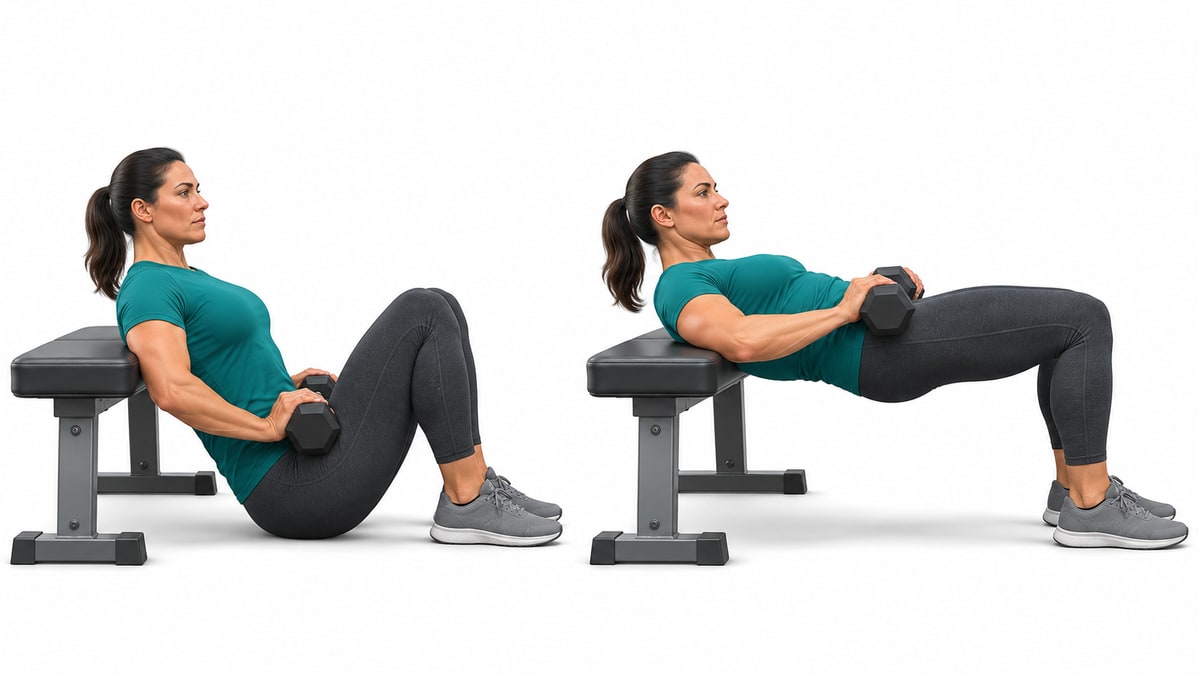
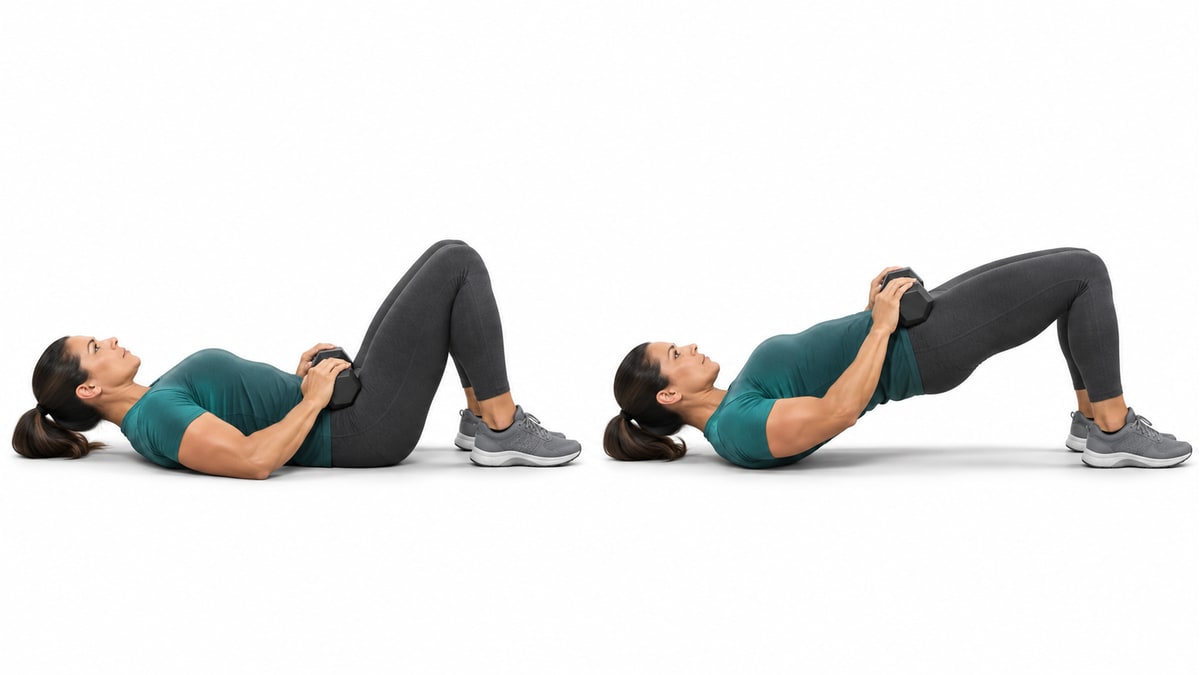
A dumbbell glute bridge keeps your head and shoulders on the floor. A hip thrust supports the upper back on a bench, leaving more space beneath the hips. Treat them as separate exercises with their own starting loads.
For either version, use one dumbbell you can place across your hips, hold steady with both hands and remove after the set. Padding can make the contact more comfortable. Finish by extending the hips rather than arching your lower back for extra height.
Only use the hip thrust if the bench stays put throughout the movement. If you can't arrange stable upper-back support, use the floor bridge. There's no need to improvise with furniture that slides. The hip thrust alternatives guide compares other substitutions.
Keep the hinge and split squat distinct
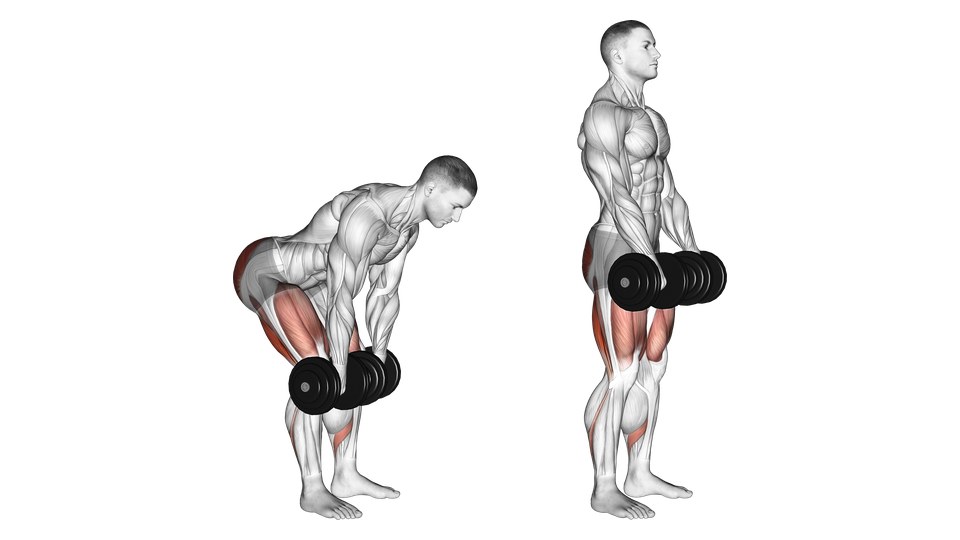
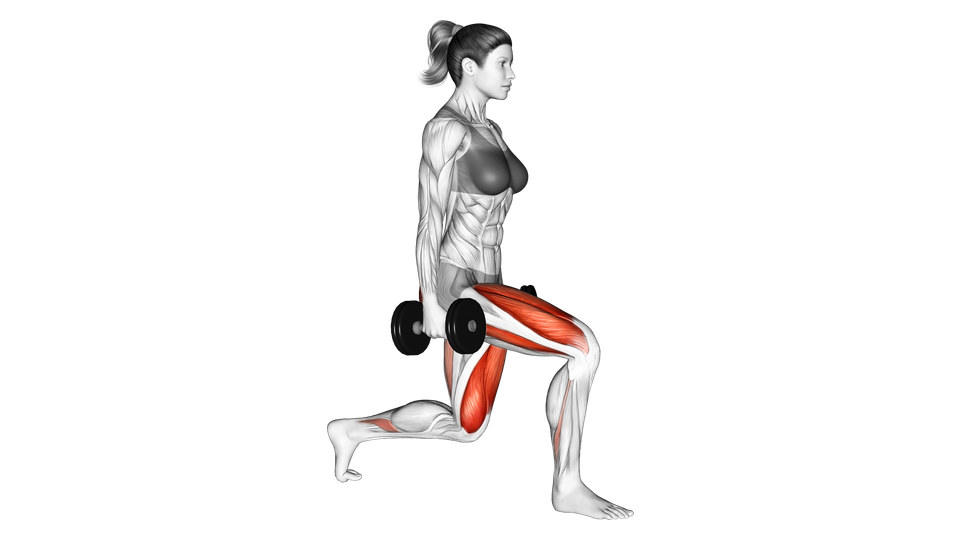
The Romanian deadlift moves the hips back with softly bent knees. The stationary split squat bends both knees while the feet stay in place. Keeping those movements distinct gives the session more variety than adding another bridge.
For the hinge, stop at the depth you can control without changing your back position. Touching the floor isn't the goal. For the split squat, choose a stance you can repeat and keep the front foot planted as you lower and rise. Start without weights if you can't yet control the position.
Both feet stay on the floor for this split squat. Raising the rear foot on a bench makes it a Bulgarian split squat, so give that variation its own name in your log.
Add reps, then increase the load
Keep the weight steady until all working sets reach the top of their range with similar effort and the same movement. Then try the smallest available increase. If that takes you below the lower end, return to the previous load and build more reps there.
For example, two bridge sets with 20 kg might go from 18 and 16 reps to 20 and 20 over later sessions. Once both reach 20 with the same controlled finish, try the next dumbbell. That's an example of what to track, not a deadline for progress. For split squats, reach the target on both legs before increasing.
When heavier dumbbells aren't available, try extending a rep range, such as taking the bridge to 20–25. Keep the effort meaningful. You can also try a bodyweight single-leg bridge, which changes the exercise without needing a larger dumbbell across your lap. Establish a new baseline for it.
If the available variations remain easy, seek heavier equipment instead of collecting more easy sets. Currier and colleagues' 2023 review found muscle growth across several combinations of load, sets and training frequency, while heavier loads were favored for maximizing strength. You have room to adapt, but a light pair of dumbbells has a ceiling.
Count the leg work already in your week
Fit this session into your existing plan before adding another training day. Squats, lunges and hinges already involve the glutes, so a separate glute workout can duplicate work you've already scheduled.
For example, if Monday already includes Romanian deadlifts and split squats, try the bridge afterward rather than repeating the whole table on Tuesday. If this is your main glute-focused work, Monday and Thursday are one possible arrangement. Adjust the extra work if your next lower-body session deteriorates despite adequate rest.
If you need a weekly plan for your whole body, start with the full-body dumbbell workout plan. It uses a bench; check its equipment before choosing it. Use this article to select glute work within a plan, rather than letting it replace your upper-body training.
The research doesn't validate this exact dumbbell session
Plotkin and colleagues (2023) found similar glute growth after nine weeks of barbell hip-thrust or back-squat training in beginners. Strength improvements favored the lift each group practised. Those were supervised barbell protocols, not a comparison of dumbbell bridges, hinges and split squats.
The practical takeaway is that a hip thrust isn't the only exercise that can train the glutes. Neither that trial nor Currier's review establishes this table's exact dose or guarantees results from your available dumbbells.
Save the setup alongside the reps
Record the weight of one dumbbell throughout this session. A single 20 kg dumbbell across your hips is logged as 20 kg. Two 12 kg dumbbells used for Romanian deadlifts or split squats are logged as 12 kg. Save that convention so you don't switch to combined weight later.
For split squats, eight reps means eight on each leg, not sixteen added together. Note any difference between sides. Record whether you used the floor or a bench, and keep bridges and hip thrusts under separate names.
In RepCount, create a routine manually and add your chosen exercises. Set the working-set counts, then put the rep ranges and setup in the exercise notes. Create a custom exercise if the exact variation isn't in your library. Log the weight and reps you complete, and use that record to choose your next session's targets.
Get RepCount for iPhone or Android to keep the routine and your training log together.
Frequently asked questions
Which dumbbell glute exercises work together in a workout?
A dumbbell Romanian deadlift, a stationary dumbbell split squat and either a dumbbell floor bridge or bench-supported hip thrust make a practical combination. They provide a hinge, work led by one leg and supported hip extension. The example session is a starting template, not a workout validated as a whole in a trial.
Can I do a dumbbell glute workout without a bench?
Yes. Use a dumbbell glute bridge with your head and shoulders on the floor, alongside Romanian deadlifts and stationary split squats. All three can be done without a bench. A standard split squat keeps the rear foot on the floor; a Bulgarian split squat needs raised support.
What should I do when my dumbbells become too light?
Add controlled reps within your chosen range first. You can then extend the range or try a different exercise, such as a bodyweight single-leg bridge, recording it separately. If the available version remains easy, heavier equipment is a sensible next step. More easy sets aren't a substitute for a challenging load.
How often should I use this glute workout?
Fit it around the leg training you already do. For example, start with one occurrence alongside an existing plan, or use two separated days if this is your main glute-focused work. Those are scheduling examples. Reduce duplicated exercises if the extra work makes your next lower-body session suffer.
How should I log dumbbell glute exercises in RepCount?
Create the routine manually in RepCount. For bridges or hip thrusts, record the single dumbbell's weight. For a pair used in Romanian deadlifts or split squats, record the weight per dumbbell. Count split-squat reps per leg, and save the convention and setup in exercise notes. Create a custom exercise if the exact variation isn't in your library.