Dumbbell hip thrust
Also called DB hip thrust.
What is a dumbbell hip thrust?
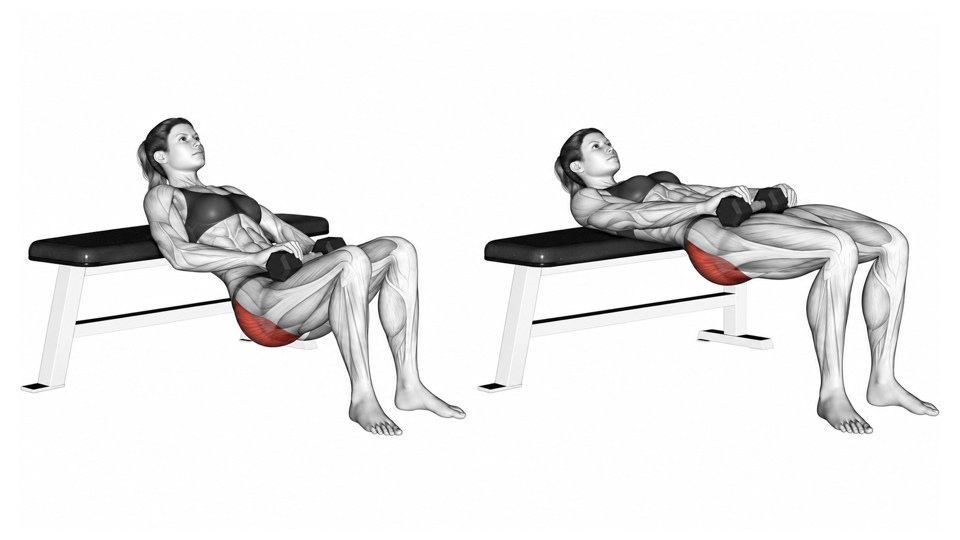
A dumbbell hip thrust is a hip-extension exercise performed with your upper back supported on a bench and one dumbbell held across your hips. Both feet stay planted as you raise and lower your hips. It is the bench-supported version, distinct from a dumbbell glute bridge on the floor.
How do you perform a dumbbell hip thrust?
Set up
- Sit against a stable bench with knees bent and feet planted. Set one dumbbell across the crease of the hips, padding the contact point if needed and holding it with both hands.
- Arrange your upper back on the bench edge so the shoulders remain supported as the hips move. Check that the bench cannot slide or tip.
Execution
- Push through the feet and raise the hips while keeping the dumbbell steady.
- Finish when the trunk and thighs line up, without leaning back to gain extra height.
- Lower the hips toward the floor in control while keeping your feet in place. After the set, sit down fully before moving the dumbbell off your lap.
Common mistakes
Chasing height by arching the back
Stop the lift when the thighs and trunk line up. Keep the finish consistent from one repetition to the next.
Letting the dumbbell roll
Keep both hands on the weight throughout the set. Choose a dumbbell you can place and remove securely.
Using a bench that moves
Check the support before loading your lap. Stop and reset if the bench shifts during a repetition.
Where it fits in a session
Use it for hip-extension work in a session with a dumbbell and a stable bench.
Choose a dumbbell you can position and remove without help. Add repetitions within your planned range before increasing load if the next dumbbell is a large jump.
Muscles worked
Primary
Secondary
- None listed in this guide
Schematic surface view. Some muscles are partly visible or not shown.
The gluteus maximus extends the hip.
Variations

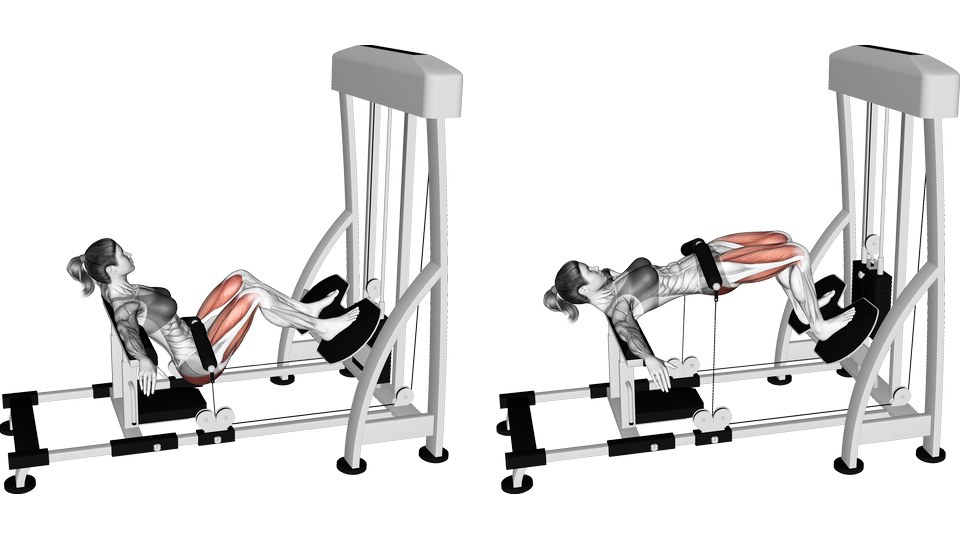
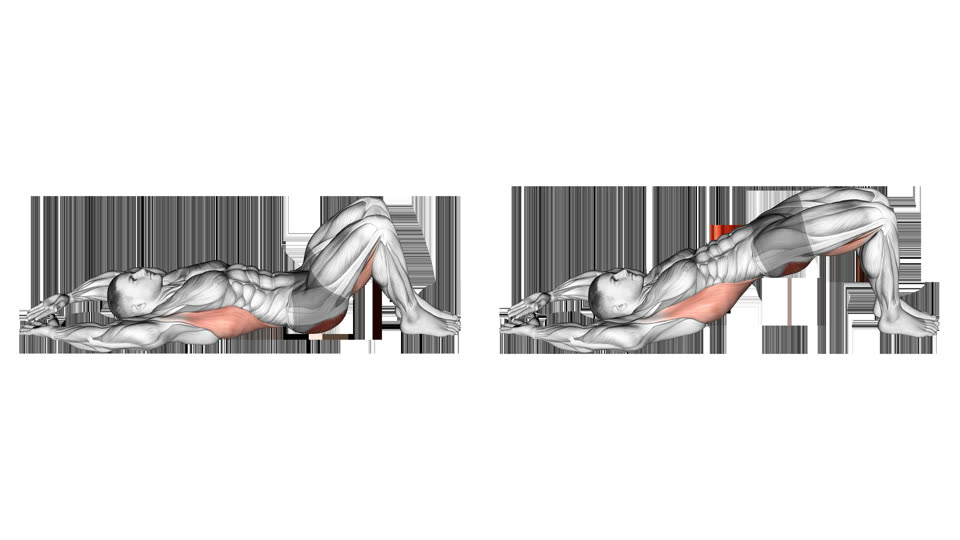
Frequently asked questions
Which muscle does the dumbbell hip thrust work?
It trains the gluteus maximus through hip extension.
Is this the same as a dumbbell glute bridge?
No. A hip thrust supports the upper back on a bench. A glute bridge keeps the shoulders on the floor.
Should I use one dumbbell or two?
This guide uses one dumbbell held across the lap with both hands. Use a size and shape you can keep steady and remove after the set.
How should I log the weight?
Record the weight of the single dumbbell once. Do not double it because both legs are working.
Sources
- Elzanie A, Borger J. Anatomy, Bony Pelvis and Lower Limb, Gluteus Maximus Muscle. StatPearls, updated April 1, 2023. https://www.ncbi.nlm.nih.gov/sites/books/NBK538193/