
Leg extension alternatives: what can replace it?
The closest leg extension alternatives keep the knee-straightening action: a seated extension with a band or ankle weight, or a properly arranged cable setup. If you simply need another exercise for your quads, a squat, split squat, or leg press can fill that slot. Those are useful options, but they change what you're doing.
Before choosing, check why leg extensions were in your plan. Replacing a general leg exercise is different from replacing the direct quad work you deliberately added after squats.
Leg extension alternatives fall into two groups
Choose between preserving the movement and preserving the broader goal of training your quads. This distinction is more useful than a long list of exercises presented as equivalent.
| Option | What it preserves | What changes |
|---|---|---|
| Seated band knee extension | Knee extension with the thigh supported | Resistance changes with band stretch and anchor position |
| Seated ankle-weight extension | Knee extension without a machine | Available load and resistance through the movement differ |
| Seated cable knee extension | Adjustable cable resistance for knee extension | Bench, pulley, and cuff setup need to work together |
| Sissy squat | Knee-focused quad work with hips held extended | Balance, support, and moving bodyweight replace the seat and pad |
| Goblet squat | General quad training with limited equipment | Both hips and knees move; holding the weight can limit you |
| Dumbbell split squat | General quad work performed one side at a time | More setup and balance, with substantial hip movement |
| Leg press or hack squat | Loaded leg work on a supported machine | Hip extension joins knee extension |
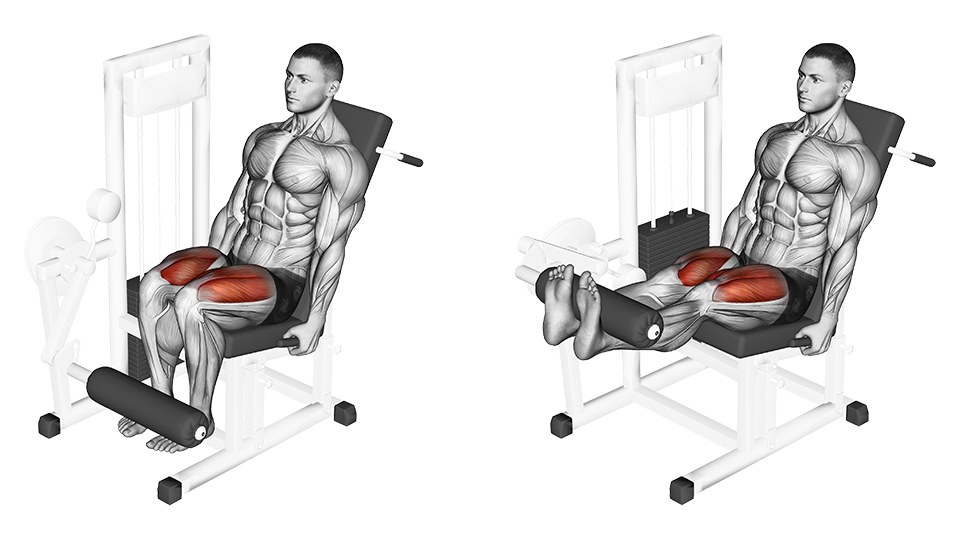
Your starting point
Leg extensionA squat trains your quads, but it doesn't make the leg extension redundant. Choose a replacement based on what you need from the exercise.
Choose by your goal and equipment
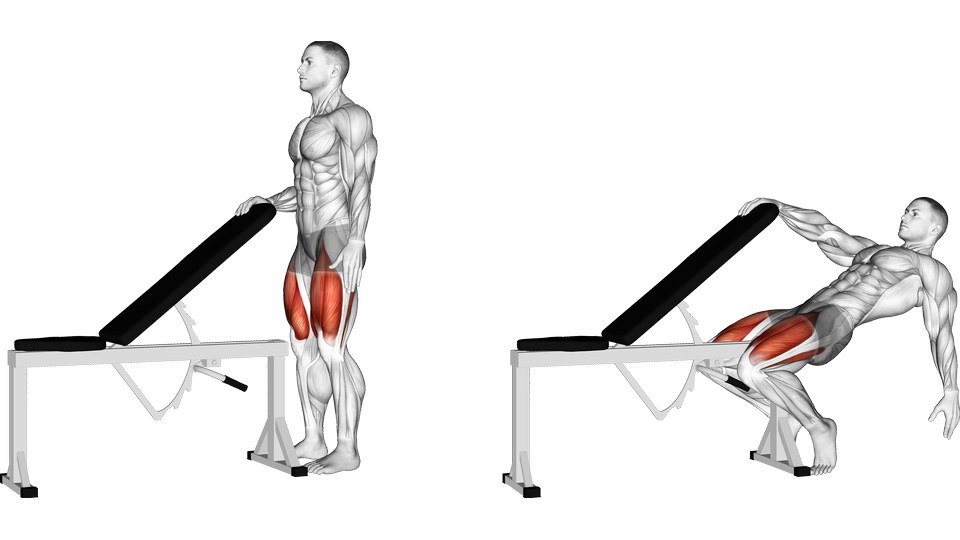
Keep hips extended
Sissy squat
Moving bodyweight rather than a seated extension
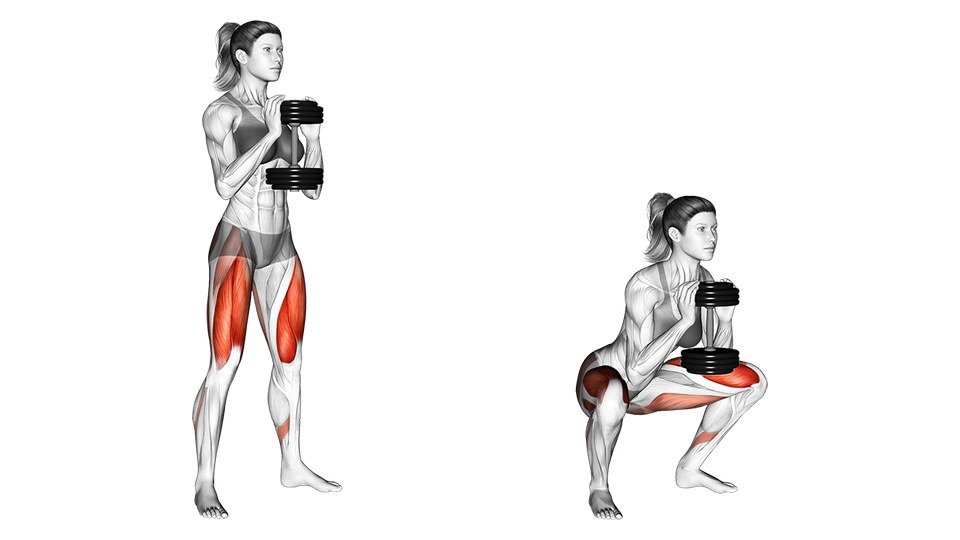
Use one dumbbell
Goblet squat
Knees and hips move together
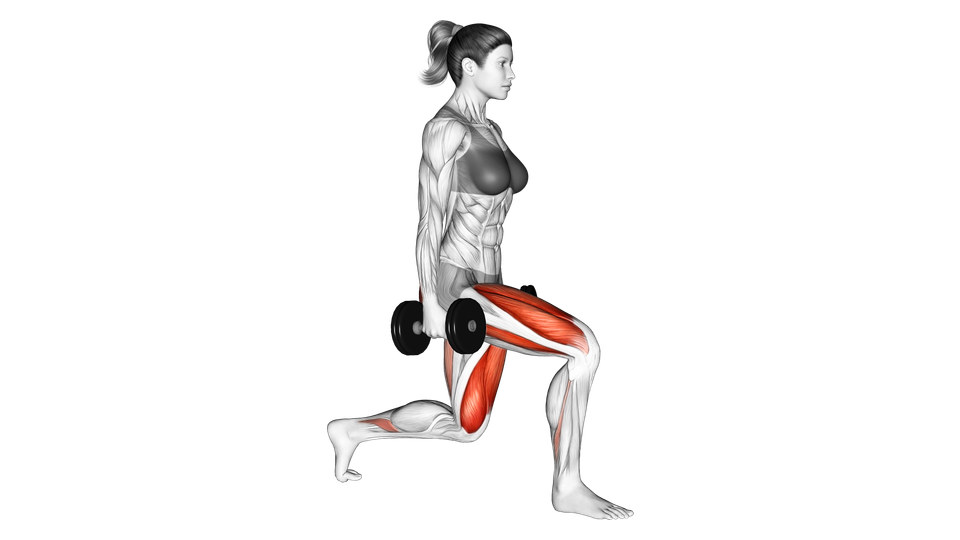
Train one side at a time
Dumbbell split squat
Different balance and per-side setup
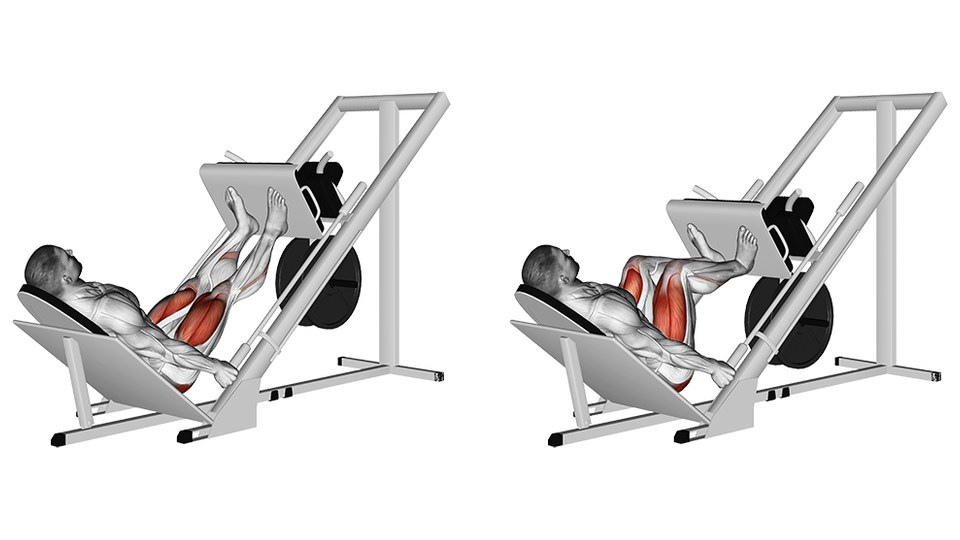
Use back support
Leg press
Hip extension joins knee extension
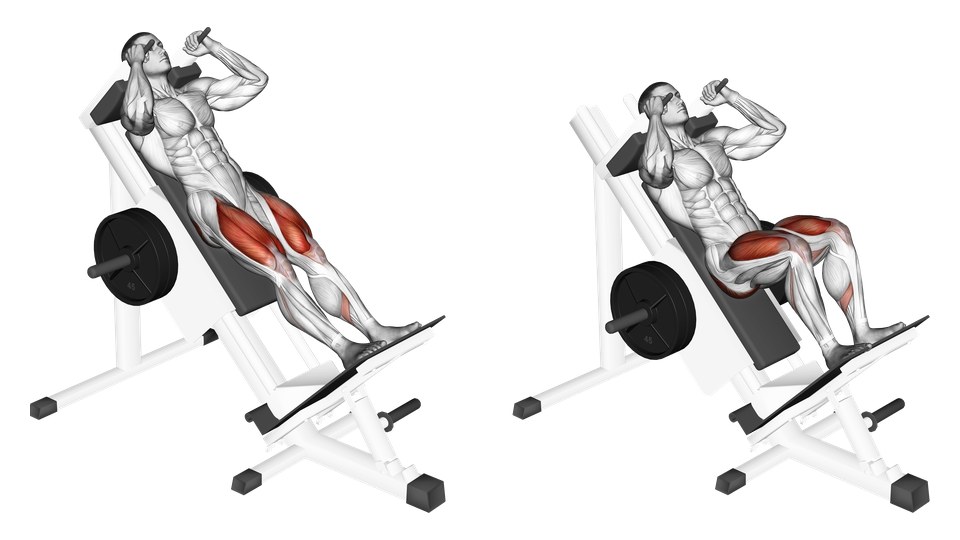
Use a supported sled
Hack squat
Hip extension joins knee extension
These categories describe the movements. They aren't evidence that every exercise in a category produces the same muscle growth.
Direct knee extension can add something to compound leg work
The leg extension has a distinct role because it loads knee extension without asking you to stand out of a squat. One quad muscle, the rectus femoris, also crosses the hip; the other three don't. Our exercise guide explains that anatomy and its implications for the machine's backrest position.
Kinoshita and colleagues (2026) compared knee extensions and leg presses in 17 untrained adults over 12 weeks. The knee-extension condition produced more rectus femoris growth, while growth of the other quad heads and the whole quadriceps was comparable between conditions.
That is a reason to retain direct knee-extension work when it's serving a purpose. It isn't proof that squats can never grow that muscle. Kojic and colleagues (2022) reported growth in all four quad muscles after parallel squat training. Different exercises and studies don't reduce neatly to “works” and “doesn't work.”
For your program, ask a smaller question: if you already squat, does adding another squat solve the reason you included leg extensions?
A seated band extension keeps the basic movement at home
A resistance band gives you a way to straighten your knee against resistance while sitting on a sturdy seat. The setup must let your lower leg move freely while your thigh stays supported.
The NHS OPAL exercise resource demonstrates seated knee extensions with a band or ankle weight. That establishes a practical version of the movement, not evidence that light rehabilitation loading matches a gym machine for muscle growth.
Use a secure attachment intended for the band and check it before each set. Straighten the knee smoothly and control the return. Don't turn the exercise into a kick or lift your whole thigh to move the resistance.
Keep the same band and anchor arrangement when comparing sessions. A different starting length can change the exercise even when the band colour stays the same. If your setup won't provide enough manageable resistance, choose another option rather than improvising a stronger anchor from furniture that can move.
An ankle weight is simple, but has a loading limit
A strapped ankle weight is a straightforward option when you have a secure seat and enough clearance for your lower leg. It also removes the need for a cable station or band anchor.
The limitation is how much resistance you can attach comfortably and securely. If the heaviest suitable ankle weight no longer makes the movement challenging, doing the same easy set indefinitely won't solve that equipment limit.
I wouldn't replace a strapped weight with a loose dumbbell squeezed between your feet. If keeping the load in place becomes the difficult part, choose an exercise with a more reliable setup.
Cable extensions require more setup than the machine
A seated cable extension is an option with an ankle cuff, a low pulley, and a bench positioned so the cable resists knee extension. Check that the cuff is secure and that the cable clears the bench throughout the movement.
Start light enough to assess the arrangement. Your thigh should stay supported, and the bench should stay put as you straighten the knee. If you have to slide, twist, or lift the thigh to complete the rep, rearrange the setup rather than adding weight.
A cable stack doesn't make this identical to a leg-extension machine. The direction of the pull and your distance from the pulley matter. Ask gym staff to check an unfamiliar attachment or setup; a workable machine is preferable to an improvised version you can't control.
A supported sissy squat is a different quad accessory
The sissy squat keeps the hips extended while the knees bend and straighten. That makes it a different movement from sitting the hips back into an ordinary squat.
It can be an option if you're comfortable with the movement and have a fixed handhold. Start with a shallow range you can reverse under control. Keep your thighs and torso moving together, and use the support for balance rather than hauling yourself upright. The sissy squat guide includes the demonstration.
Don't assume a bodyweight exercise is automatically the easiest replacement. If you can't control the return, shorten the range or pick a seated version. You don't need to force this exercise into your plan to train your quads.
Compound exercises are a practical fallback, with a tradeoff
A goblet squat or split squat can keep a home leg session useful when there's no workable extension setup. At a gym, a leg press or hack squat may be more convenient.
Use those options deliberately. If your workout already includes a squat and leg press, replacing the extensions with another press adds more similar work. You might prefer to move the extensions to another session instead.
If you do substitute, start from the new exercise's demands. For example, replacing a planned extension slot with two modest sets of split squats per side is an introduction to a different movement, not a formula for equal training effects. Adjust the rest of the session if needed.
Pain changes the decision. This list is about exercise selection for general training, not a rehabilitation prescription. If an injury is the reason you're avoiding extensions, get a replacement matched to that situation.
Compare the muscle maps without treating them as scores
The muscle maps show the anatomical targets listed in the linked guides. Primary and secondary labels describe those guide roles, not measured muscle activation or predicted growth. A highlighted region does not establish that one alternative is better than another.
Use the maps to locate muscles, then choose the exercise by its movement, support and available equipment. These are practical comparisons, not a trial ranking every replacement.
Explore the muscle maps
Leg extension
Primary
Secondary
- None listed in this guide
Schematic surface view. Some muscles are partly visible or not shown.
| Exercise | Primary | Secondary |
|---|---|---|
| Leg extension | rectus femoris, vastus lateralis, vastus medialis, vastus intermedius | None listed in this guide |
| Sissy squat | quadriceps | None listed in this guide |
| Goblet squat | quadriceps | gluteus maximus, adductor magnus, soleus |
| Dumbbell split squat | quadriceps, gluteus maximus | adductors, hamstrings |
| Leg press | vastus lateralis, vastus medialis, vastus intermedius, gluteus maximus, adductor magnus | rectus femoris, hamstrings, soleus |
| Hack squat | quadriceps | gluteus maximus, adductor magnus |
Track the replacement as its own exercise
Record the movement you actually performed, with its load and setup. A machine extension, band extension, and split squat shouldn't share one progression just because they occupied the same place in your workout.
RepCount stores your sets, reps, and weight so you can compare the next session with the same exercise. It's also available on Android. Start with a repeatable setup; the log becomes useful when the next set means the same thing as the last one.
Frequently asked questions
What is the closest leg extension alternative at home?
A seated knee extension using a resistance band or ankle weight preserves the basic action of straightening the knee while seated. It won't reproduce a machine's resistance, support, or loading range, so treat it as a separate exercise.
Can squats replace leg extensions?
Squats can replace general quad work, but they change the exercise from knee extension to a movement involving both the knees and hips. If your program deliberately includes direct knee-extension work, another squat isn't an exact replacement.
Are leg extension alternatives automatically easier on the knees?
No exercise name guarantees that a replacement will suit your knees. The movement, load, range, and your situation matter. If pain or rehabilitation is the reason for changing the exercise, use individual guidance rather than a generic substitution list.
Is a sissy squat the same as a leg extension?
No. A sissy squat keeps the hips extended while the knees bend and straighten, but it moves your body over your feet and requires balance or support. It is a quad accessory option, not a seated machine exercise with a different name.