Sissy squat
Also called bodyweight sissy squat, supported sissy squat.
What is a sissy squat?
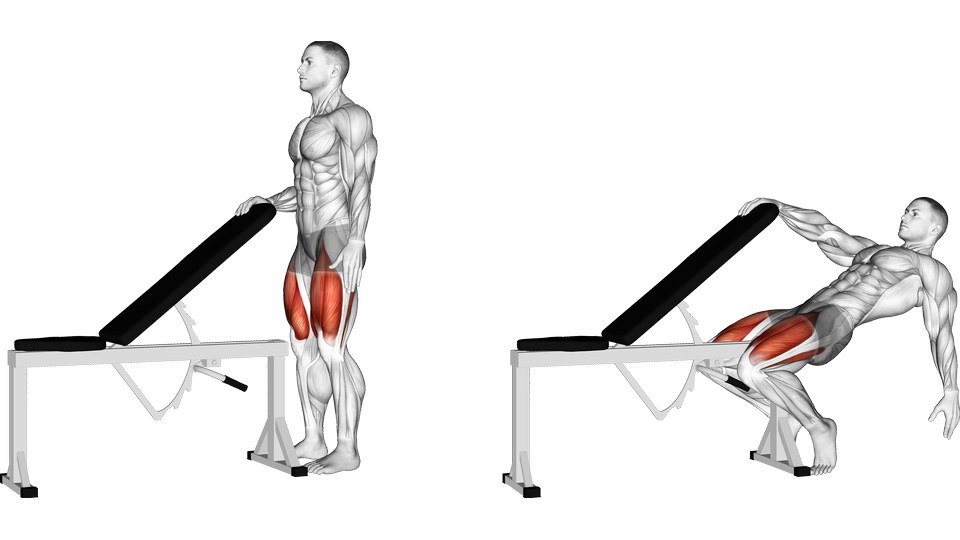
The sissy squat is a bodyweight quadriceps exercise in which the knees travel forward and the heels rise while the hips stay extended. You lean the torso and thighs back together, then straighten the knees to return, usually holding a fixed support for balance.
How do you perform a sissy squat?
Set up
- Stand with your feet about shoulder-width apart beside a stable support you can hold lightly.
- Rise onto the balls of your feet, brace your midsection and keep your hips extended.
Execution
- Let your knees travel forward as your heels rise and your body leans back from the knees.
- Lower only as far as you can keep the hips open and the line from knees through shoulders controlled.
- Straighten your knees to return, using the support for balance rather than to pull yourself up.
Common mistakes
Sitting the hips back
A hip hinge turns the movement toward a regular squat and removes the defining straight line above the knees.
Dropping deeper than you can control
Depth stops being useful once the hips fold, the body line breaks or you need the support to pull yourself up.
Using an unstable handhold
The support is part of the balance strategy, so it needs to stay fixed throughout the repetition.
Where it fits in a session
As quadriceps accessory work after squats or presses, or as a bodyweight option when equipment is limited.
Begin with a shallow range and a secure handhold. Add depth before external load, provided the same hip position and controlled return remain intact.
Muscles worked
Primary
Secondary
- None listed in this guide
Schematic surface view. Some muscles are partly visible or not shown.
The knees bend while the hips stay extended, making the quadriceps the clear target rather than sharing the movement with a deep hip bend.
Variations
- Weighted sissy squat — Holds a plate or dumbbell after the bodyweight range is controlled.
- Sissy squat machine — Anchors the lower legs and feet in a purpose-built station.
- Reverse Nordic curl — Kneels on the floor and leans back from the knees with the feet anchored by body position.
Frequently asked questions
What muscles do sissy squats work?
They mainly train the quadriceps. Keeping the hips extended while the knees bend makes this more knee-dominant than a regular squat.
Why do the heels rise?
Rising onto the balls of the feet lets the knees travel forward while the thighs and torso lean back together. It is part of the movement shown here, not a balance error.
Should I hold onto something?
Yes. A stable support lets you balance while the body leans back. Hold it lightly; if you must pull hard with the arm, shorten the range.
How deep should a sissy squat be?
Lower only as far as you can keep the hips extended and return under control. Depth can grow gradually; there is no required bottom position for every lifter.
Is a sissy squat the same as a regular squat?
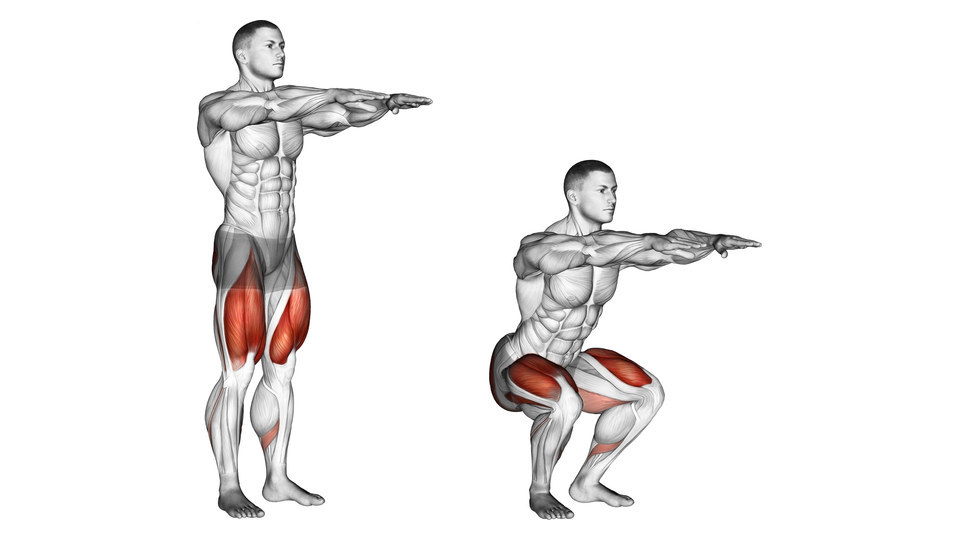
No. A regular squat bends substantially at both the hips and knees with the feet planted. A sissy squat keeps the hips open, allows the heels to rise and pivots the body around the knees.