A chest and tricep workout you can progress
Start this chest and tricep workout with the barbell bench press, then move to an incline dumbbell press, a chest fly, and a small amount of direct triceps work. The session below gives you sets, rep ranges, rest periods, and links to each exercise's setup.
Treat it as an adjustable example, not a claim that these exact numbers are optimal for everyone. If you're new to training, use the shorter version described below. If you already follow a program, fit this session into it rather than adding it on top of all your existing pressing.
The chest-and-triceps workout
These are working sets. Warm-up sets are separate, and the overhead extension guide uses an EZ bar.
| Exercise | Sets | Reps per set | Rest between sets |
|---|---|---|---|
| Barbell bench press | 3 | 6–10 | 2–3 minutes |
| Incline dumbbell press | 2 | 8–12 | 2–3 minutes |
| Machine chest fly | 2 | 10–15 | 1–2 minutes |
| Overhead triceps extension | 2 | 10–15 | 1–2 minutes |
| Triceps pushdown | 2 | 10–15 | 1–2 minutes |
That is 11 working sets: seven chest-focused sets and four direct triceps sets. The five pressing sets also involve the triceps, so the four direct sets aren't their only work in the session.
For a shorter introduction, use two sets of the bench press, two sets of the fly, and two sets of one triceps exercise. Learn the setups and see how you recover before deciding whether to expand to the full example.
Warm up toward the first working weight
Start the bench press with an empty bar, or a lighter training bar if needed, and perform controlled practice reps. Add weight across a few warm-up sets as needed, keeping those sets easier than the work to come.
Use the warm-up to check your bench position, grip, and bar path. It shouldn't leave you so tired that the first working set becomes a test of whether you can recover from the warm-up.
Later exercises may need their own lighter preparation set, particularly if the movement or equipment is unfamiliar. The fact that your chest is warm doesn't mean you've established the right setting on a different machine.
Start with the barbell bench press
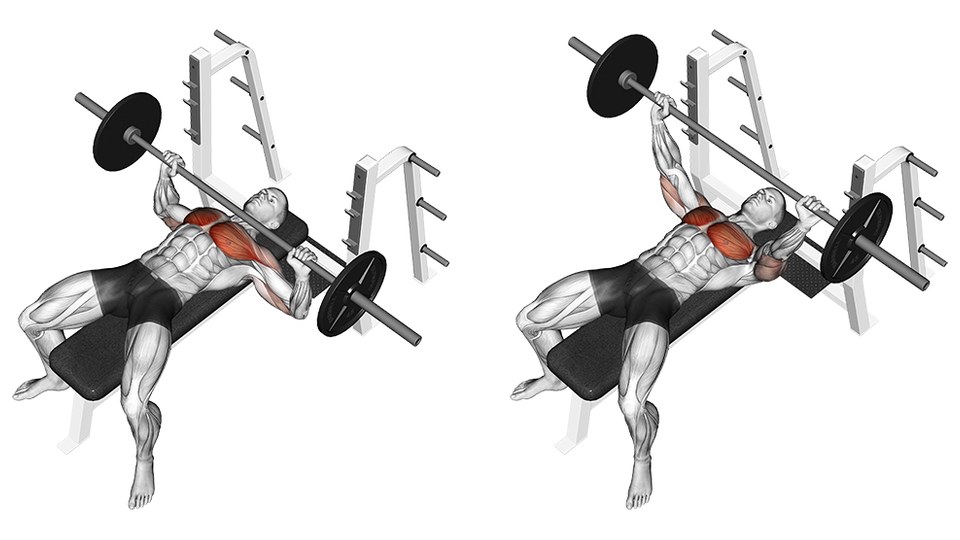
The barbell bench press is the main movement in this example. Set the rack hooks so you can unrack with nearly straight arms, and use safety arms or a spotter for hard sets. Keep your feet planted and your shoulder blades against the bench. Lower the bar under control to your chest without bouncing, then press it back up. The bench press guide covers the full setup.
Start with a load that leaves roughly two good reps available at the end of the set. That's a practical effort target, not something you need to estimate perfectly on your first workout. If the final rep needs a completely different movement to get the weights up, reduce the load next set.
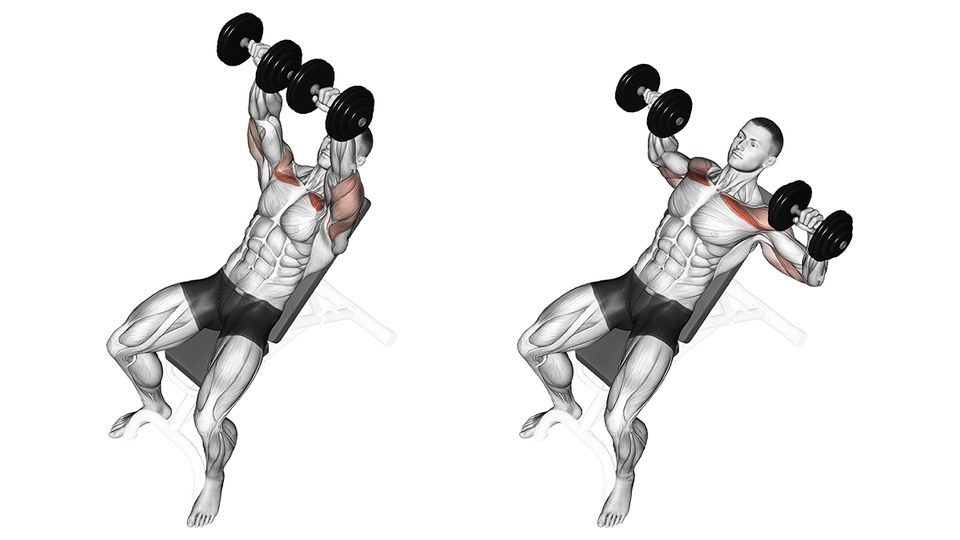
The incline press gives you a second pressing angle. Use a modest incline and record the bench setting rather than changing it from session to session. The incline dumbbell press guide explains the setup.
If you prefer dumbbells or don't have a barbell setup, use the dumbbell bench press in the first slot instead. Record which version you use and progress it on its own; the weights aren't directly interchangeable.
You don't need both presses if the full session is more than you can currently manage. Keep the bench press and build consistency before adding the second angle.
Use the fly for chest work without another press
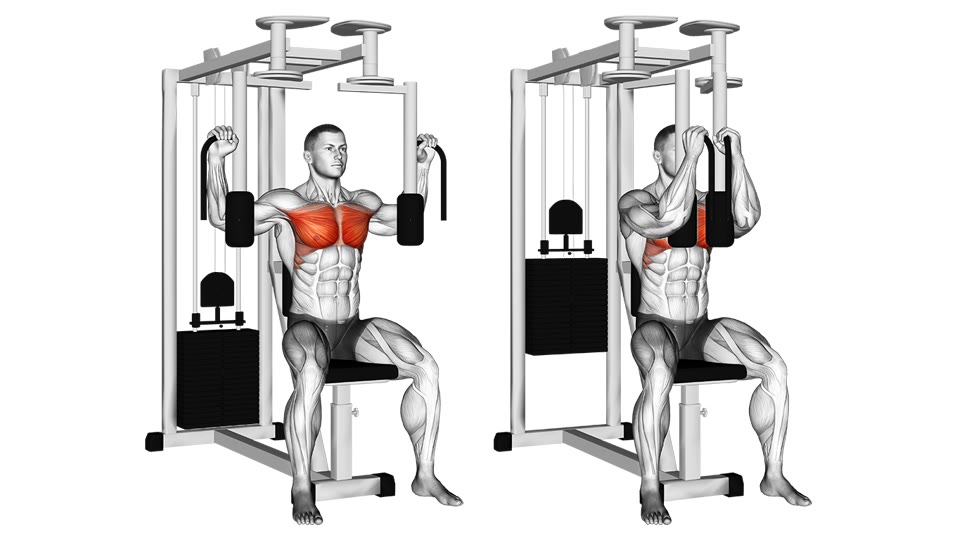
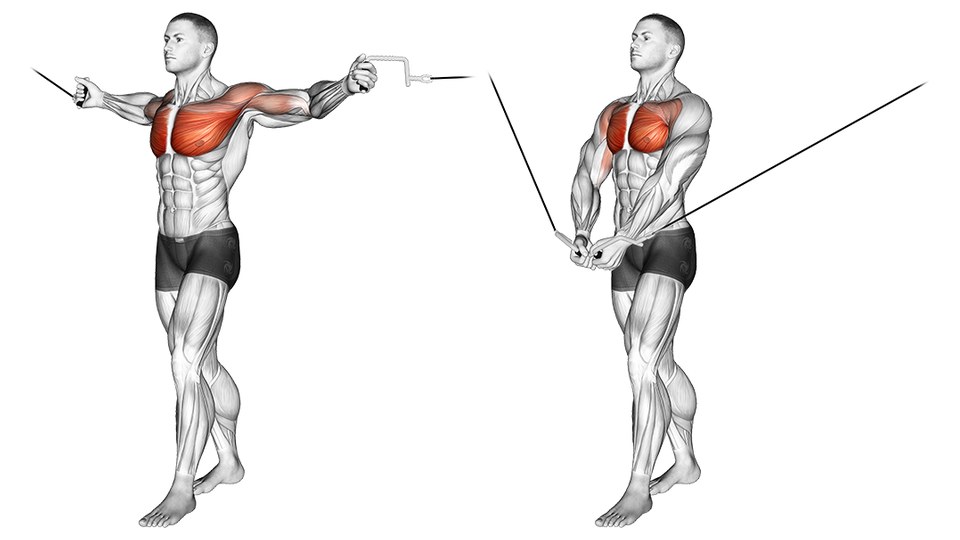
The machine chest fly lets you bring the upper arms together without another repeated elbow-extension movement. Adjust the seat and start position so you can control the opening phase rather than letting the machine pull you backward.
Keep the movement steady. Increasing the weight by shortening every rep or driving your torso forward makes it harder to tell whether your chest work has progressed.
If the machine is occupied, a cable fly can fill a similar role. Treat the new setup as its own exercise with its own starting load. You don't need to transfer the pec-deck number to the cable stack.
Keep the direct triceps work manageable
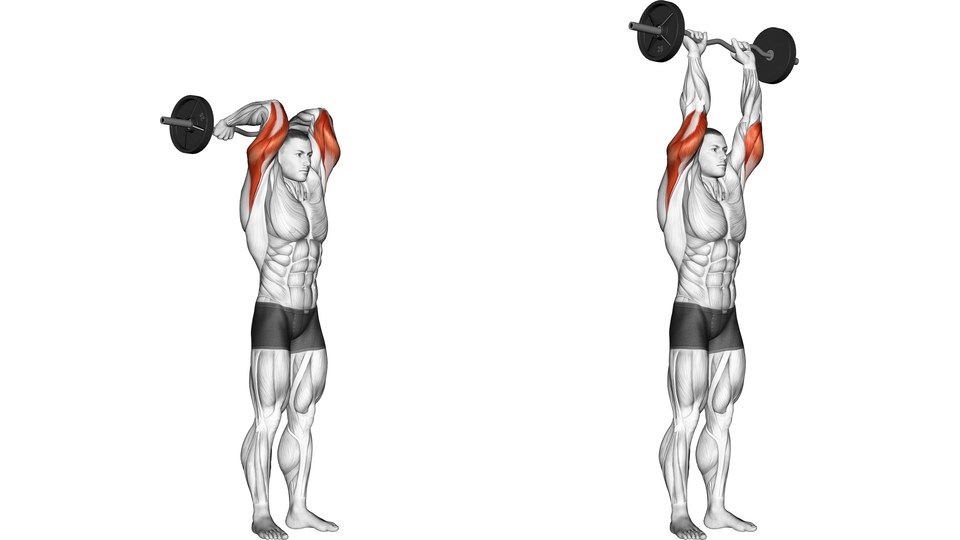
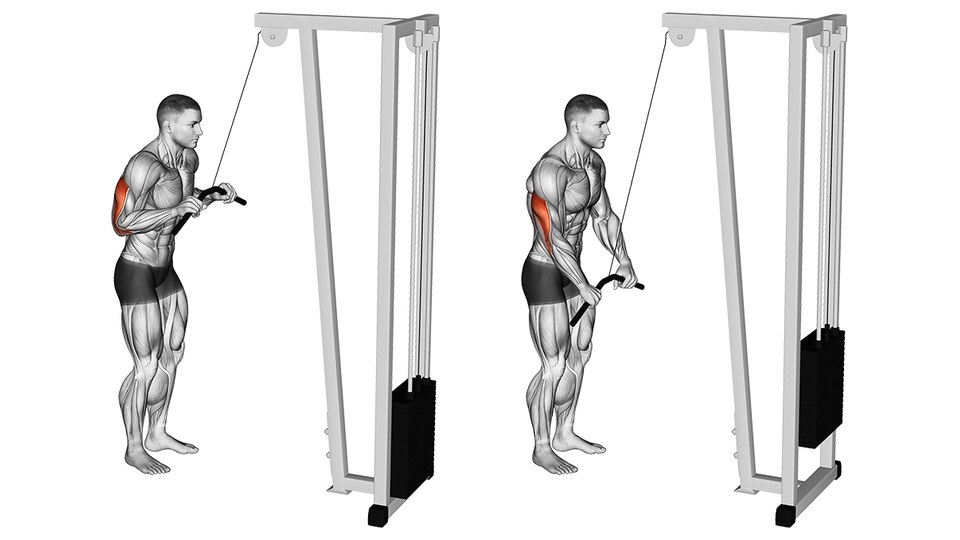
The overhead extension and pushdown put your upper arms in different positions. Choose light enough loads to keep the elbows' movement controlled without turning either exercise into a whole-body effort.
The linked overhead extension guide shows a standing EZ-bar version. Establish a manageable way to get the bar into and out of position, and avoid using a large backward lean to finish reps. The pushdown guide covers the high-cable setup with the upper arms by your sides.
There is evidence for considering an overhead position: Maeo and colleagues found greater triceps growth from overhead than neutral-arm cable extensions in their 12-week study. Both conditions produced growth. They tested cable exercises, so that result doesn't prove this EZ-bar version or this entire workout is superior.
If your triceps are already struggling after the presses, use one direct exercise. Finishing every item in the table matters less than doing work you can perform and recover from consistently.
Rest long enough to repeat useful work
Use the listed rest periods as starting points. Longer rests for presses give you time to repeat a demanding movement; the smaller exercises may need less time.
The IUSCA position stand on hypertrophy training recommends at least two minutes between multi-joint sets, with shorter rests possible for single-joint work. That informs the session's rest structure, but it doesn't validate these exact exercises and set counts as a package.
If your breathing or general fatigue prevents you from performing the next set properly, take more time. A shorter workout isn't automatically a better workout if rushing changes every set.
Progress reps before forcing the next weight jump
Keep the same rep range and setup for several sessions so you have something to compare. For the bench press, an example starting performance might be 8, 8, and 7 controlled reps with the same total barbell weight.
Work toward three sets of ten at a comparable effort and range of motion. Then add a small amount of weight and allow the reps to fall toward the lower end of the range. If the increase is too large to manage six controlled reps, keep the previous weight and build further before trying again.
Use the same principle for the accessory exercises within their listed ranges. You don't have to increase the load every workout. Holding the setup steady and adding a rep can be useful progress too.
Fit the session into the rest of your week
This is a chest-and-triceps session, not a complete training program. Your week still needs to account for the other muscle groups and movements you want to train. If you need a complete weekly schedule, compare the workout plans, including the four-day upper/lower plan.
Start with one occurrence and check what other upper-body days already contain. Repeating the full session twice would give you 14 chest-focused sets and eight direct triceps sets, plus the triceps work from ten pressing sets. Those totals may or may not fit your current training; doubling the table isn't a default instruction.
Save the session as a routine in RepCount
RepCount's free version has unlimited saved routines. Enter the session once, then reuse it when it fits your weekly plan.
- Open Routines and create Chest and triceps.
- Add the exercises you chose in workout order. If a name isn't in your library, create a custom exercise.
- Set the working-set counts and write the rep ranges in each exercise's notes.
- Start the routine when you train and record the weight and reps you complete.
Record which press or machine you used so the next session has a useful reference. Enter the workout manually using this guide; the download links open the app stores and don't import it.
Download RepCount for iPhone · Download RepCount for Android
Frequently asked questions
Can I train chest and triceps together?
Yes. Chest presses already involve the triceps, so training them in the same session is a practical arrangement. Account for that overlap when deciding how much direct triceps work to add.
Should I train chest or triceps first?
This example starts with the barbell bench press because pressing is the session's priority. If triceps are your main priority, you can change the order, but expect that tiring them first may affect your subsequent pressing performance.
How often should I do this workout?
Fit it into your existing weekly training rather than automatically repeating the full session. Begin with one occurrence and review your other pressing and triceps work before adding another. The example is a session, not a complete weekly program.
What if I only have dumbbells?
Keep a dumbbell press as the main movement and use a dumbbell triceps extension if you have learned a controlled setup. An incline bench is optional. You don't need to reproduce every cable or machine exercise to have a useful session.