Machine chest fly
Also called pec deck, machine fly, pec fly, butterfly.
What is a machine chest fly?
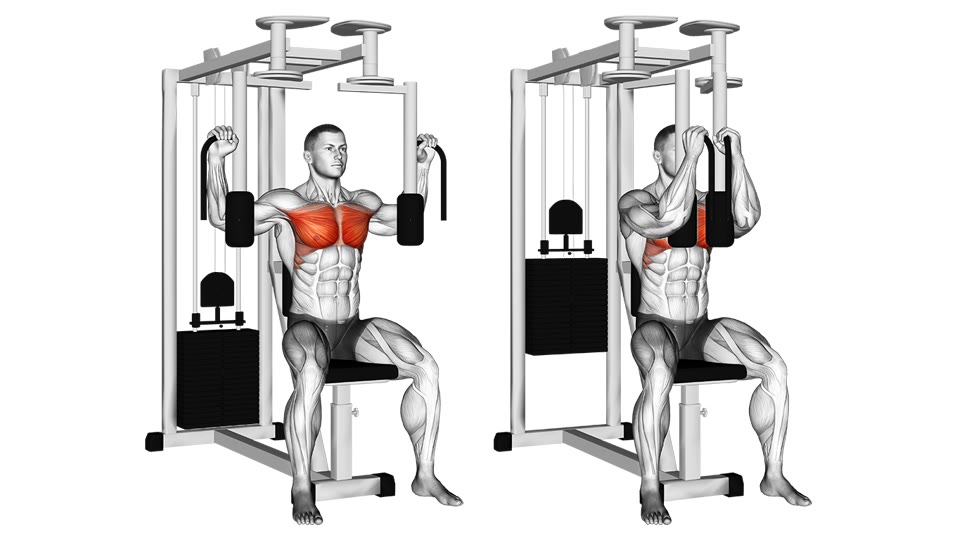
The machine chest fly, or pec deck, is a seated exercise that brings the upper arms together against resistance. It mainly trains the pectoralis major, with the front deltoids assisting.
How do you perform a machine chest fly?
Set up
- Adjust the seat so the arm pads sit around chest height, then place your back against the pad and feet flat.
- Rest your forearms on the pads with your elbows bent and open the arms only as far as your shoulders comfortably allow.
Execution
- Bring the pads together by moving your upper arms forward in an arc.
- Pause when the pads meet or nearly meet without letting your shoulders roll forward.
- Open the arms under control until you return to a comfortable chest stretch.
Common mistakes
Setting the seat too low or high
A poor seat height puts the pads above or below the intended chest-height arm path.
Letting the shoulders roll forward
The torso leaving the back pad shortens the fly and turns the finish into a reach.
Dropping the stack on the return
The opening phase should remain controlled instead of letting the machine pull the arms apart.
Where it fits in a session
Usually after heavier chest presses or as the main fly variation in a chest session.
Choose a load that lets the torso stay against the pad and the return remain smooth.
Muscles worked
Primary
Secondary
Schematic surface view. Some muscles are partly visible or not shown.
The pectoralis major brings the upper arms together, with the front deltoids assisting.
Variations
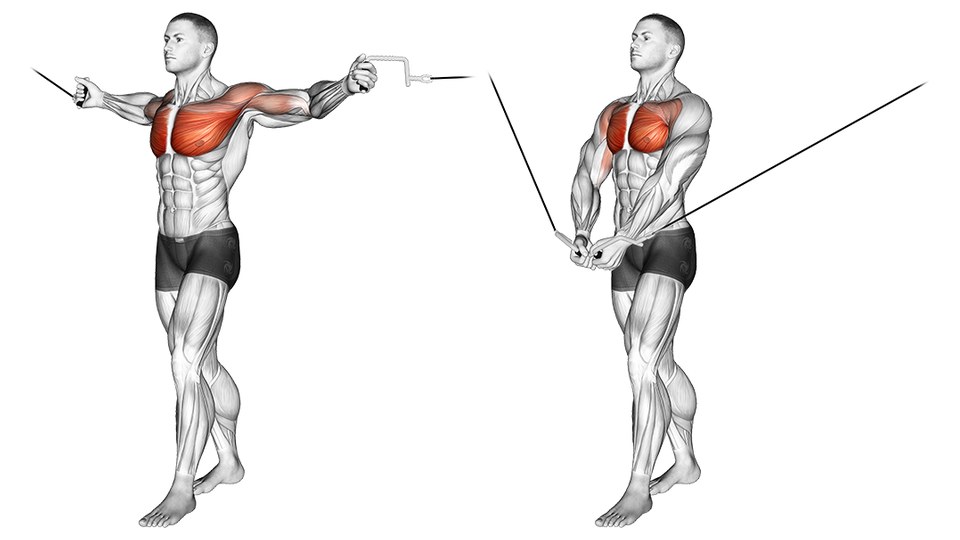
- Handle machine fly — Uses straight or slightly bent arms on handles instead of forearm pads.

Frequently asked questions
What muscles does the machine chest fly work?
It mainly trains the pectoralis major, with the front deltoids assisting the arm movement.
Is a machine chest fly the same as a pec deck?
Pec deck commonly means the forearm-pad machine shown here. Some machines use handles instead, but both guide the arms through a chest-fly path.
How far back should the arms go?
Open until you feel a comfortable chest stretch while your back and shoulders remain settled against the pad. Do not force the deepest machine setting.
Should the elbows stay bent?
Yes on the forearm-pad pec deck. Keep the elbows supported and move the upper arms rather than changing the bend to press the pads.