Hack squat alternatives for gym and home
A leg press is a useful hack squat alternative when you want a guided leg exercise with back support. A Smith machine squat keeps a guided bar, while barbell squats, goblet squats and dumbbell split squats offer free-weight options. Choose according to the equipment and support that made the hack squat useful in the first place.
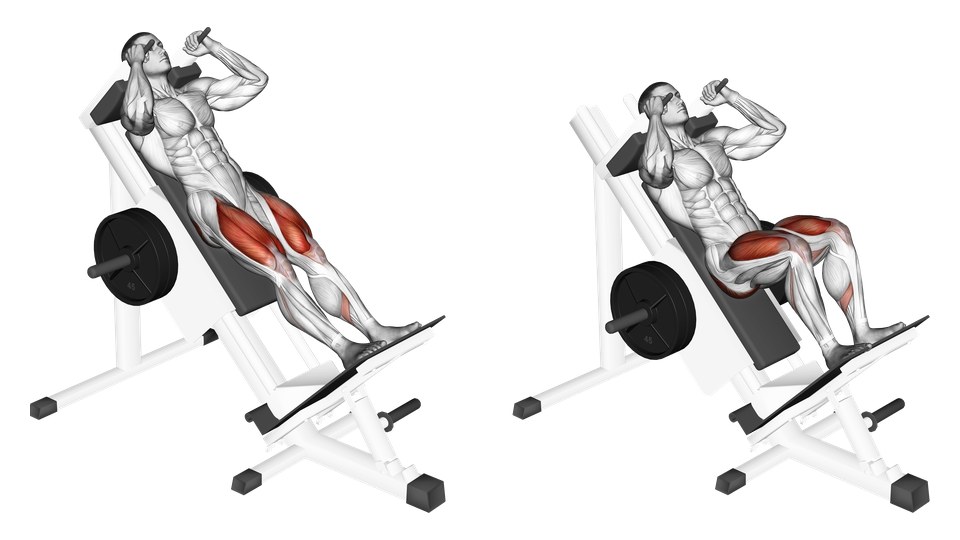
A sled hack squat places you beneath shoulder pads with the back against a moving carriage. The hips and knees bend as the sled travels on rails. A leg press also follows a machine path, but you press the carriage away while sitting rather than moving under its shoulder pads.
That is a close practical replacement, not an identical loading arrangement. If the goal is a main leg exercise, several options may fit. If the hack squat supplied supported leg work after barbell squats, another unsupported squat changes the session more substantially.
Choose hack squat alternatives by the support you want
| Your goal | Alternative | Equipment | Main tradeoff |
|---|---|---|---|
| Keep back support | Leg press | Leg press station | You press from a seat instead of moving under shoulder pads |
| Keep a guided bar path | Smith machine squat | Smith station | No back pad carrying your torso |
| Use a barbell and rack | Barbell squat | Barbell and rack | You support and balance the load |
| Use one dumbbell at home | Goblet squat | Dumbbell | Grip and available weight may limit the set |
| Use limited weights one side at a time | Dumbbell split squat | Dumbbells and floor | More balance and per-side setup |
Your starting point
Hack squatChoose hack squat alternatives by support and equipment, from leg presses and Smith squats to free-weight squats and split squats at home.
Choose by your goal and equipment
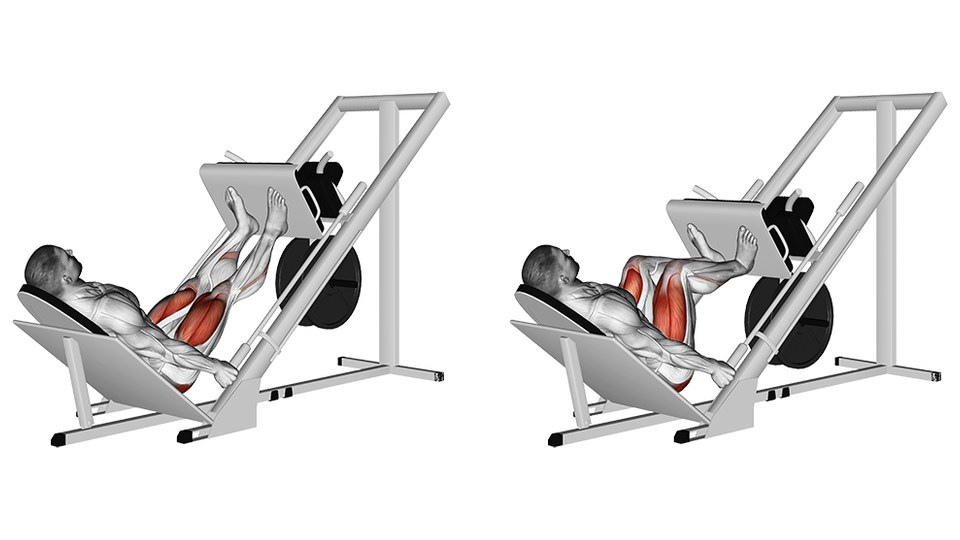
Keep back support
Leg press
You press from a seat instead of moving under shoulder pads
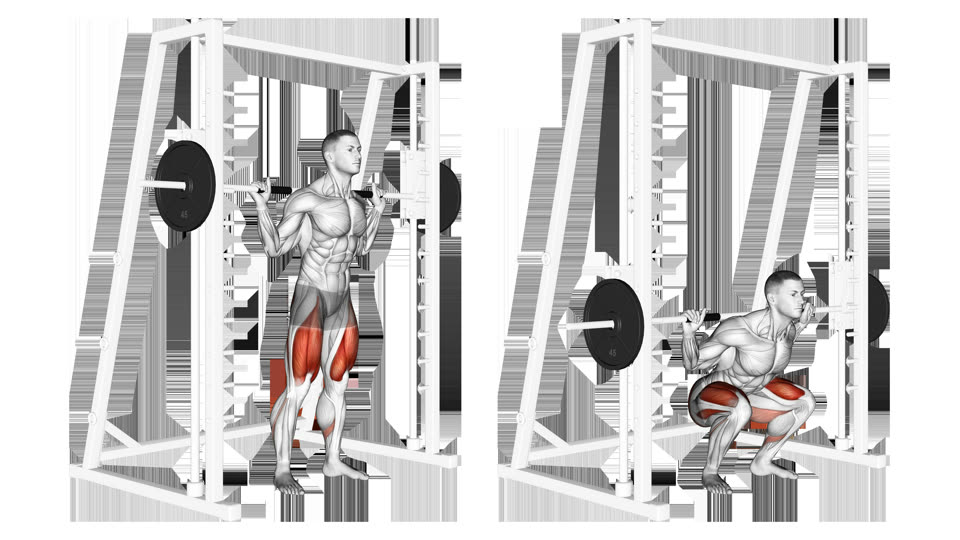
Keep a guided bar path
Smith machine squat
No back pad carrying your torso
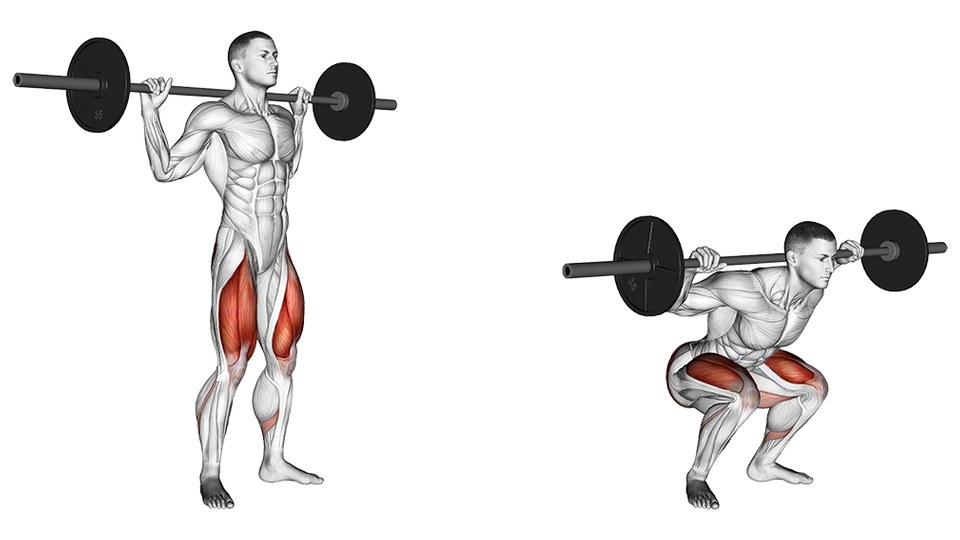
Use a barbell and rack
Barbell back squat
You support and balance the load
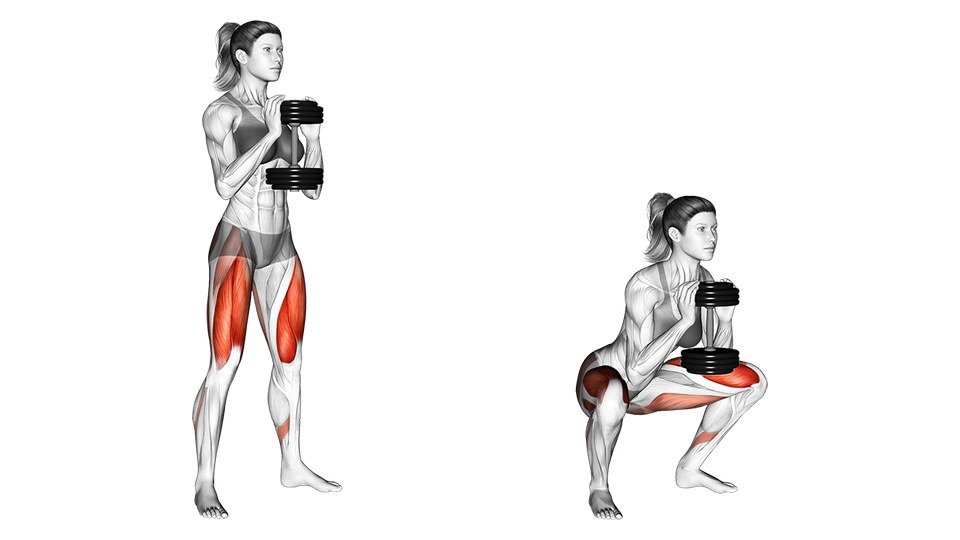
Use one dumbbell at home
Goblet squat
Grip and available weight may limit the set
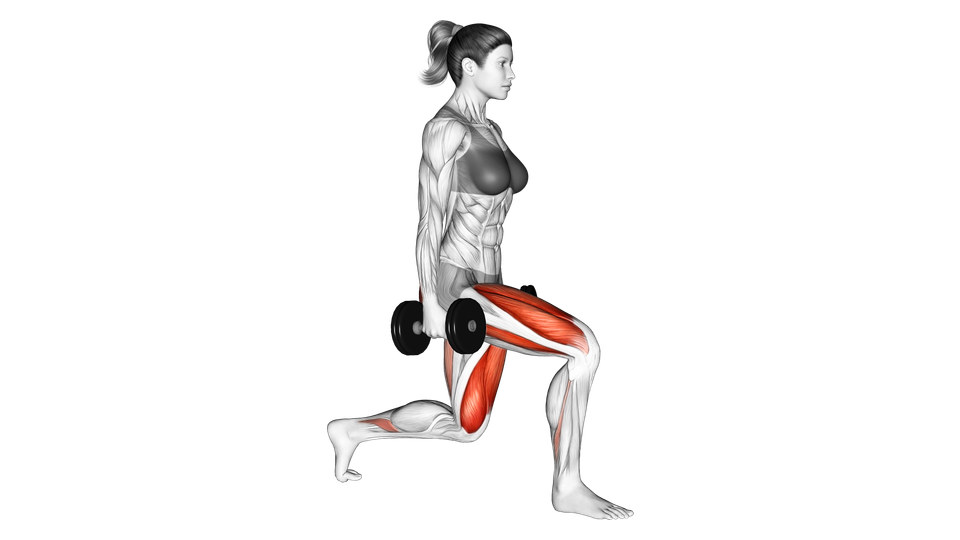
Use limited weights one side at a time
Dumbbell split squat
More balance and per-side setup
A leg press keeps back support with a different machine task
A leg press supports the back while the legs push a sled or footplate. Adjust the seat and inspect the release and safety catches before selecting a working load. Keep the feet planted and the pelvis against the pad through a range you can control.
Do not lower farther just because the machine allows more travel. End the descent where you can retain the supported position rather than letting the pelvis lift. Different leg press designs also have different paths and seat angles.
The hack squat plate total is not a leg press prescription. Sled mass, rail angle and machine geometry differ. Use warm-up sets to find a load on the actual station, then record that station separately.
A Smith machine squat keeps guidance but removes the back pad
A Smith machine squat uses a bar moving on fixed rails. You support it across the upper back and keep your own torso position, so it does not retain the hack squat's back pad and shoulder-pad arrangement.
Set the safety stops before starting. Establish a stance that fits the machine's rails and lets you keep your feet planted through the intended range. Vertical and angled rails can require different arrangements.
Test the empty bar before adding plates. Learn how both hooks engage and confirm the bar is secure before releasing it after the set. A guided bar still needs a deliberate setup, especially when the machine differs from one you have used previously.
Barbell squats replace the machine with a balanced free load
A barbell squat can fill a main leg-training slot when you have a rack and know the movement. It requires you to support the bar and control its path rather than following a padded sled. Set the rack and safeties before starting.
That change can be useful, but context matters. If the hack squat was planned after demanding barbell squats, replacing it with more barbell squats adds work to the same unsupported movement. A leg press might retain more of the original support choice.
Find a new starting load and use a range you can repeat with planted feet and a controlled torso. There is no reliable conversion from hack squat plates to the barbell. The fact that both train the legs does not make their displayed numbers equivalent.
Goblet squats are a simple home option with a loading limit
A goblet squat uses one weight held close to the chest. It removes the machine setup and can be a straightforward option when training at home. Choose a comfortable stance and a depth you can maintain with the feet planted.
The available dumbbell and your ability to hold it may limit the exercise. If the arms fatigue long before the legs, repeatedly adding easy reps might not address the original goal. That is a reason to consider another loading arrangement, not to reach for unstable furniture or awkward improvised weights.
Record the actual dumbbell load and keep the same counting method. Treat the goblet squat as its own progression rather than expecting it to reproduce a heavy machine set immediately.
Split squats can make more use of limited dumbbells
A dumbbell split squat trains one side at a time with both feet on the floor. Establish the stance before lifting weights, keep the front foot planted and lower with control. You do not need a rear-foot bench for this version.
The unilateral setup can be useful when your available dumbbells are light for bilateral squats. It also changes the balance and the way you count the work. Start with a stable, manageable version rather than assuming the machine's rep target must transfer immediately.
Count sets and reps for each leg. Two sets per side means two for the left and two for the right. Note the stance and weights so future sessions compare the same exercise instead of a different amount of help from the rear leg.
Leg extensions fill a narrower knee-extension slot
A leg extension provides direct knee-extension work on a seated machine. It can be useful if the hack squat was intended as extra quad work, but it does not replace the hip-extension component of a squat or leg press.
Look at the rest of the workout before choosing that narrower replacement. If the session already contains a suitable squat or press and only needs additional knee work, a leg extension may fit. If the hack squat was the main multi-joint leg movement, changing to extensions removes more of the original task.
These are programming decisions rather than claims that one muscle map proves a winner. Guide targets and illustration shading describe anatomical regions, not measured activation or predicted muscle growth.
Compare the muscle maps without treating them as scores
The muscle maps show the anatomical targets listed in the linked guides. Primary and secondary labels describe those guide roles, not measured muscle activation or predicted growth. A highlighted region does not establish that one alternative is better than another.
Use the maps to locate muscles, then choose the exercise by its movement, support and available equipment. These are practical comparisons, not a trial ranking every replacement.
Explore the muscle maps
Hack squat
Primary
Secondary
Schematic surface view. Some muscles are partly visible or not shown.
| Exercise | Primary | Secondary |
|---|---|---|
| Hack squat | quadriceps | gluteus maximus, adductor magnus |
| Leg press | vastus lateralis, vastus medialis, vastus intermedius, gluteus maximus, adductor magnus | rectus femoris, hamstrings, soleus |
| Smith machine squat | quadriceps, gluteus maximus, adductor group | hamstrings |
| Barbell back squat | quadriceps — vastus lateralis, vastus intermedius, vastus medialis, gluteus maximus, adductor group | hamstrings, rectus femoris |
| Goblet squat | quadriceps | gluteus maximus, adductor magnus, soleus |
| Dumbbell split squat | quadriceps, gluteus maximus | adductors, hamstrings |
Keep the first sessions comparable and record the change
Choose one alternative that solves the equipment or support problem. Warm up on that movement, keep the first working sets manageable and leave some controlled reps available. Do not add several alternatives just to compensate for one unavailable machine.
Record equipment settings with the load and reps. Seat position matters for a leg press, rack and foot position matter for a Smith squat, and stance matters for a split squat. Keep those details stable before treating an increase in weight as comparable progress.
RepCount lets you log sets, reps and weight and review previous sessions. Save the replacement separately and note the machine or setup. RepCount is also available for Android.
Frequently asked questions
What is the closest alternative to a sled hack squat?
A leg press is a close practical option when you want guided leg work and back support. It uses a seated pressing setup instead of moving beneath shoulder pads, so its loading and range need their own starting record.
Can Smith machine squats replace hack squats?
Smith machine squats can fill a guided squat slot, but they do not supply the hack squat sled back pad. You support the bar and maintain the torso position yourself, so learn the stance and safety setup separately.
What can replace a hack squat at home?
Goblet squats and dumbbell split squats are options when suitable weights are available. The goblet squat uses both legs together, while the split squat trains one side at a time and requires clear per-side counting.
Can leg extensions replace hack squats?
Leg extensions can replace some direct quad work, but they remove the hip-extension part of the hack squat. Choose them when the workout needs a knee-extension accessory rather than assuming they replace the main multi-joint leg exercise.