Leg press alternatives for gym and home
A hack squat is a useful leg press alternative when you want guided movement and back support. A Smith machine squat keeps the guided bar path, while barbell squats, goblet squats, split squats, and step-ups offer free-weight options. At home, a goblet squat is a straightforward starting choice if your available dumbbell is heavy enough for your legs.
The replacement doesn't need to look identical. It needs to do the job you put the leg press in the workout to do. That might be your main leg exercise, extra quad work after squats, or an exercise you can load without balancing a barbell.
Choose a leg press alternative by what you need
Start with the equipment you have and the support you want to keep. These are practical selections, not a ranking from a trial comparing every exercise.
Your starting point
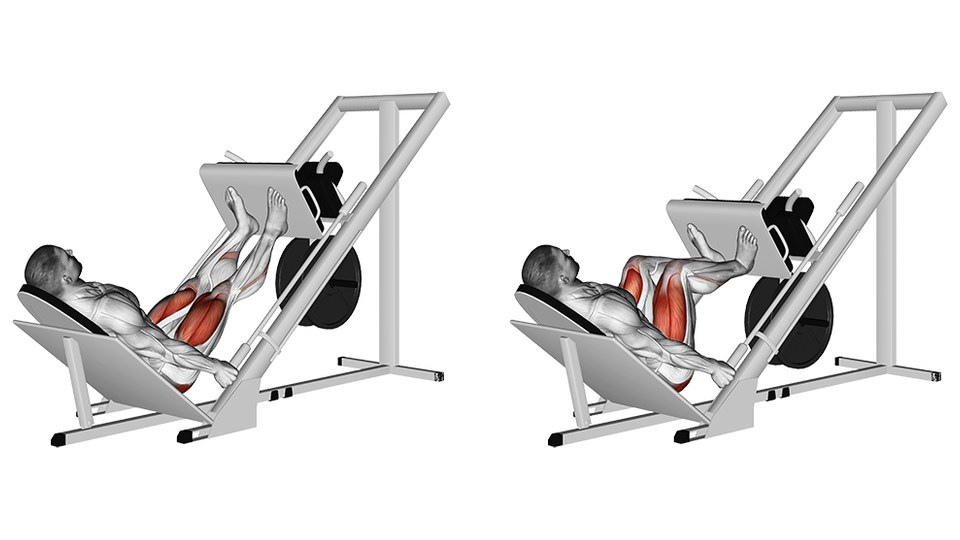
Leg pressThe leg press supports your back while you press through your legs. Decide which parts of that setup you want to keep.
Keep a guided movement
Use free weights
If the leg press was there because you prefer supported exercise, a free-weight squat changes that setup. Back support is one factor to consider, alongside the equipment available and how familiar you are with the replacement.
A hack squat keeps the back support
Back support
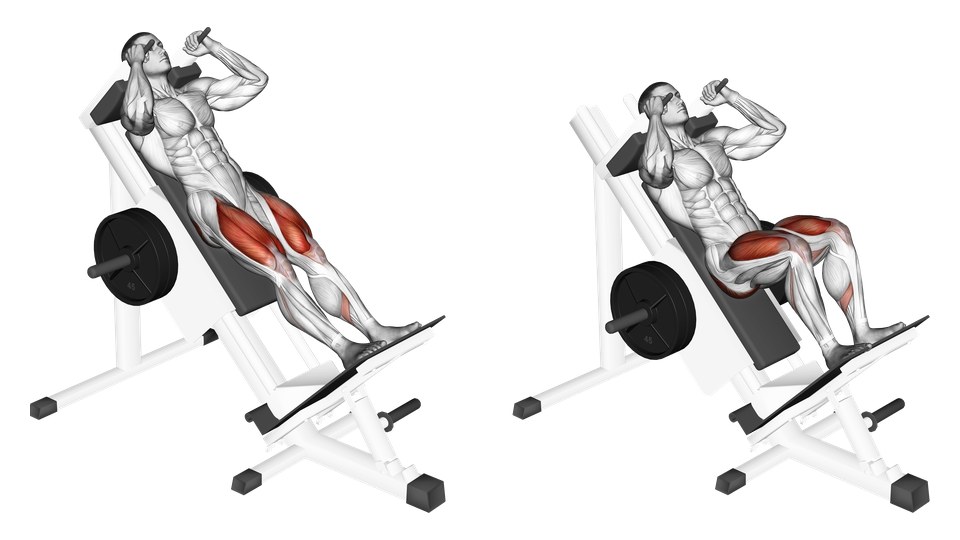
View exercise guideA sled hack squat also provides back support, but you move under shoulder pads rather than pressing from a seat. The sled follows rails, and your knees and hips bend together. Treat its setup and safety catches as something to learn separately.
Check the machine's release mechanism and safety stops before loading it. Choose a stance that lets your whole foot stay planted, then lower only as far as you can while maintaining contact with the back pad.
Use the hack squat guide for the setup and demonstration. You don't need to find a special foot position that supposedly isolates one part of your thighs. First find a position you can reproduce without your heels or pelvis lifting.
A Smith machine squat keeps the guided bar
Guided bar
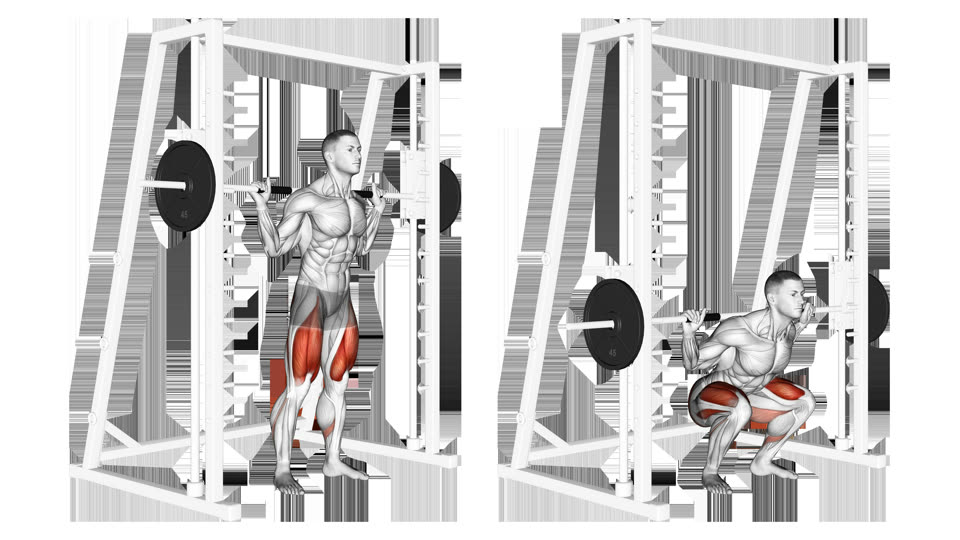
View exercise guideA Smith machine squat is an option when you want a fixed bar path but don't have another leg machine. It still asks you to support the bar across your upper back and maintain your torso position.
Set the safety stops before starting. Adjust your feet to the machine in front of you: rails can be vertical or angled, so copying a stance from a different Smith machine isn't a reliable setup method.
Treat the Smith squat as its own exercise in your log. If you switch machines, note that too. The same plates on a different machine don't necessarily represent the same resistance.
Barbell and goblet squats use free weights
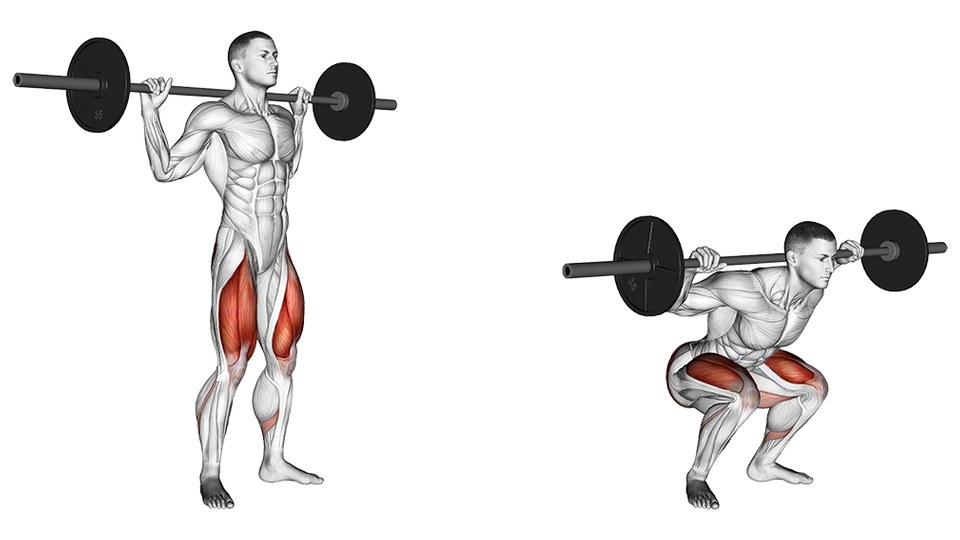
Barbell and rack
Barbell back squat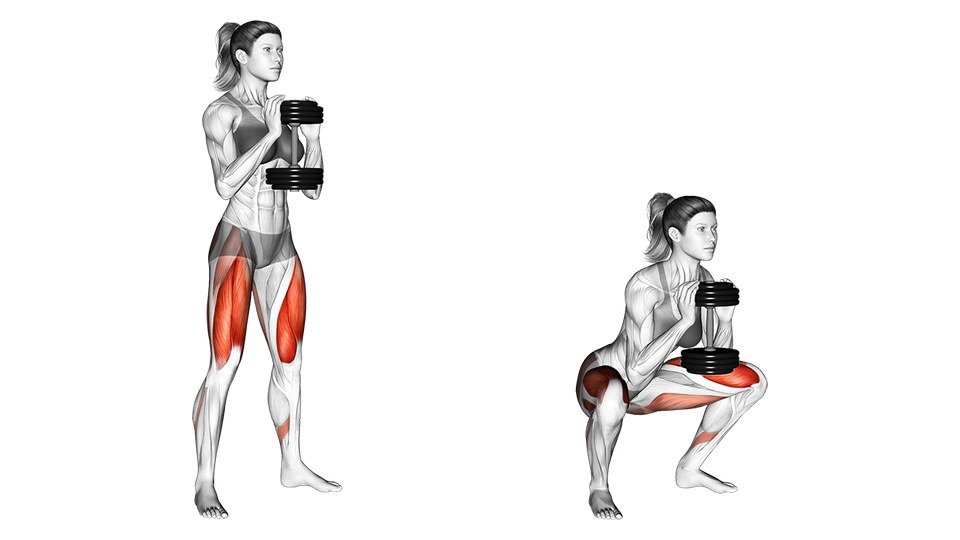
One dumbbell
Goblet squatA barbell squat can replace the leg press as a main leg exercise when you have the equipment and know the movement. But adding squats after an already demanding squat session is a different decision from choosing them as your first exercise.
If the leg press was intended as supported leg work after squats, a barbell squat changes both the support and the balance demands. A hack squat has a back pad, but also has a different machine setup to learn. Those are tradeoffs to weigh when choosing a replacement.
Without a rack, the goblet squat is a simpler setup. Hold the dumbbell close to your chest and keep your feet planted through the range you can control. If your arms give out while your legs still have plenty left, adding more goblet squats may not solve the problem. Consider a split squat instead.
Dumbbell split squats help when available weight is limited
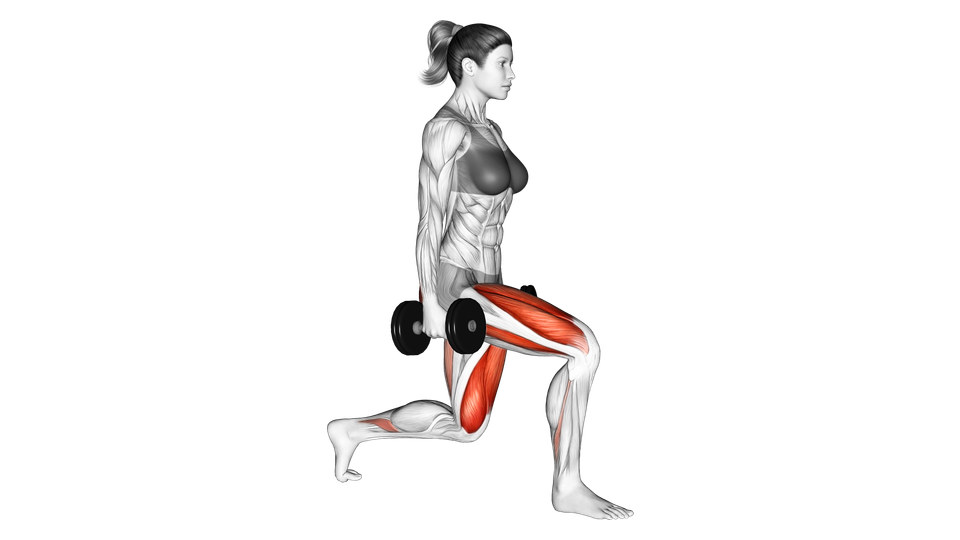
Both feet on the floor
Dumbbell split squat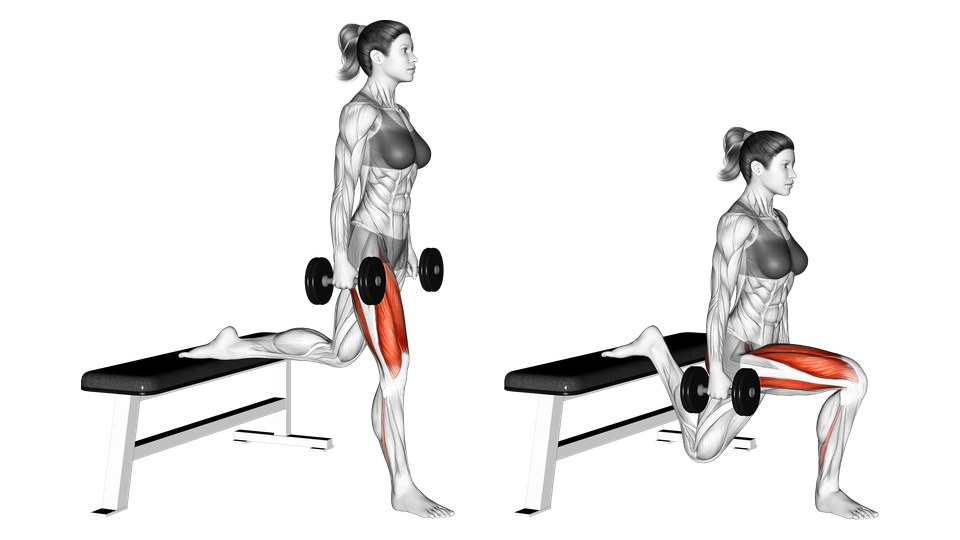
Rear foot elevated
Bulgarian split squatA split squat lets you train one side at a time with dumbbells at your sides. Start with both feet on the floor if elevating the rear foot makes setup or balance awkward.
The Bulgarian version adds a rear-foot support. That doesn't make it compulsory or automatically better. Pick a support that stays put, establish your stance before adding weight, and keep the front foot planted as you lower. The Bulgarian split squat guide shows the movement.
Count and record reps for each side. An example prescription of two sets per side means two sets for the left leg and two for the right, not four for each. Use the same stance and loading arrangement next time so the comparison means something.
Step-ups need a repeatable platform and a controlled return
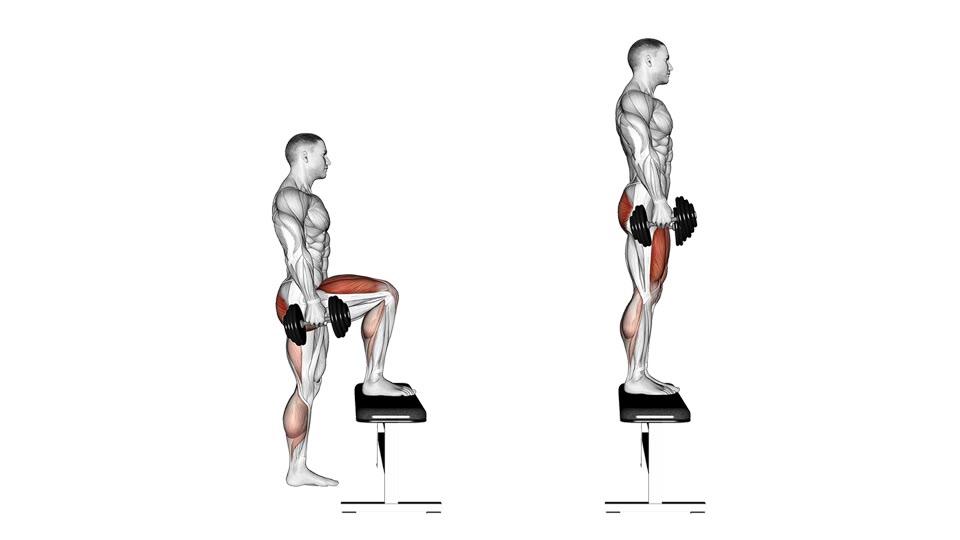
Stable platform
View exercise guideStep-ups are another option with dumbbells, but the platform is part of the exercise. Changing its height changes what you're comparing.
Use a stable platform with room for your whole lead foot. Choose a height you can reach without twisting your pelvis or lifting the lead heel. Stand through the leg on the platform rather than jumping from the floor, then control the step down.
If you need a big push from the trailing leg to finish, reduce the load or height. There's no benefit to recording a heavier step-up when the way you reach the top changes with every rep.
Compare the muscles worked by leg press alternatives
The leg press and these alternatives all involve knee extension to train the quadriceps, with the glutes also involved. That makes back support, balance, and available equipment more useful deciding factors than looking for a completely different muscle map.
Open the muscle maps below to explore the same targets shown in each exercise guide. Primary and secondary labels describe the roles listed in the guides; they don't measure activation, predict muscle growth, or rank the exercises.
The guides also vary in detail: a broad "quadriceps" label and a list of individual thigh muscles aren't directly comparable scores. Use the map to locate muscles, then choose the movement by its setup and the role it fills in your workout.
Explore the muscle maps
Leg press
Primary
Secondary
Schematic surface view. Some muscles are partly visible or not shown.
| Exercise | Primary | Secondary |
|---|---|---|
| Leg press | vastus lateralis, vastus medialis, vastus intermedius, gluteus maximus, adductor magnus | rectus femoris, hamstrings, soleus |
| Hack squat | quadriceps | gluteus maximus, adductor magnus |
| Smith machine squat | quadriceps, gluteus maximus, adductor group | hamstrings |
| Barbell back squat | quadriceps — vastus lateralis, vastus intermedius, vastus medialis, gluteus maximus, adductor group | hamstrings, rectus femoris |
| Goblet squat | quadriceps | gluteus maximus, adductor magnus, soleus |
| Dumbbell split squat | quadriceps, gluteus maximus | adductors, hamstrings |
| Bulgarian split squat | quadriceps | gluteus maximus, adductor magnus |
| Step ups | quadriceps, gluteus maximus | adductors, hamstrings |
What research says about leg press alternatives
There is research supporting free-weight options, but it doesn't establish a universal winner. Amanuma and colleagues (2025) compared lunges with inclined leg presses in eight previously untrained women over nine weeks. The measured thigh-muscle changes didn't differ significantly between conditions.
That's a small, specific study. It supports the idea that a free-weight exercise can be useful; it doesn't prove every squat, lunge, and machine is interchangeable for every lifter.
For a general leg-training session, choose an option you can perform consistently and progress. For improving your leg press specifically, you still need to practise the leg press.
Start a new progression instead of converting the weight
Find a working weight for the replacement from its own warm-up sets. A leg press number doesn't tell you what to put on a squat bar or which dumbbells to pick up.
For example, you might replace your planned leg press work with two controlled sets of split squats per side while learning the movement. Choose a load that leaves a few good reps available, record what happened, and use that as the starting point next time. This is an example of introducing a replacement, not a claim that two sets is the ideal dose.
Keep the exercise stable long enough to compare sessions. If you change the movement, range, and loading every workout, the log can't tell you whether you're improving at any one of them. The progressive overload guide explains how to build on those records.
RepCount lets you log sets, reps, and weight and look back at previous sessions. Record the replacement under its own exercise, with a note about the machine or setup. It's also available on Android.
Frequently asked questions
What is the closest alternative to a leg press?
A sled hack squat is a close practical alternative when you want a guided leg exercise with back support. It still has a different setup and loading arrangement, so start with a new working weight rather than copying your leg press load.
What can replace the leg press at home?
A goblet squat, dumbbell split squat, or Bulgarian split squat can fill a general leg-training slot at home. Choose according to the weights and stable supports available. None reproduces the leg press machine exactly.
Can I convert my leg press weight to a squat weight?
There isn't a dependable conversion. The machine's geometry, sled and friction differ from a squat, and a squat also moves your body. Find a manageable starting load for the replacement and track it separately.
Is a leg extension a replacement for the leg press?
A leg extension can replace some quad-focused work, but it doesn't replace the hip-extension part of a leg press. Decide whether your program needs direct knee-extension work or a movement involving both the knees and hips.