Step ups
Also called step up, step-ups, dumbbell step up.
What are step ups?
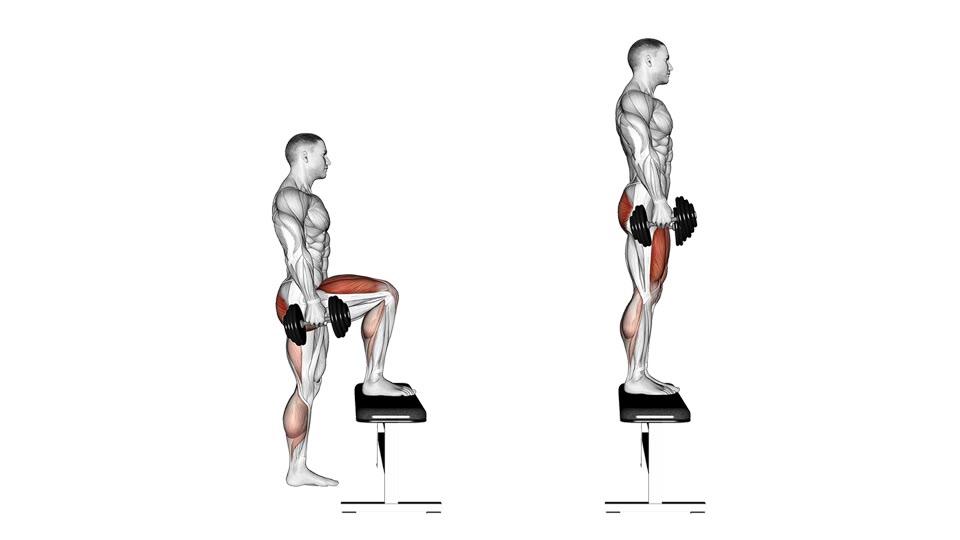
Step ups are a unilateral leg exercise performed by stepping onto a stable platform and standing tall through the lead leg. The dumbbell version mainly trains the quadriceps and gluteus maximus, with the adductors and hamstrings assisting.
How do you perform step ups?
Set up
- Stand close to a stable step or bench with a dumbbell in each hand.
- Place your whole lead foot on the platform so the heel is supported.
Execution
- Drive through the foot on the platform and straighten that leg to lift your body.
- Bring the trailing foot onto the platform without jumping from the floor.
- Step down under control with the trailing foot first, then repeat or change sides.
Common mistakes
Pushing off hard with the trailing leg
A jump from the floor shifts work away from the leg on the platform.
Using a platform that is too high
If the pelvis twists or the lead heel lifts just to reach the top, the height exceeds the range you can control.
Dropping quickly to the floor
The working leg should control the descent instead of letting gravity take over.
Where it fits in a session
Usually used as a unilateral leg movement after a heavier squat pattern or as a main lower-body exercise with limited equipment.
Choose a platform height that allows the full lead foot to stay planted and the descent to remain controlled.
Muscles worked
Primary
Secondary
Schematic surface view. Some muscles are partly visible or not shown.
The leg on the step extends the knee and hip to raise the body, while the other leg follows for balance.
Variations
- Bodyweight step up — Removes the dumbbells while keeping the same platform and step pattern.
- Alternating step up — Changes the lead leg every repetition.
- Lateral step up — Approaches the platform from the side.
Frequently asked questions
What muscles do step ups work?
They mainly train the quadriceps and gluteus maximus of the lead leg. The adductors and hamstrings assist.
How high should the step be?
Use a height you can reach with the whole foot while keeping the pelvis level and the lead heel down. A lower step is better than losing control.
Should both feet finish on the platform?
They can. The version shown brings the trailing foot up before stepping down; other variations keep it off the platform between repetitions.
Which leg should do the work?
Drive mainly through the foot on the platform. The floor leg should assist as little as needed to leave the ground smoothly.