Deadlift alternatives for gym and home
A trap-bar deadlift is a practical deadlift alternative if you still want to lift from the floor. Romanian deadlifts keep a standing hip hinge, while back extensions, hip thrusts and cable pull-throughs can fill more specific glute or hamstring slots. These options do different jobs, so choose the replacement before choosing its weight.
A conventional deadlift combines a floor start with movement at the hips and knees. Its role might be practising that lift, building general pulling strength, or providing glute and hamstring work in a broader plan. If you only need the last of those, preserving every detail of the conventional deadlift may be unnecessary.
Start with the reason for the change. An occupied platform is a different problem from limited home equipment, and both differ from a program already containing plenty of demanding barbell work. There is no single substitute that solves all three.
Choose deadlift alternatives by their purpose
| Your goal | Alternative | Equipment | Main tradeoff |
|---|---|---|---|
| Lift a weight from the floor | Trap-bar deadlift | Trap bar and plates | Different handles and starting position |
| Keep a standing hip hinge | Romanian deadlift | Barbell or dumbbells | Starts from standing rather than a dead stop |
| Use a supported hinge station | Back extension | 45-degree bench | The body moves around a fixed hip pad |
| Train hip extension without a floor pull | Hip thrust | Bench, padded barbell | Back-supported setup and bent knees |
| Use a cable station | Cable pull-through | Low cable and rope | Cable resistance replaces a free bar |
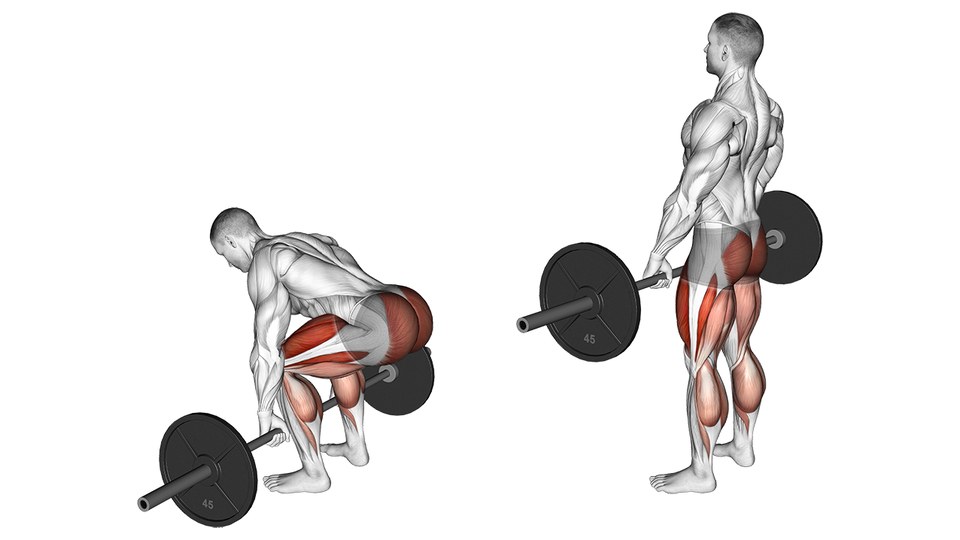
Your starting point
Conventional deadliftChoose a deadlift alternative by the job it needs to do: lifting from the floor, training a hip hinge, or adding glute and hamstring work.
Choose by your goal and equipment
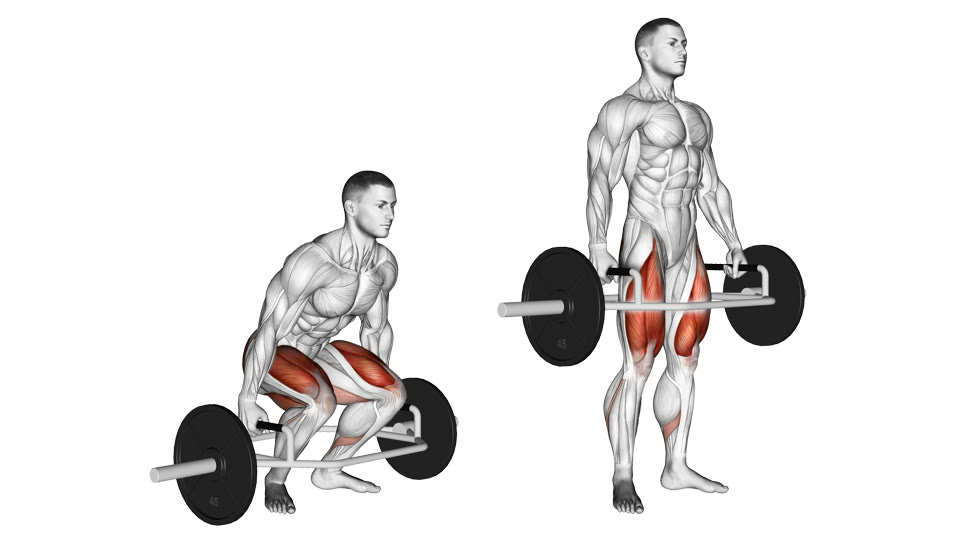
Lift a weight from the floor
Trap bar deadlift
Different handles and starting position
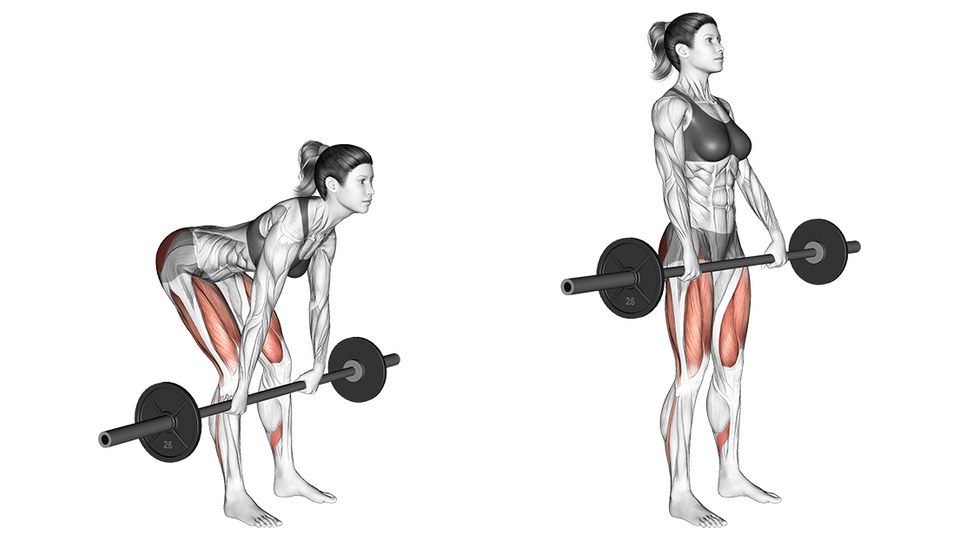
Keep a standing hip hinge
Romanian deadlift
Starts from standing rather than a dead stop
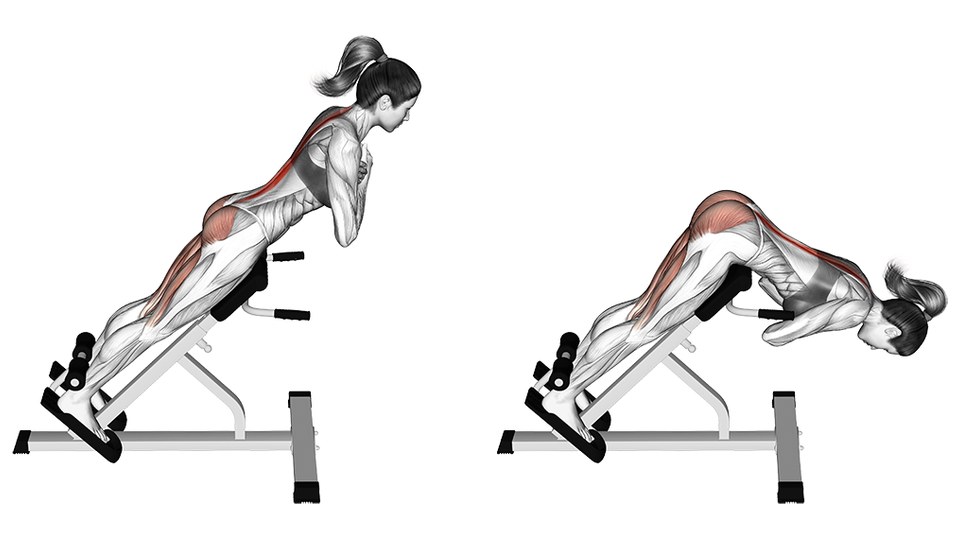
Use a supported hinge station
Back extension
The body moves around a fixed hip pad

Train hip extension without a floor pull
Barbell hip thrust
Back-supported setup and bent knees
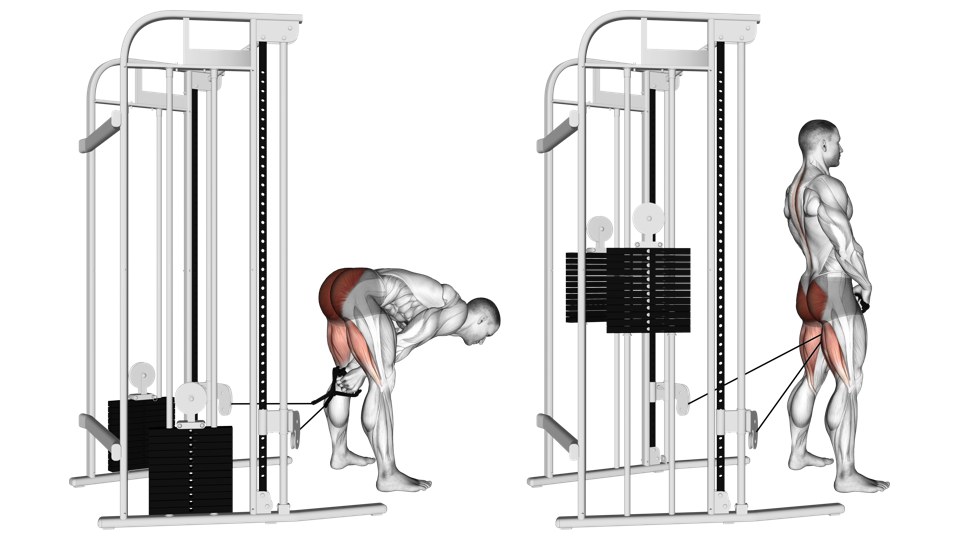
Use a cable station
Cable pull-through
Cable resistance replaces a free bar
A trap-bar deadlift keeps the floor start
The trap-bar deadlift retains a loaded floor pull, with your hands on handles beside the body. Stand inside the bar, establish a stable position and lift without letting the bar tip. The geometry changes, so your conventional deadlift number is not a starting prescription.
Some bars have handles at two heights. High handles shorten the distance from the floor; record which handles you use rather than treating both settings as the same exercise. Check plate clearance and the available space before a set.
This is still a free-weight lift requiring you to support the load. Calling it a trap-bar alternative does not make it a guaranteed solution for back discomfort. If pain is the reason for replacing deadlifts, an exercise list cannot determine the cause or prescribe a pain-free load.
Romanian deadlifts preserve the hinge rather than the floor pull
A Romanian deadlift starts upright. Push your hips back with a small knee bend, keep the weight close and stop the descent where you can maintain the same controlled position. The plates do not need to touch the floor.
That distinction matters when your goal is practising a conventional deadlift. RDLs can provide hinge work, but they do not rehearse breaking a stationary bar from the floor. Conversely, forcing an RDL to the floor because your conventional deadlift begins there changes the intended exercise.
At home, dumbbell Romanian deadlifts offer the same general pattern without a barbell. Available dumbbell weight and grip may eventually limit the load. Do not compensate by reaching farther down or speeding up the return.
Back extensions use a hip pad
A back extension can replace accessory hinge work when a suitable bench is available. Adjust the pad so your hips can move, secure your feet and hinge with control. Finish in a straight body line rather than continuing into an exaggerated backward bend.
The bench supports part of the setup, but your trunk still needs to remain controlled. Its angle and pad height are part of the exercise. A change from one bench to another can make the same held weight feel quite different.
Begin without an added plate if the movement is new. Once you can repeat the same range, add a load you can hold securely. This is a separate progression from your floor deadlift, not a percentage of it.
Hip thrusts and pull-throughs fill more specific slots
A hip thrust provides hip-extension work with the upper back supported and the knees bent. Use a stable bench, secure the padded bar and finish by extending the hips without leaning farther back. It can fill a glute-focused slot, but it removes the floor start and changes the knee position.
A cable pull-through uses a rope from a low pulley behind you. Stand far enough away to keep the cable taut, hinge at the hips and return to standing. Keep the rope path clear and choose a load that does not pull you off balance.
Neither exercise trains gripping and lifting a free bar from the floor in the same way as a deadlift. That can be an acceptable tradeoff when you are replacing accessory work. It is less useful when the main goal is a stronger conventional deadlift.
Match the rest of the workout before adding more exercises
Check what your session already contains. Replacing a deadlift with an RDL after an existing RDL changes the amount of hinge work, while replacing it with a hip thrust changes the exercise emphasis. You do not need to add every alternative to make up for one missing lift.
Keep the first sessions deliberately manageable. Retain a sensible amount of work from the original plan, but find the replacement's load through warm-up sets. If you choose a unilateral exercise, count its work per side rather than doubling both sides accidentally.
A useful practical note is why you changed the movement: equipment, support, or the planned training goal. That makes the next decision easier than a log containing an unexplained collection of different lifts.
Compare the muscle maps without treating them as scores
The muscle maps show the anatomical targets listed in the linked guides. Primary and secondary labels describe those guide roles, not measured muscle activation or predicted growth. A highlighted region does not establish that one alternative is better than another.
Use the maps to locate muscles, then choose the exercise by its movement, support and available equipment. These are practical comparisons, not a trial ranking every replacement.
Explore the muscle maps
Conventional deadlift
Primary
Secondary
Schematic surface view. Some muscles are partly visible or not shown.
| Exercise | Primary | Secondary |
|---|---|---|
| Conventional deadlift | gluteus maximus, hamstrings (biceps femoris, semitendinosus, semimembranosus), adductor magnus (ischiocondylar portion), quadriceps femoris, erector spinae (iliocostalis, longissimus, spinalis), multifidus | latissimus dorsi, trapezius, forearm flexors, the finger flexors above all, abdominal wall (rectus abdominis, external oblique, internal oblique, transversus abdominis) |
| Trap bar deadlift | gluteus maximus, quadriceps | erector spinae, adductor magnus, trapezius, forearm and finger flexors |
| Romanian deadlift | hamstrings (biceps femoris long head, semitendinosus, semimembranosus), gluteus maximus | erector spinae, adductor magnus, forearm flexors (grip) |
| Back extension | erector spinae, gluteus maximus, hamstrings | None listed in this guide |
| Barbell hip thrust | gluteus maximus | hamstrings, quadriceps femoris |
| Cable pull-through | gluteus maximus, hamstrings | None listed in this guide |
Progress the replacement on its own terms
Record the exercise, load and reps with enough setup detail to repeat them. For a trap bar, note handle height; for back extensions, note the bench and added load; for a cable, note the station. Keep range and execution stable before using a heavier number as evidence of progress.
If the aim is improving the conventional deadlift itself, return to practising the conventional deadlift when the reason for the substitution no longer applies. General strength gained elsewhere does not guarantee identical progress in the original movement.
RepCount lets you log sets, reps and weight and review previous sessions. Record the alternative under its own exercise and add a note about the setup. Download RepCount for Android if that is your training phone.
Frequently asked questions
What is the closest alternative to a conventional deadlift?
A trap-bar deadlift keeps a loaded floor start, although its handles and loading geometry differ from a conventional barbell deadlift. Use a new starting load and record the handle height.
Can Romanian deadlifts replace conventional deadlifts?
Romanian deadlifts can replace a general hip-hinge slot, but they start from standing and do not practise pulling a stationary bar from the floor. Choose according to the purpose of the original deadlift.
What can replace deadlifts at home?
Dumbbell Romanian deadlifts can provide standing hinge work at home. Glute bridges provide hip-extension work with a different setup. Neither is an exact copy of a conventional barbell floor pull.
Which deadlift alternative is best for back pain?
No deadlift alternative is guaranteed to be appropriate for back pain. The cause, symptoms and tolerated movement matter. A generic replacement list cannot diagnose the problem or establish a suitable load.