Cable pull-through
Also called cable pull through, rope pull-through.
What is a cable pull-through?
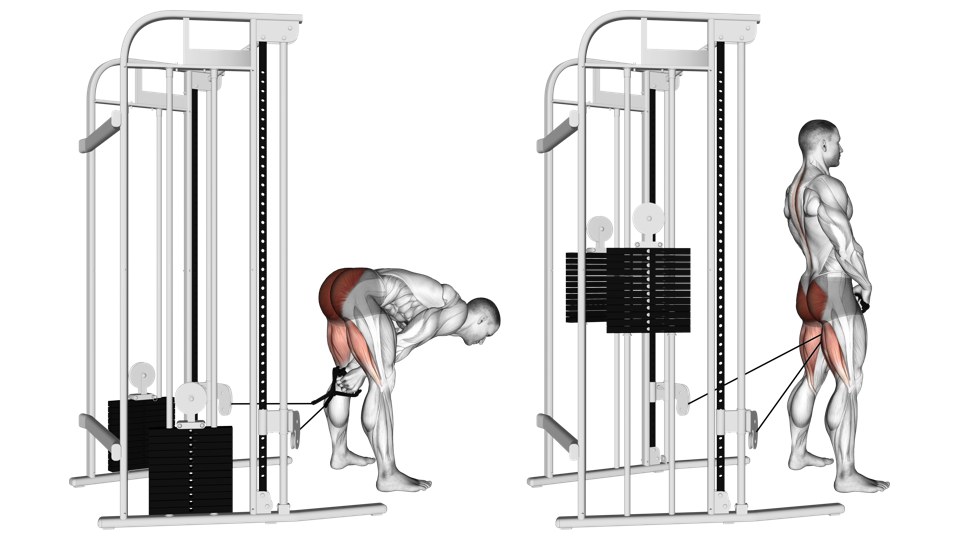
A cable pull-through is a standing hip hinge with a low cable behind you. Hold a rope between your legs, move your hips back, then stand upright while your arms stay long. It trains the glutes and hamstrings.
How do you perform a cable pull-through?
Set up
- Clip a rope to the lowest pulley and select a light starting load. Face away from the machine, reach between your legs and take one end of the rope in each hand.
- Walk forward until the cable has tension. Plant your feet far enough apart for the rope to pass between them, soften your knees and brace your torso.
Execution
- Send your hips toward the machine and let your torso tip forward. Keep your arms long as the rope travels back between your thighs.
- Stop the hinge before your back rounds or the cable pulls you off balance. Keep your feet planted and your knees softly bent.
- Bring your hips forward to stand upright, finishing with your hands in front of your thighs. Repeat without leaning backward; after the set, walk back carefully and lower the stack before releasing the rope.
Common mistakes
Pulling the rope with bent elbows
Keep the arms long and use the hip movement to bring yourself upright. Lower the stack setting if you need to row the rope.
Leaning backward at the finish
End the repetition standing upright. Do not keep pushing the hips forward after your torso has returned to vertical.
Standing too close to the stack
Set enough distance to keep tension through the movement, with room behind you for the hands and rope. Check the cable travel before loading heavily.
Where it fits in a session
Use this where your session calls for a hip hinge.
Record the cable machine and stack setting; start light enough to hold your position throughout each repetition.
Muscles worked
Primary
Secondary
- None listed in this guide
Schematic surface view. Some muscles are partly visible or not shown.
Variations
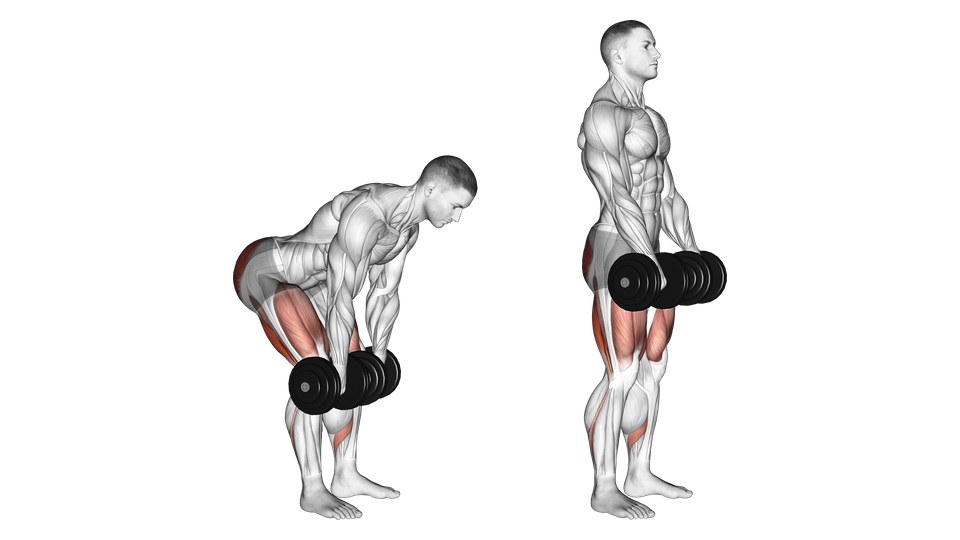
- Dumbbell Romanian deadliftUses dumbbells held in front of the legs instead of a cable behind the body.
Frequently asked questions
Should I squat down or hinge?
Move your hips backward with softly bent knees. Your torso tips forward as the rope passes between your legs; avoid dropping straight down into a squat.
How heavy should the cable pull-through be?
Start with a setting you can control without stepping backward or pulling with your elbows. Increase it only while you can repeat the same stance and range.
Can I use a straight bar attachment?
This guide uses a rope so each hand can hold an end as the cable passes between your legs. Use that setup for these instructions.
Sources
- J. Gordon Betts et al. Anatomy and Physiology 2e: Appendicular Muscles of the Pelvic Girdle and Lower Limbs. 2022. https://openstax.org/books/anatomy-and-physiology-2e/pages/11-6-appendicular-muscles-of-the-pelvic-girdle-and-lower-limbs