
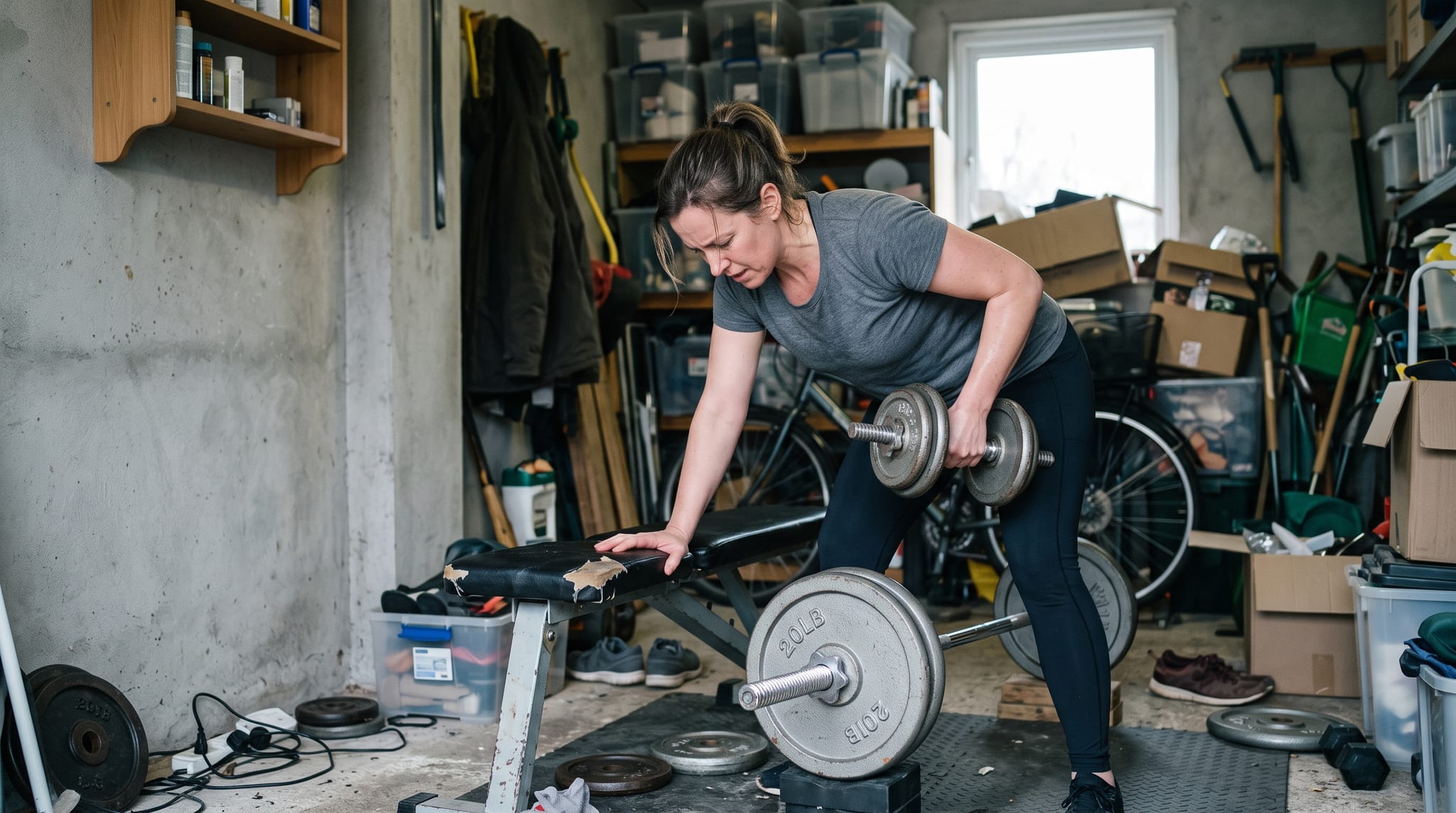
A postpartum workout plan to rebuild strength
This postpartum workout plan alternates two short strength sessions. Start with easy versions of the exercises, record what you actually did, and repeat a tolerable session before increasing the demand. Your recovery and any clinical advice determine the starting point.
The plan is for someone ready to reintroduce the movements below. It is a small return-to-strength template, not a timetable for the first weeks after birth or treatment for diastasis recti, prolapse, or an injury. If you already tolerate more training, you may need a different starting dose.
The postpartum strength progression guide explains how to adjust support, range, repetitions and weight, with examples of useful set notes.
Start when this level of exercise fits your recovery
Being ready for gentle movement and being ready for a strength session are different decisions. ACOG's advice on exercise after pregnancy allows an earlier return to gentle activity after an uncomplicated vaginal birth, while C-section recovery or complications call for individual advice.
The 2025 Canadian postpartum guideline supports progression beyond light activity when incisions or tears have healed sufficiently and activity does not increase postpartum bleeding. A date on the calendar does not make every exercise appropriate.
Follow any restrictions from your care team. If ordinary walking, getting up, or the proposed starting movements cause pelvic heaviness, leakage, pelvic pain, or incision pain, get help choosing the next step rather than forcing the table below.
Alternate A and B on days that allow recovery
Aim to try two sessions on nonconsecutive days when you can manage them. A then B is the sequence. Continue with the next session after an interruption; there is no catch-up workout.
The starting amounts below are conservative coaching examples for this template, not a tested postpartum rehabilitation dose. You can begin with fewer movements or repetitions. Leave plenty of effort in reserve, breathe comfortably, and finish before straining.
| Part of the plan | Starting approach |
|---|---|
| Frequency | Two sessions on nonconsecutive days, adjusted to recovery |
| Preparation | A little comfortable walking or easy movement, then a few practice repetitions |
| Working sets | One easy set per exercise initially |
| Rest | About 1–2 minutes, or longer until you feel ready |
| Effort | Stop with several comfortable repetitions still possible |
| Progression | Repeat a manageable dose, then adjust one exercise variable |
You will need a light band and a suitable secure anchor, a stable raised surface for push-ups, and comfortable floor space. A chair or hand support can help with the squat. Use equipment that will not slide, tip, or come loose.
Postpartum A: repeatable foundations and a supported core drill
Use the table in order. The links explain the standard movements; choose the easier range or support described here where needed.
| Exercise | Starting set and repetitions | Make it more manageable |
|---|---|---|
| Bodyweight squat | 1 × 6–8 | Use a comfortable shallow range, stable hand support, or a higher chair as a target |
| High incline push-up | 1 × 5–8 | Put the hands on a taller, fixed support |
| Light band row | 1 × 6–8 | Use a lighter band or reduce its starting stretch |
| Glute bridge | 1 × 6–8 | Lift through a smaller comfortable range |
| Supine heel slide | 1 × 4–6 per side | Keep the heel supported and shorten the slide |
For the heel slide: lie on your back with knees bent and feet on the floor. Breathe normally and gently steady your trunk as you slide one heel a short distance away, then return it. Alternate sides without forcing the lower back flat or gripping as hard as possible.
Heel slides are one of the low-load options described in the POGP postnatal exercise booklet. This version practices control while the leg moves; it does not isolate one abdominal muscle or establish that you are ready for a harder exercise.
For the standing band row, use a suitable anchor in front of you at about lower-chest height. Follow the band and anchor instructions and test the attachment with a gentle pull. Record the band and starting position. A different band or standing farther away changes the resistance even when the repetition count stays the same.
Postpartum B: keep the main movements familiar
Repeat the same squat, push-up and row setups. B changes the hip and core options rather than introducing another set of unfamiliar main exercises.
| Exercise | Starting set and repetitions | Make it more manageable |
|---|---|---|
| Bodyweight squat | 1 × 6–8 | Keep the same comfortable support and depth as A |
| High incline push-up | 1 × 5–8 | Repeat the same stable hand support |
| Light band row | 1 × 6–8 | Repeat the same band and starting position |
| Clamshell | 1 × 6–8 per side | Use a smaller knee opening without rolling the pelvis |
| Bent-knee fallout | 1 × 4–6 per side | Keep the knee movement small |
For the bent-knee fallout: lie on your back with knees bent and both feet supported. Let one knee open a little to the side while keeping the pelvis comfortably steady, then return it and switch sides. Keep breathing and avoid forcing the range.
The POGP booklet includes this movement too. If the floor position or getting down and up is uncomfortable, ask your clinician about an appropriate alternative instead of treating the last row as compulsory.
The two sessions are deliberately similar. Keeping a few setups consistent makes it easier to judge whether a change in the training log came from more repetitions, a different exercise version, or a different response.
Progress one exercise variable at a time
Choose a small change only after the current version is consistently manageable during the session and afterward. Check again later that day and the next day. Rehabilitation guidance recognizes that a response can be delayed; a comfortable final repetition is not the whole picture. Postpartum rehabilitation framework
Start by repeating the same setup. Then you might add a repetition within the table's range. Another option is a slightly larger controlled range, a second easy set, or a small resistance increase. These are separate choices, not changes to make together.
For example, six comfortable incline push-ups can become seven at the same hand height. Lowering the support also increases the demand, so do not automatically lower it while adding repetitions. Record the height if you change it.
When you reach the top of a range, repeating it is allowed. Later, choose a modest next step that fits your response and care plan. Progress each movement separately; an easy row does not earn a harder core exercise.
| Example visit | What was completed | Decision |
|---|---|---|
| A | Squat: 6 reps to the same high chair, comfortable during the session and next day | Repeat the setup, perhaps try 7 reps |
| B | Squat: 7 reps with the same support and response | Keep that dose or make one small change later |
| A | Lower target causes pelvic heaviness during the set | Stop that movement; discuss persistent or recurring symptoms with a pelvic-health clinician |
The examples show decisions, not a required number of visits before progressing. Adding weight is one form of progress. Repeating a familiar movement with better control or a more comfortable recovery is useful information too.
Adjust the exercise when symptoms appear
Stop the provoking movement if it causes leakage, heaviness or bulging in the vagina, pelvic pain, or incision pain. Review the range, support and amount of work; get pelvic-health advice for symptoms that persist or recur. The NHS Fife exercise guidance similarly advises stepping back when progression increases symptoms.
If exercise increases postpartum bleeding, stop and contact your maternity team before continuing strength work.
If abdominal doming persists, is uncomfortable or is difficult to control, reduce the movement and seek a pelvic-health assessment rather than pushing through it.
Urgent symptoms require medical attention. Heavy bleeding, severe persistent abdominal pain, chest pain, trouble breathing, or one-sided calf swelling or pain belong in that category. Follow the CDC's maternal warning-sign guidance, rather than trying a lighter workout.
Pelvic-floor exercises are a separate skill from these strength movements. Follow the advice you have been given, including fully relaxing between contractions. Pain or difficulty relaxing is a reason to seek help, not to squeeze harder throughout the session. The NHS pelvic-floor relaxation leaflet explains why relaxation matters.
Save the plan and today's response in different notes
RepCount can keep the intended routine and the actual session distinct. Create Postpartum A and Postpartum B manually, add the exercises in order, and set one working set initially. Creating saved routines and writing notes do not require Premium.
Create a custom exercise if a movement is missing from your exercise list. The website library and the installed app library do not necessarily contain the same movements.
Put the starting range, support and progression rule in each routine exercise note. For the incline push-up, that might be:
High fixed support. Start with 1 set of 5–8 easy reps. Repeat a comfortable dose before changing reps or hand height. Rest until ready.
During a workout, record the repetitions you complete and write or update the Notes field on that set's row. For bodyweight exercises, describe the variation rather than inventing a kilogram value. For bands, record the actual band and setup rather than treating its color as a standardized weight.
| Place in RepCount | Useful example |
|---|---|
| Routine exercise note | “High support; 5–8 easy reps; change one variable.” |
| Today's set Notes | “6 reps; same kitchen counter; felt easy; no heaviness during set.” |
| Workout Notes after a later check | “Evening and next morning: comfortable. Repeat the same setups.” |
Check any carried-forward text before saving. A note from an earlier set or workout describes that earlier effort, not automatically what happened today. If symptoms occur, write what actually happened and act on them.
RepCount records your training and your observations. You decide on the next dose using that information and any clinical advice; a previous weight or repetition target is not a readiness assessment.
Let the plan grow with what you can tolerate
Keep ordinary comfortable movement, walking, and any prescribed pelvic-floor work alongside the strength sessions as your recovery permits. These two small sessions are a starting template, not the whole of longer-term physical activity.
If time or fatigue makes the full session impractical, do fewer exercises and log the work you completed. Resume the A/B sequence when you next train. A short, clearly recorded session is easier to learn from than a plan that grows every time you miss a day.
As capacity increases, the linked guides provide further exercise options. You do not need to add jumping, running, heavy carries or demanding plank variations just because they appear under the same muscle group in an exercise library. Choose the next movement for the task you can currently manage.
Download RepCount for iPhone · Download RepCount for Android
Frequently asked questions
When can I start this postpartum workout plan?
Use this strength template when your recovery and advice from your maternity or pelvic-health clinician support its exercises. Gentle early movement is different from a loaded workout. A six-week date alone does not establish readiness, and C-section recovery or complications can change the starting point.
Is this a six-week postpartum recovery program?
No. The two sessions repeat at a pace you can tolerate; they are not assigned to weeks after birth. The sets and repetitions are starting examples for this template, rather than a validated rehabilitation prescription or a deadline for regaining strength.
What equipment do I need?
Use a light resistance band with a suitable secure anchor, a stable raised surface for push-ups, and a comfortable floor space or mat. A stable chair or hand support can make the squat more manageable. Dumbbells are optional for later progression.
Will these exercises close diastasis recti?
This plan does not promise to close an abdominal gap or treat a pelvic-floor condition. Exercise research reports mixed effects on gap width, and improvement in strength or daily function is a different outcome. Get an individual assessment if you have symptoms or concerns.
Can I save these routines in RepCount?
Yes. Create Postpartum A and Postpartum B manually and add the exercises and intended set counts. Create a custom exercise if a movement is missing from your list. Put the plan in routine exercise notes, write today's observations in each set's Notes, and use workout Notes for later observations.