T-bar row alternatives for gym and home
A barbell row can replace an unsupported T-bar row when you have a barbell. Chest-supported dumbbell rows or a rowing machine make sense when you want torso support, while a seated cable row offers another horizontal pull. The first decision is whether the original T-bar row supports your chest.
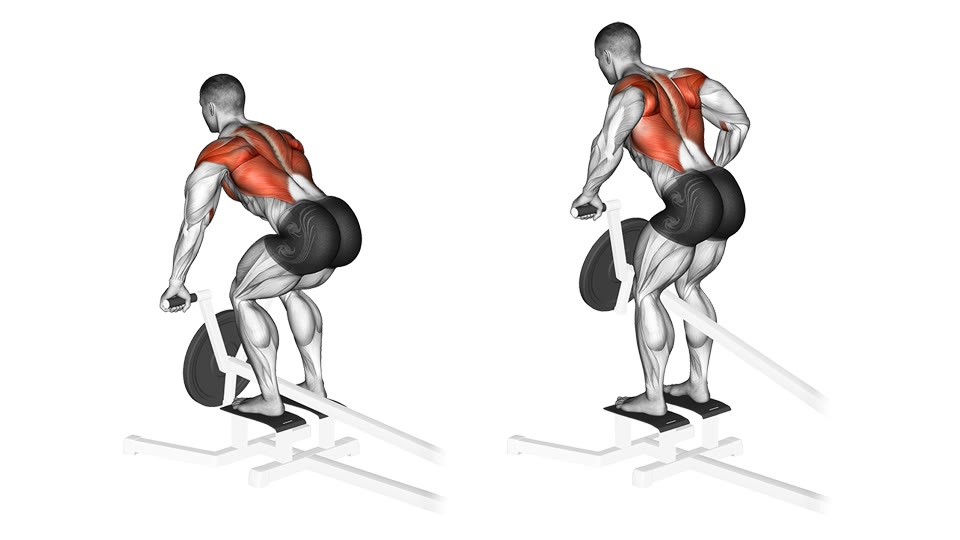
The published T-bar row guide shows a standing, unsupported torso on a plate-loaded station. Some gyms use the same name for a machine with a chest pad. Those are different starting points, even though both involve pulling handles toward the body.
If you chose the original exercise to avoid holding a bent-over position, replacing it with an unsupported barbell row removes that benefit. Conversely, a supported row is a larger setup change when practising the unsupported lift is the goal. Match the support before matching the name.
Choose T-bar row alternatives by their support
| Your goal | Alternative | Equipment | Main tradeoff |
|---|---|---|---|
| Keep a standing unsupported row | Barbell row | Barbell and plates | You still hold the torso position |
| Support the chest | Chest-supported dumbbell row | Incline bench and dumbbells | Independent weights replace a machine lever |
| Use a seated cable | Seated cable row | Cable station | Different seat, cable path and support |
| Use a dedicated machine | Machine row | Row station | Machine designs and handles vary |
| Use one dumbbell | Dumbbell row | Dumbbell and stable support | Train and record each side separately |
Your starting point
T-bar rowFind a T-bar row replacement that fits your support and equipment: dumbbell rows, chest-supported rows, cables or a seated rowing machine.
Choose by your goal and equipment
Keep a standing unsupported row
Barbell bent-over row
You still hold the torso position
Support the chest
Chest-supported row
Independent weights replace a machine lever
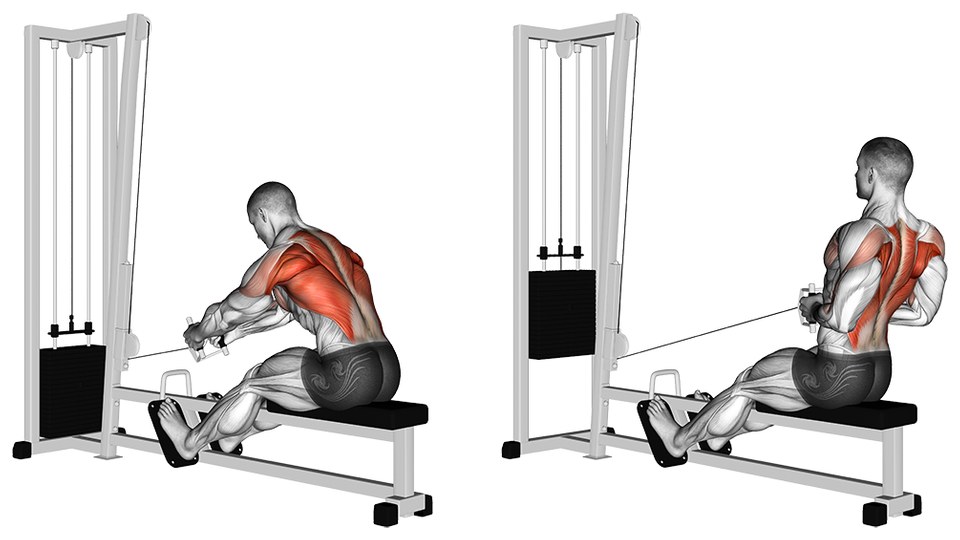
Use a seated cable
Seated cable row
Different seat, cable path and support
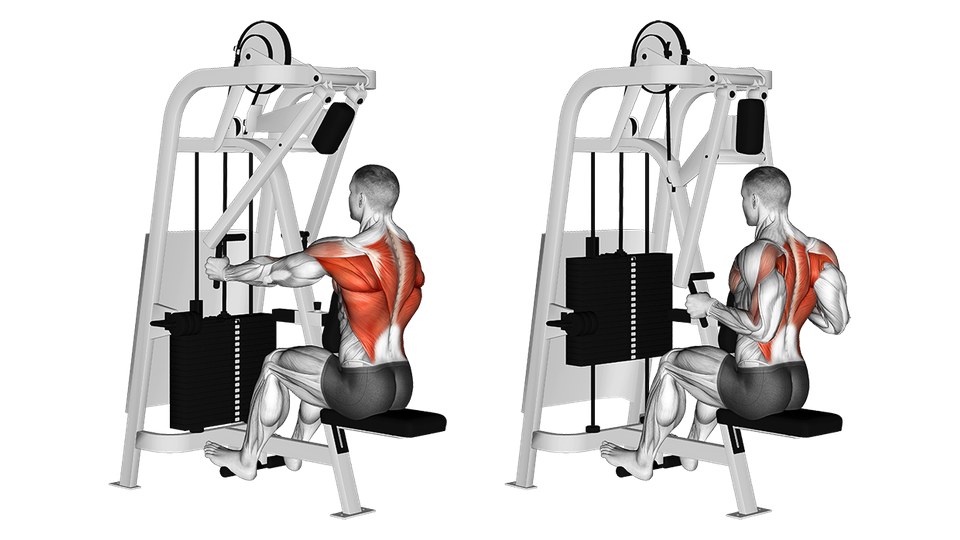
Use a dedicated machine
Machine row
Machine designs and handles vary
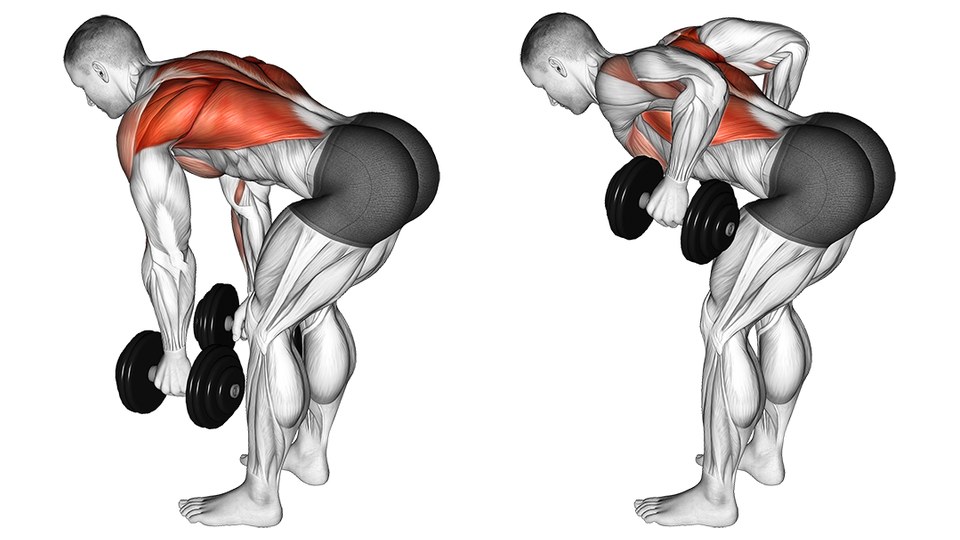
Use one dumbbell
Dumbbell row
Train and record each side separately
A barbell row retains an unsupported torso
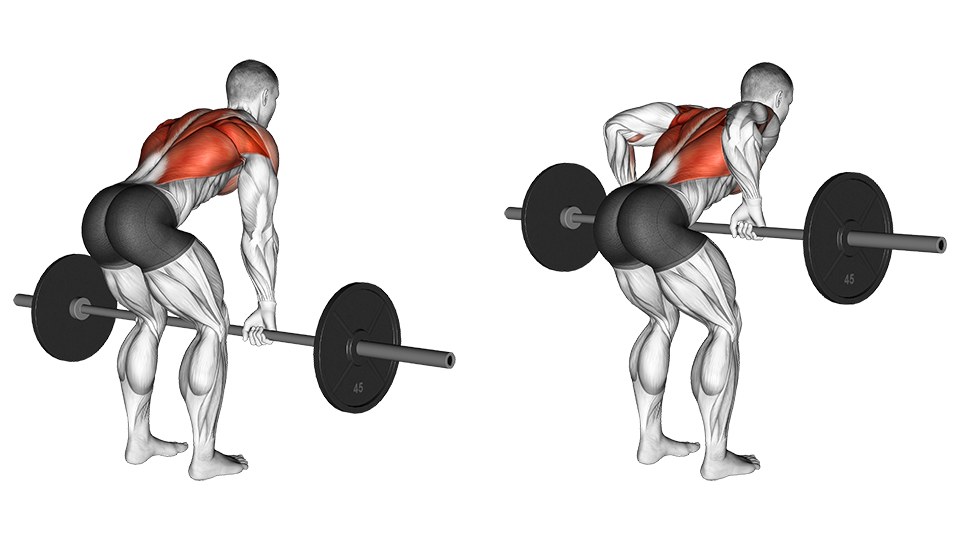
The barbell row is a practical choice when the T-bar station is occupied and you have a free bar. Set a position you can hold, begin with straight arms and row without standing up to finish each repetition.
The bar travels freely rather than following a station's lever. Grip, distance between your hands and the bar's path may differ from the original T-bar handles. Start with a lighter practice load rather than copying the plate total from the machine.
If holding the torso position ends the set before the intended pulling work, adding more weight will not preserve the exercise. Choose a supported row if that better matches your planned slot. The alternative should suit the session rather than win a contest over which movement looks harder.
Chest-supported dumbbell rows keep the torso on a pad
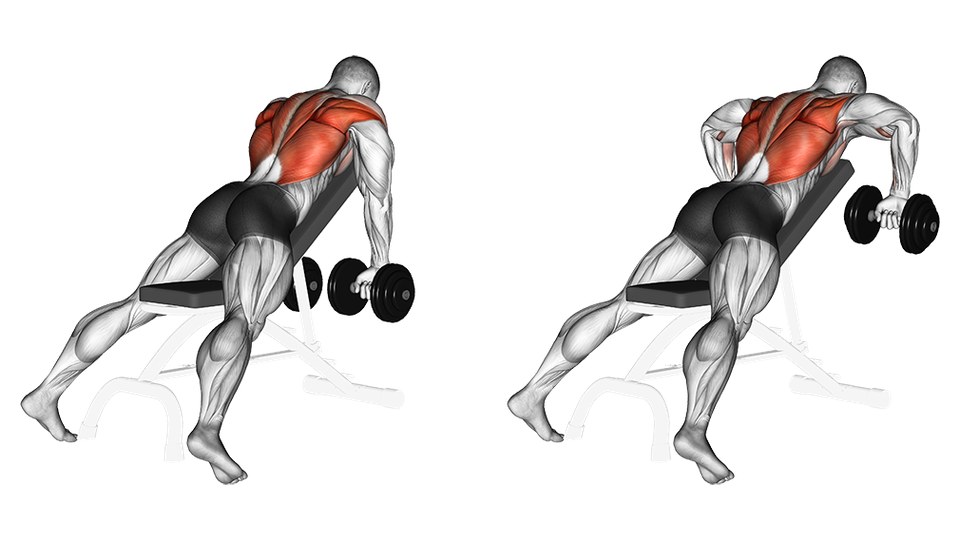
A chest-supported dumbbell row uses an incline bench to support the chest while you pull separate weights. Set a bench angle that gives the dumbbells room to move without hitting the floor or bench frame.
Keep your chest in contact through the pull and return. Row to a position you can reach without raising the torso, then lower the dumbbells under control. A heavier rep completed by lifting off the pad is a different setup from the one you recorded previously.
The independent dumbbells do not follow a T-bar machine's lever path. You also need to get the weights into position and back down after the set. Find a load that fits the whole setup, not just the hardest part of the pull.
Seated cable rows offer a horizontal pull with adjustable load
A seated cable row replaces the loaded lever with a cable attachment. Sit with secure foot support, establish your torso position and pull without turning each repetition into a backward swing.
Keep the attachment and cable station consistent when comparing workouts. A narrow parallel handle and a wider bar are not interchangeable logging details. They change your hand spacing and the path available around the body.
The pin number also belongs to that particular machine. Pulley arrangements and labels vary, so a cable-stack weight is not a conversion from T-bar plates. Use the station's warm-up sets to establish your working resistance.
A machine row may preserve support, depending on its design
A machine row is useful when you want a dedicated station rather than balancing a free bar. Inspect the seat, chest pad and handle path before assuming the machine supplies the kind of support you want.
Adjust the station so you can reach the handles without losing the pad contact. Keep your chest supported if the machine is designed that way, and choose a return you can control. Handle positions that suit one station may not suit another.
Treat each design as its own setup. Some machines load with plates, others use a stack, and the resistance at the handles can differ even with the same marked weight. Record the station and handle choice so future sessions compare the same movement.
Dumbbell rows work with limited equipment
A dumbbell row lets you train each side with one available weight and a stable support. Establish the same support and stance before both sides. Move the elbow back while keeping the torso from turning to finish the lift.
The support must be secure. A suitable bench is different from a loose chair that tips as you lean on it. Check the setup without a load first, especially when arranging a home workout.
Count reps and sets per side, and start with the side you find harder to keep consistent. Do not add extra repetitions automatically to the easier side. A unilateral row is its own progression rather than half of the plate total from a two-handed machine row.
Choose the row for the workout rather than a muscle ranking
These alternatives all provide horizontal pulling work, but they differ in support, grip and equipment. A target-muscle list helps describe the exercise; it does not measure how much muscle you will gain from it.
Do not use an illustration's red shading as an activation score. The maps show anatomical regions and guide targets, while a study measuring electrical activity during one session answers a different question from a training study measuring changes over time.
For a practical choice, ask whether you can repeat the setup and whether it fits the rest of the session. A supported row after demanding lower-body work may solve a support problem. Another unsupported row may preserve a pattern you specifically want to practise.
Compare the muscle maps without treating them as scores
The muscle maps show the anatomical targets listed in the linked guides. Primary and secondary labels describe those guide roles, not measured muscle activation or predicted growth. A highlighted region does not establish that one alternative is better than another.
Use the maps to locate muscles, then choose the exercise by its movement, support and available equipment. These are practical comparisons, not a trial ranking every replacement.
Explore the muscle maps
T-bar row
Primary
Secondary
Schematic surface view. Some muscles are partly visible or not shown.
| Exercise | Primary | Secondary |
|---|---|---|
| T-bar row | latissimus dorsi, middle and lower trapezius, rhomboids, rear deltoids | biceps, forearm flexors, erector spinae |
| Barbell bent-over row | latissimus dorsi, teres major, posterior deltoid, trapezius, middle and lower fibres, rhomboid major and minor | biceps brachii, brachialis, brachioradialis, infraspinatus and teres minor, erector spinae, gluteus maximus, hamstrings, forearm flexors |
| Chest-supported row | latissimus dorsi, trapezius, middle and lower fibres, rhomboids, posterior deltoid | biceps brachii, brachialis, brachioradialis |
| Seated cable row | latissimus dorsi, teres major, posterior deltoid, middle trapezius, rhomboids | lower trapezius, infraspinatus and teres minor, biceps brachii, brachialis, brachioradialis, erector spinae |
| Machine row | latissimus dorsi, trapezius, middle and lower fibres, rhomboids, posterior deltoid | biceps brachii, brachialis, brachioradialis |
| Dumbbell row | latissimus dorsi, teres major, posterior deltoid, rhomboid major and minor, trapezius (middle and lower fibres) | brachialis, biceps brachii, brachioradialis, erector spinae |
Start a new row progression and record the machine
Keep the planned amount of work manageable while learning the replacement. Warm up on the new equipment and select a load that allows controlled reps with some room left. There is no dependable T-bar-to-dumbbell or T-bar-to-stack conversion.
Write down bench angle for a supported dumbbell row, the cable attachment for a seated row, or the station and handles for a machine row. Keep those details steady while progressing reps or weight. Change one thing deliberately rather than rotating through every available row each session.
RepCount lets you log sets, reps and weight and look back at earlier workouts. Save the replacement as its own exercise and note the setup. RepCount is also available for Android.
Frequently asked questions
What is the closest alternative to a T-bar row?
The closest practical T-bar row alternative depends on the original station. A barbell row preserves an unsupported torso, while a chest-supported dumbbell row or supported machine row preserves chest support.
Can a cable row replace a T-bar row?
A seated cable row can fill a horizontal pulling slot instead of a T-bar row. Its cable path, grip and loading differ, so establish a new load rather than copying the T-bar plate total.
What can replace a T-bar row at home?
A dumbbell row with a secure support is an option when you have one weight. An incline bench and two dumbbells also allow chest-supported rows. Choose according to the support and equipment available.
Is a chest-supported T-bar row the same as an unsupported T-bar row?
A chest-supported T-bar row holds the torso on a pad, while an unsupported T-bar row requires you to maintain the bent-over position yourself. That support difference matters when selecting a replacement.