T-bar row
Also called T bar row, T-bar rows, tbar row, V-bar row.
What is a t-bar row?
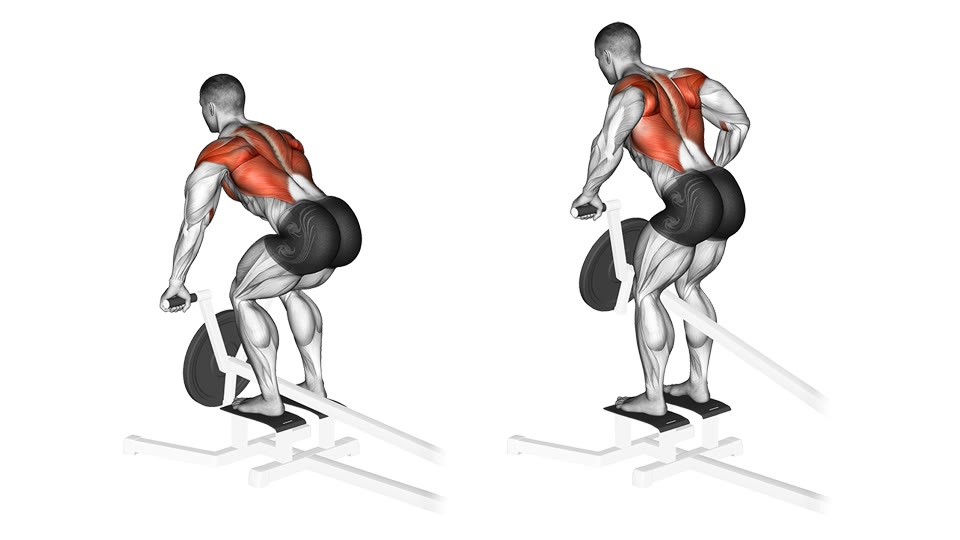
The T-bar row is a standing horizontal pull performed here on an unsupported plate-loaded station with a fixed bar path. It trains the lats, middle back and rear deltoids, while the biceps, forearms and spinal erectors assist.
How do you perform a t-bar row?
Set up
- Load the T-bar station, stand on its platform and take the handles with both hands.
- Hinge forward with soft knees, a braced trunk and straight arms so the plates hang clear.
Execution
- Row the handle toward your lower chest or upper abdomen by driving the elbows back.
- Keep the torso angle steady instead of standing up to finish the pull.
- Lower under control until the arms are straight and the shoulders can reach forward without the lower back rounding.
Common mistakes
Standing up as the handle rises
Changing the torso angle turns the repetition into a mix of rowing and hip extension.
Jerking the plates from the bottom
Momentum removes the controlled start and makes the load hard to compare between repetitions.
Stopping before the arms straighten
A shortened return removes the reachable bottom range without improving trunk position.
Where it fits in a session
Usually used as a main horizontal pull or after a heavier barbell movement.
Use a load that allows the torso angle to stay stable from the first repetition to the last.
Muscles worked
Primary
Secondary
Schematic surface view. Some muscles are partly visible or not shown.
The back and rear shoulders pull the fixed bar toward the torso while the elbow flexors and trunk muscles assist.
Variations
- Close-grip T-bar row — Uses a neutral V handle and pulls toward the upper abdomen.
- Chest-supported T-bar row — Adds a torso pad and removes much of the trunk-support demand.
Related tools
Frequently asked questions
What muscles does the T-bar row work?
It trains the lats, middle and lower trapezius, rhomboids and rear deltoids. The biceps, forearms and spinal erectors assist.
Is a T-bar row the same as a barbell row?
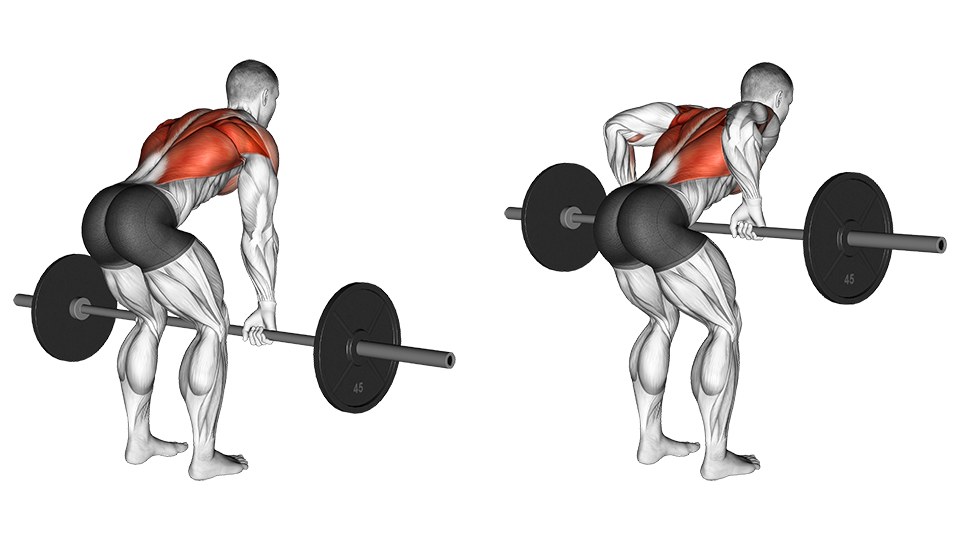
No. A T-bar pivots from a fixed point or machine lever, while a barbell row moves a free bar. Both are horizontal pulls but their setup and bar path differ.
Where should the handle touch?
Aim toward the lower chest or upper abdomen, depending on the handle and machine. Keep the torso fixed rather than chasing one exact touch point.
Should the back move during T-bar rows?
Hold the hip hinge and braced trunk mostly still. The shoulder blades can move naturally as the arms reach and row, but the torso should not rise and fall each rep.