Chest-supported row
Also called chest supported row, chest-supported dumbbell row, chest supported dumbbell row, incline dumbbell row.
What is a chest-supported row?
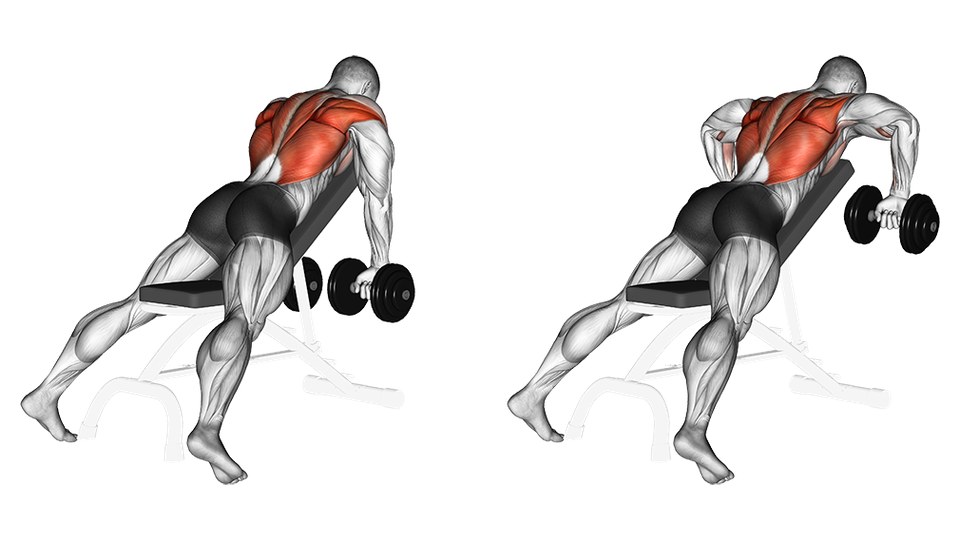
The chest-supported row is a two-dumbbell row performed face-down on an incline bench. The support removes the need to hold a hip hinge, leaving the lats, middle back and posterior deltoids to pull while the elbow flexors assist.
How do you perform a chest-supported row?
Set up
- Set a bench to a low or moderate incline, around 30 to 45 degrees, and place one dumbbell on each side.
- Lie chest-down with your feet planted, take the dumbbells and let your arms hang straight without the weights touching the floor.
Execution
- Pull your elbows back and row the dumbbells toward your lower ribs, allowing your shoulder blades to draw together.
- Keep your chest on the pad and stop before the shoulders roll forward or the torso lifts.
- Lower the dumbbells under control until your arms are straight and the shoulder blades can move forward.
Common mistakes
Setting the bench too low for the dumbbells to clear
The weights hit the floor before the arms straighten. Raise the bench or use a setup that gives the dumbbells room to hang.
Lifting the chest to finish
That removes the support and adds torso momentum. End the pull where the chest can still stay in contact.
Pinning the shoulder blades throughout
The back muscles then hold one position instead of moving the blades through the row. Let them reach forward under control at the bottom.
Where it fits in a session
Use it as a main horizontal pull or after unsupported rows when the lower back should no longer limit the set.
Keep the bench angle and elbow path consistent when comparing dumbbell loads between sessions.
Muscles worked
Primary
Secondary
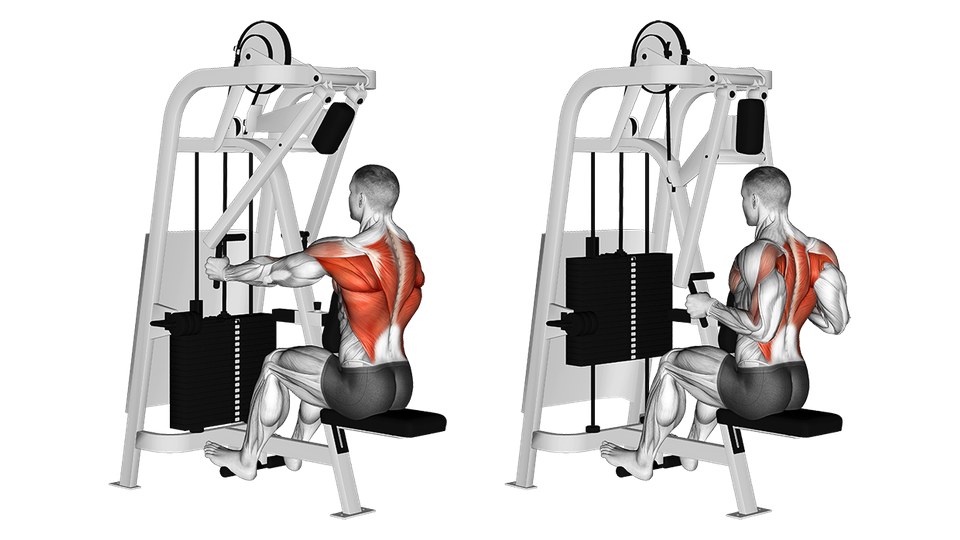
Schematic surface view. Some muscles are partly visible or not shown.
The back muscles move the upper arms and shoulder blades while the elbow flexors assist. The bench supports the torso instead of the spinal extensors holding a hip hinge.
Variations
- Seal row — Uses a raised flat bench, which keeps the torso horizontal and requires more clearance below it.
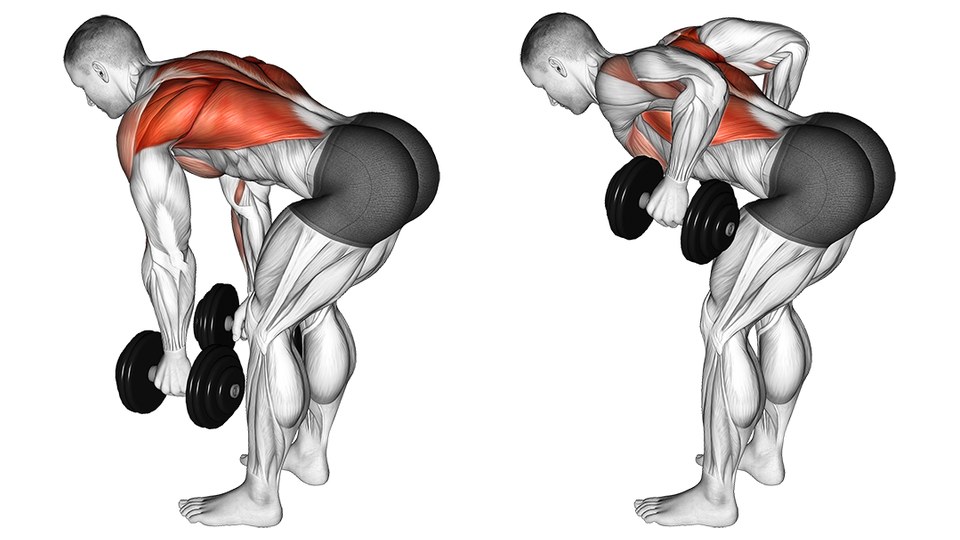
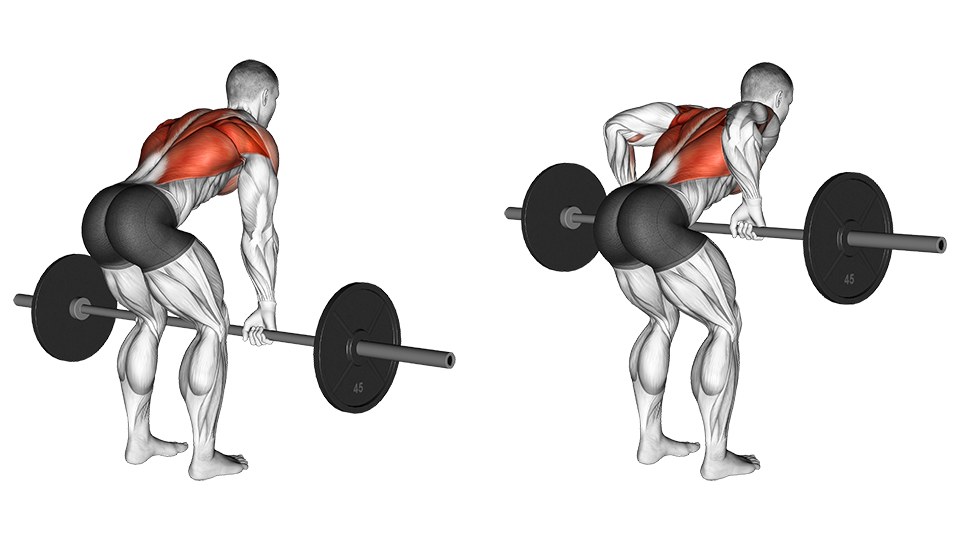
Related tools
Frequently asked questions
What muscles does a chest-supported row work?
It trains the latissimus dorsi, middle and lower trapezius, rhomboids and posterior deltoids, with the elbow flexors assisting.
What bench angle should you use?
Around 30 to 45 degrees is a practical starting range. Use enough height for the dumbbells to hang freely while your chest and feet remain supported.
Where should you row the dumbbells?
Pull toward the lower ribs with a moderate elbow path. Stop where the chest can stay on the pad rather than lifting to chase extra range.
Should the shoulder blades move?
Yes. Let them move forward as the arms straighten and draw together during the pull, while the chest stays supported.
Sources
- Anatomy, Back, Latissimus Dorsi. StatPearls. https://www.ncbi.nlm.nih.gov/books/NBK448120/
- Anatomy, Back, Trapezius. StatPearls. https://www.ncbi.nlm.nih.gov/books/NBK518994/
- Anatomy, Shoulder and Upper Limb, Deltoid Muscle. StatPearls. https://www.ncbi.nlm.nih.gov/books/NBK537056/