Machine row
Also called seated machine row, row machine, lever row, machine rows.
What is a machine row?
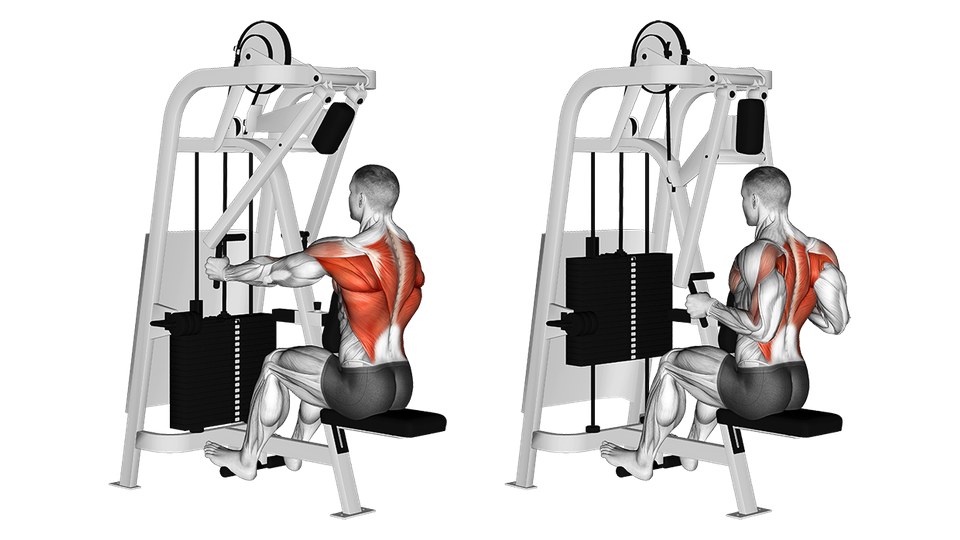
The machine row is a seated horizontal pull in which a guided lever provides the resistance. Pulling the handles toward your torso trains the latissimus dorsi, middle and lower trapezius, rhomboids and posterior deltoids, with the elbow flexors assisting.
How do you perform a machine row?
Set up
- Adjust the seat so the handles are around lower-chest height. If the machine has a chest pad, set it close enough to reach the handles without rounding your back.
- Sit tall with your feet planted, take the handles and let your arms straighten while keeping your torso supported and controlled.
Execution
- Drive your elbows back and pull the handles toward your lower ribs, allowing your shoulder blades to draw together.
- Finish without leaning away from the machine or lifting your shoulders toward your ears.
- Return with control until your arms are straight and your shoulder blades can move forward, then repeat from the same seated position.
Common mistakes
Rocking the torso
Leaning back turns the first part of each pull into body momentum. Use a load that lets the torso keep the same angle.
Stopping the return early
A short return removes the controlled forward movement of the shoulder blades. Let the arms straighten without losing the supported position.
Shrugging the finish
Lifting the shoulders is not needed to complete the row. Keep the neck long while the elbows travel back.
Where it fits in a session
Use it as a main horizontal pull or after free-weight rows when torso support makes consistent repetitions useful.
Keep the seat, handle and chest-pad settings the same when comparing loads between sessions.
Muscles worked
Primary
Secondary
Schematic surface view. Some muscles are partly visible or not shown.
The back muscles move the upper arm and shoulder blade; the elbow flexors assist as the handles come toward the torso. Handle and elbow position can shift emphasis without turning it into a different movement.
Variations
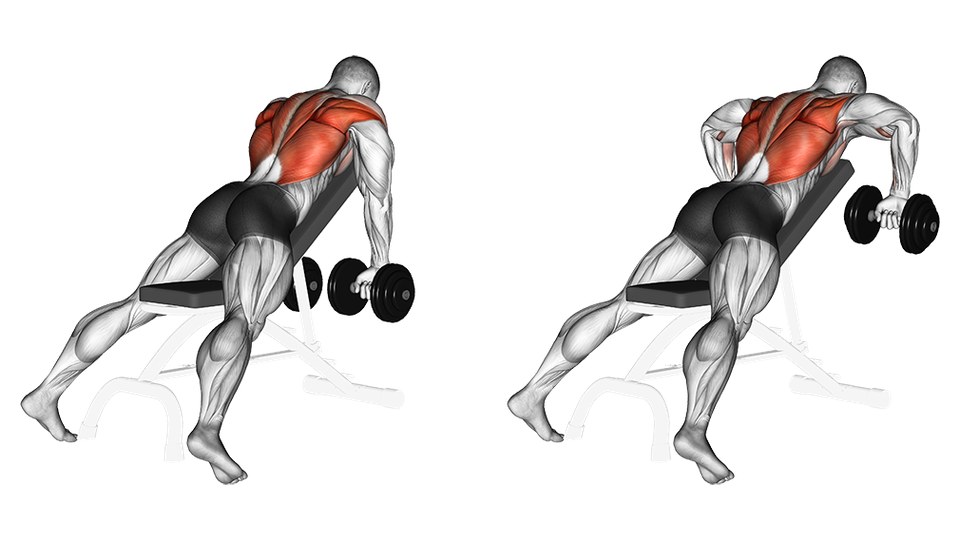
- Single-arm machine row — Rows one lever at a time when the machine has independent arms.
Related tools
Frequently asked questions
What muscles does the machine row work?
It trains the latissimus dorsi, middle and lower trapezius, rhomboids and posterior deltoids. The biceps, brachialis and brachioradialis assist by bending the elbows.
Where should the handle touch on a machine row?
Aim around the lower ribs, but let the machine's handle path and your arm length decide the exact point. Finish before you have to lean back or shrug.
Should your shoulder blades move during a machine row?
Yes. Let them move forward under control as the arms straighten and draw back as you row. Do not force extra range by rounding the whole torso.
Is a machine row the same as a seated cable row?
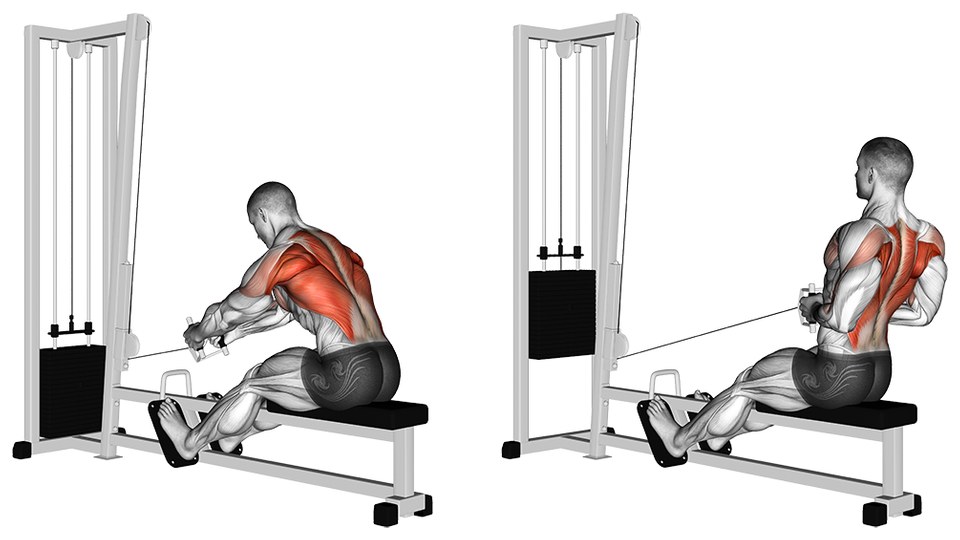
No. Both are seated horizontal pulls, but a machine row follows a lever path while a cable row leaves the handle path less constrained.
Sources
- Anatomy, Back, Latissimus Dorsi. StatPearls. https://www.ncbi.nlm.nih.gov/books/NBK448120/
- Anatomy, Back, Trapezius. StatPearls. https://www.ncbi.nlm.nih.gov/books/NBK518994/
- Anatomy, Shoulder and Upper Limb, Deltoid Muscle. StatPearls. https://www.ncbi.nlm.nih.gov/books/NBK537056/