
Dumbbell back exercises for your setup
Useful dumbbell back exercises start with a row you can repeat: a standing bent-over row with dumbbells alone, a one-arm row supported on a flat bench, or a chest-supported row on an adjustable bench. Choose one as your main pull. A pullover can add an overhead arm arc if you have a bench, but dumbbells don't reproduce a pull-up or lat pulldown.
The choice matters more than collecting row variations. Start with your actual setup, then give each extra exercise a reason to be in the session.

Choose dumbbell back exercises by your equipment
Choose one main row from the table. Bench support changes how you hold your torso; it doesn't establish a winner for back growth.
| Main row | Your setup | What you need to hold steady |
|---|---|---|
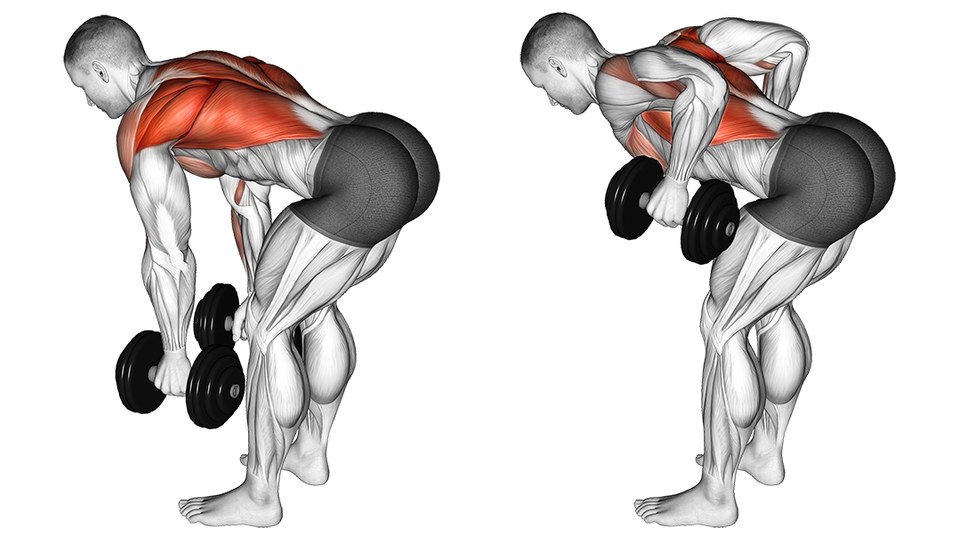
Standing bent-over row | Dumbbells only, no bench | Hold the hip hinge while both arms row |
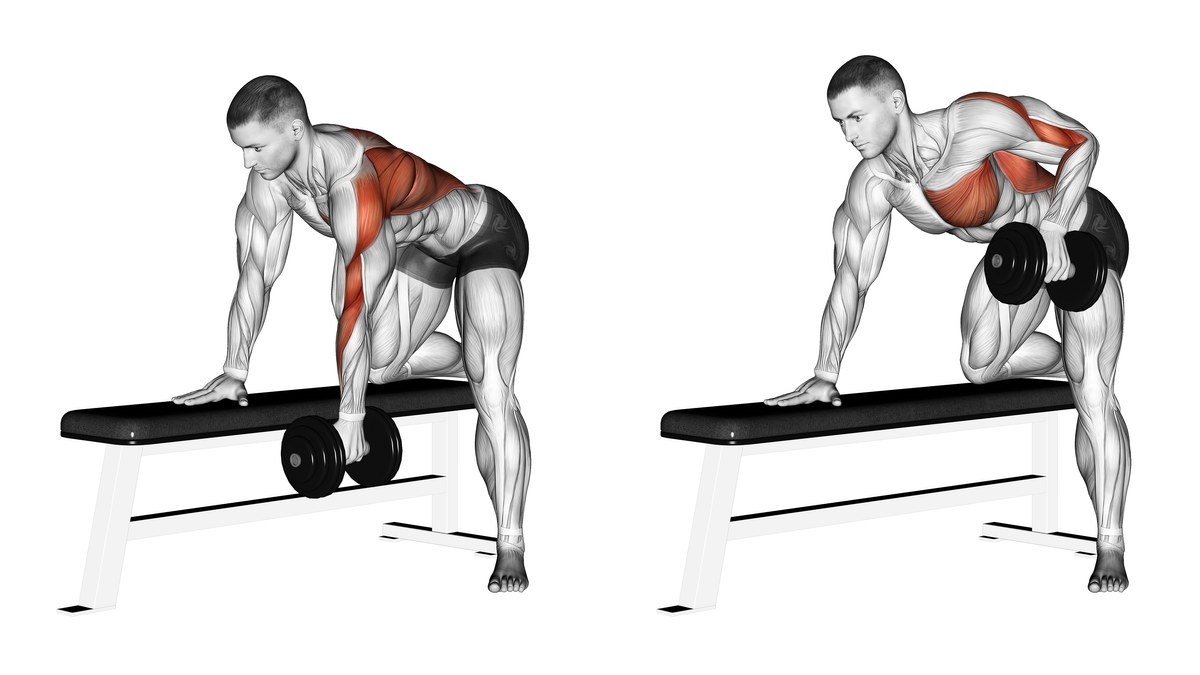 One-arm dumbbell row | Dumbbell and sturdy flat bench | Keep hips and shoulders square while one arm rows |
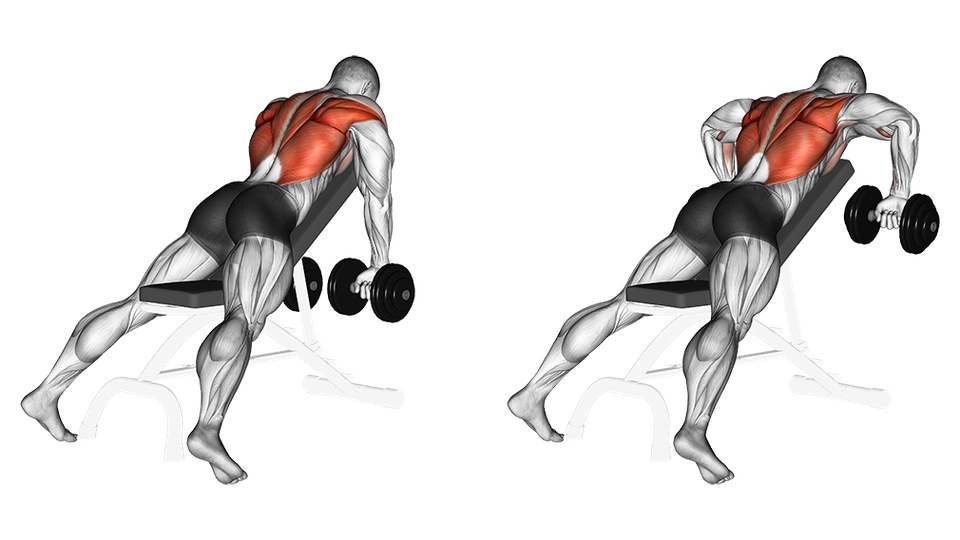 Chest-supported row | Dumbbells and adjustable bench | Keep the chest on the pad and feet planted |
- Your setup
- Dumbbells only, no bench
- What you need to hold steady
- Hold the hip hinge while both arms row
- Your setup
- Dumbbell and sturdy flat bench
- What you need to hold steady
- Keep hips and shoulders square while one arm rows
- Your setup
- Dumbbells and adjustable bench
- What you need to hold steady
- Keep the chest on the pad and feet planted
With dumbbells alone, you can start with the standing version. The row guide covers several setups; its main instructions use one arm and bench support, while its illustration shows the standing two-arm version. Follow the setup you've chosen consistently.
An ordinary flat bench works for the supported one-arm row. It doesn't automatically provide enough clearance for a face-down two-arm row. Use the adjustable-bench version described in the chest-supported guide rather than balancing a flat bench on improvised supports. The back exercise hub has more choices if you also train at a gym.
Build the session around one row
Start with the row, then choose an optional addition for a different purpose. The following is an adaptable example, not a workout tested as a package in a study. Fit it into your existing week and count rows you already do before adding more.
| Part of the session | Working sets and reps | Starting rest |
|---|---|---|
| Your chosen main row | 3 × 8–15; per side for the one-arm version | 2 minutes after both sides or each two-arm set |
| Optional addition: choose one below | 2 sets in its suggested range | 1–2 minutes |
For the optional slot, choose one exercise for the job you want. You can also finish after the rows.
| Optional exercise | Equipment | Purpose and example reps |
|---|---|---|
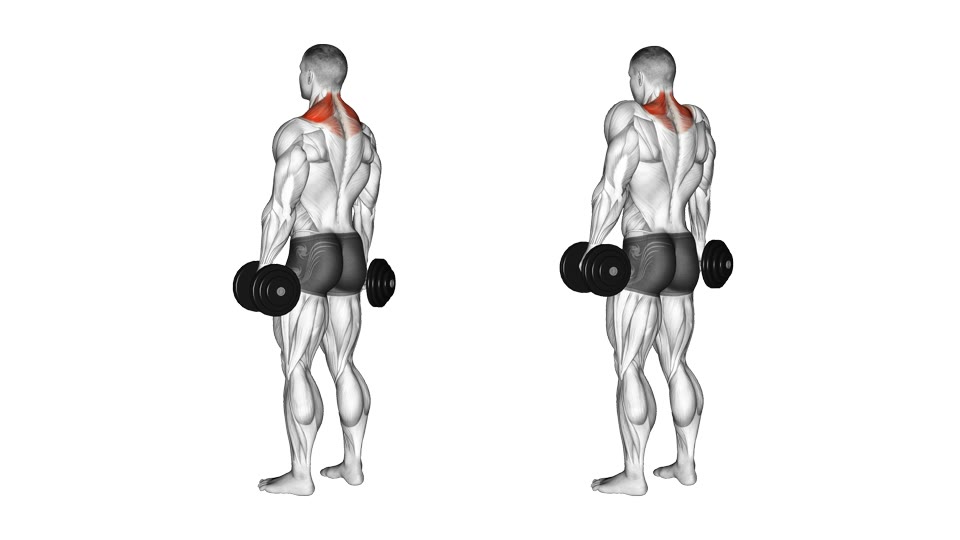 Dumbbell shrug | Dumbbells only | Upper traps; 2 × 10–20 |
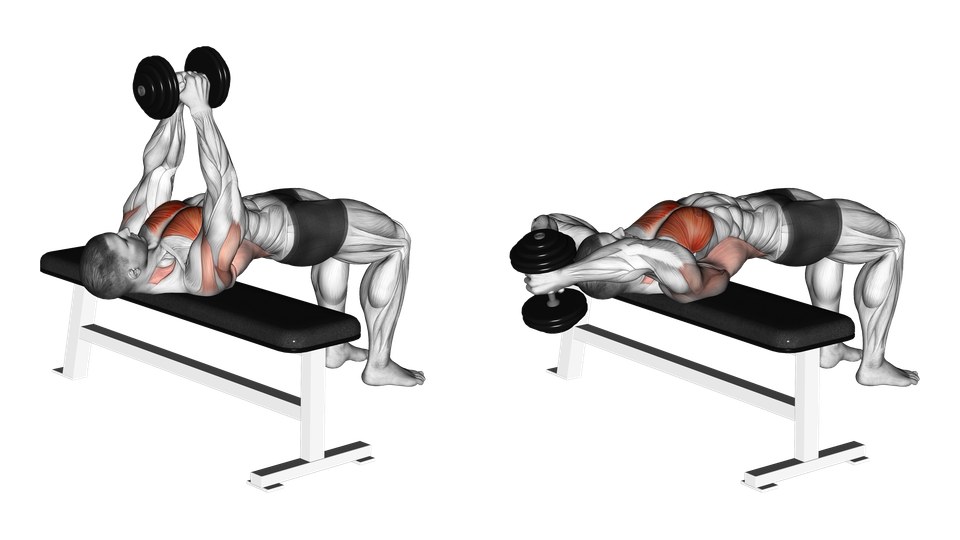 Dumbbell pullover | One dumbbell and a flat bench | Different shoulder movement involving chest and lats; 2 × 10–15 |
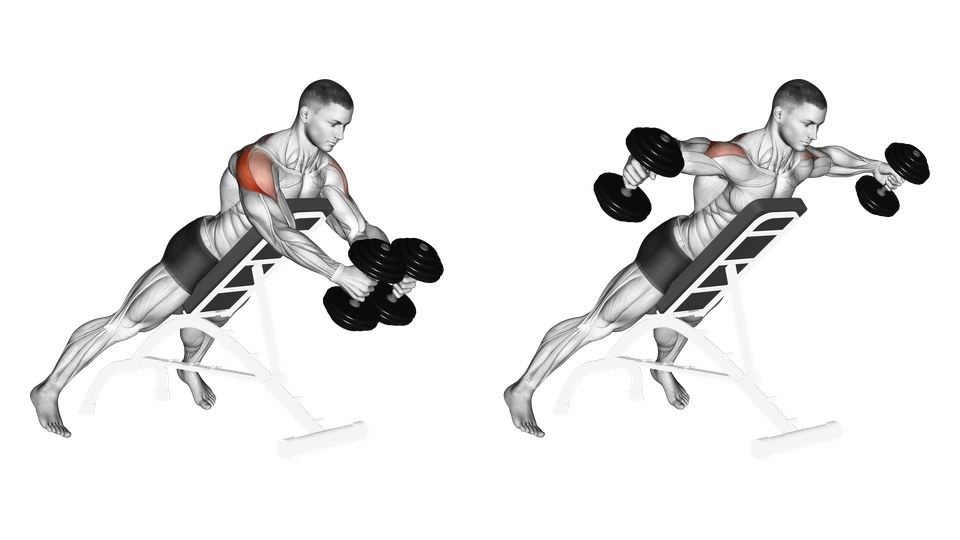 Rear delt fly | Dumbbells and an adjustable bench | Back of the shoulders; 2 × 12–20 |
- Equipment
- Dumbbells only
- Purpose and example reps
- Upper traps; 2 × 10–20
- Equipment
- One dumbbell and a flat bench
- Purpose and example reps
- Different shoulder movement involving chest and lats; 2 × 10–15
- Equipment
- Dumbbells and an adjustable bench
- Purpose and example reps
- Back of the shoulders; 2 × 12–20
Warm up with lighter practice sets. Choose working weights that make the final reps demanding while leaving roughly two controlled reps available. That's a practical starting target, not a requirement to calculate effort precisely. Rest longer if you need it to repeat the movement.
Putting the row first reflects the priority here. Nunes et al. (2021) found that strength gains favored exercises performed earlier in a session; exercise order didn't significantly affect hypertrophy in their analysis. That supports prioritizing the lift you want to improve, not this exact exercise order or set count.
If you're looking for a whole-body routine instead, use the three-day dumbbell workout plan. It already includes rowing, so this session isn't an automatic extra workout to stack on top.
Support changes what can limit your row
A standing dumbbell row asks your hips and trunk to hold the bent-over position while you pull. Bench support reduces that job. If maintaining the hinge ends your set before the rowing feels demanding, a supported version is worth trying when you have the equipment.
For a one-arm row, brace the free hand and knee on a sturdy bench and keep your torso from rotating to lift the weight. For the chest-supported row, keep your chest against the incline pad. The individual guides show the full setup and movement.
Choose a weight for each version separately. Moving from standing rows to chest support changes the task, so a smaller number on the dumbbell doesn't mean you've lost strength. Keep each variation's history separate rather than changing support between sets and comparing the numbers directly.
Rows train the lats, but dumbbells don't replace vertical pulling
Dumbbell rows involve the lats as the upper arm moves back. They also involve the muscles moving the shoulder blades and the elbow flexors. A row isn't a lat-isolation exercise, and turning your palm doesn't transform it into a pulldown.
The dumbbell pullover adds an overhead arm arc with a fairly fixed elbow bend. Both the chest and lats participate. It can broaden a bench-based session, but it doesn't recreate a vertical pull's combination of shoulder movement and elbow bending.
If training the pull-up or pulldown movement matters to you, add access to a secure bar or high cable when possible. The lat pulldown alternatives guide explains those choices. Meanwhile, you can still do your dumbbell rows without pretending the movements are interchangeable.
Keep the other jobs clear too. Shrugs train the upper traps; rear delt flies focus on the back of the shoulders. A dumbbell Romanian deadlift is primarily a hip hinge for the hamstrings and glutes, with the spinal erectors helping hold the trunk. It belongs in your hinge programming, not in the row slot as another lat exercise.
Add reps before weight, then reassess the ceiling
Keep the same row setup and use completed reps to choose your next step. For one-arm rows, use the more limited side as your reference and match its reps on the other side.
| Where you are | Next step in this example |
|---|---|
| Within 8–15 reps | Add controlled reps at the same weight |
| All three sets reach 15 with comparable effort | Try the next weight, then build reps again |
| The weight jump takes you below the range | Keep the lighter weight and extend the rep target while working toward the jump |
| Already using your heaviest dumbbell | Try 15–20 reps; reassess the resistance if long sets remain easy |
These are progression rules for this example, not biological cutoffs.
Currier et al. (2023) found that varied resistance-training prescriptions improved muscle size, while higher-load prescriptions favored strength. That supports some flexibility with load; it doesn't establish that an arbitrarily light dumbbell is enough forever.
Keep a controlled range before adding difficulty. A pause can make the same weight harder, but note the change and establish a new baseline. Don't shorten rests until breathlessness replaces the pulling effort, or count extra torso swing as progress. The 2026 ACSM position stand also found that training to momentary fatigue didn't consistently improve outcomes. You don't need to turn each set into a failed rep.
If your heaviest dumbbells still leave long sets easy, heavier resistance may be the useful next step. Another row name doesn't remove the weight limit.
Log the setup and each side consistently
Record the dumbbell's weight and reps per side for one-arm rows. Here's an example of keeping the number and its meaning together:
| What you completed | Log entry | Setup note |
|---|---|---|
| One 20 kg dumbbell, 12 reps on each side | 20 kg × 12 | Flat bench; hand and knee supported; 12 left, 12 right; weight per dumbbell |
| One 20 kg dumbbell, 12 left and 10 right | 20 kg × 10 as the shared result | Same setup; 12 left, 10 right |
| Two 20 kg dumbbells, 12 simultaneous reps | 20 kg × 12 | Standing two-arm row; weight per dumbbell |
Don't add the sides together as 24 reps. If the sides differ, preserve both results in the notes rather than hiding the difference in one number.
In RepCount, manually save your chosen row and optional addition as a routine. Use separate custom exercises when you need names that distinguish your setups, and keep the rep target and support details in the notes. That gives you the same setup to return to next time you train.
Frequently asked questions
Can I train my back with dumbbells and no bench?
Yes. A standing bent-over dumbbell row needs no bench, although you must hold the hip hinge throughout the set. A dumbbell shrug adds upper-trapezius work. Neither reproduces an overhead pull such as a lat pulldown.
Which dumbbell row should I choose?
Choose by the support available and the position you can repeat. With no bench, use a standing bent-over row. A flat bench supports a one-arm row; an adjustable bench also allows a chest-supported row. You don't need to do all three in one session.
Do dumbbell rows and pullovers work the lats?
Dumbbell rows involve the lats alongside other back muscles and the elbow flexors. Pullovers involve both the lats and chest. A pullover changes the shoulder movement but doesn't reproduce the combined shoulder and elbow action of a pull-up or lat pulldown.
How do I progress when my dumbbells are too light?
Extend your rep target while keeping the same setup and controlled range. If you change the variation or add a pause, record the change and establish a new baseline. When the heaviest available weight is still easy for long sets, heavier resistance may be the practical next step.
How should I log a one-arm dumbbell row?
Record the single dumbbell's weight and reps per side. If both arms complete 12 reps with 20 kg, this article uses 20 kg × 12, with a note that both sides were completed. If the sides differ, write both results in the notes instead of hiding the difference in one number.