Good morning alternatives without a back bar
Romanian deadlifts, cable pull-throughs and hip-led back extensions are practical good morning alternatives when you want hip-hinge work without resting a bar on your back. Dumbbell RDLs also suit home training, while a B-stance RDL shifts the work toward one side. These choices change where the load acts or how the body is supported, so none should inherit your good morning working weight automatically.
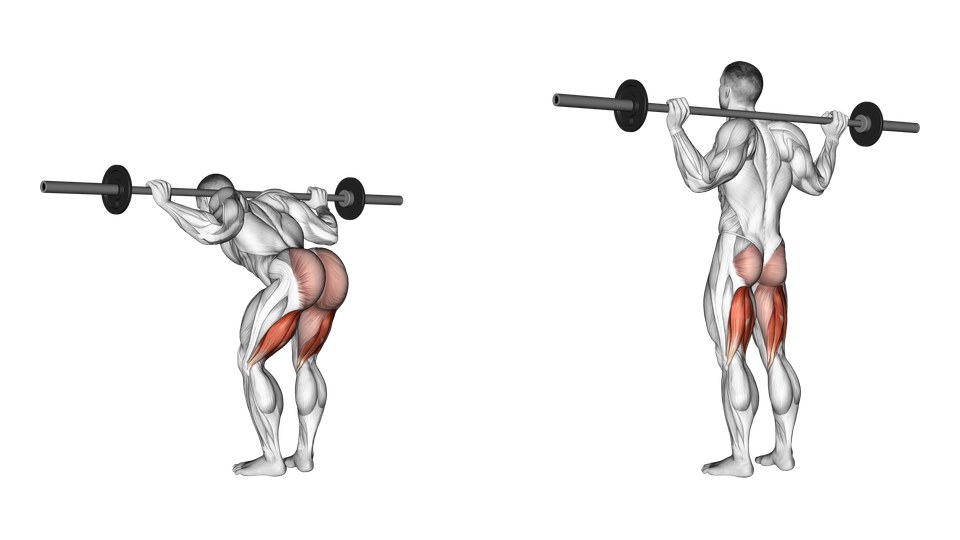
A barbell good morning starts standing with the bar across the upper back. The hips move backward as the torso inclines, with a small, fairly steady knee bend. The replacement decision begins with that movement, rather than with a list of exercises that all mention hamstrings.
Choose good morning alternatives by load position and support
Use a standing RDL if you want to keep a free-weight hinge. Choose a cable or supported bench if those arrangements better fit your session. The options below reflect movement and equipment, not a study ranking them for growth.
| What you need | Alternative | Main tradeoff |
|---|---|---|
| A standing hinge without the back bar | Romanian deadlift | Hands carry the bar, adding grip demands |
| A hinge with home weights | Dumbbell RDL | Available weights and grip can limit loading |
| More emphasis on one side | B-stance RDL | Rear foot still helps; stance must be repeatable |
| A low-cable option | Cable pull-through | The cable pulls toward a pulley behind you |
| A station with anchored feet | Back extension | Bench angle and hip pad change the task |
| A glute-focused accessory | Hip thrust | Bent-knee hip extension rather than a standing hinge |
| Knee-flexion hamstring work | Leg curl | A different hamstring movement, not a hinge replacement |
Your starting point
Good morningsKeep hip-hinge work without resting a barbell on your back. Compare Romanian deadlifts, cable pull-throughs and supported back extensions.
Choose by your goal and equipment
Keep a standing barbell hinge
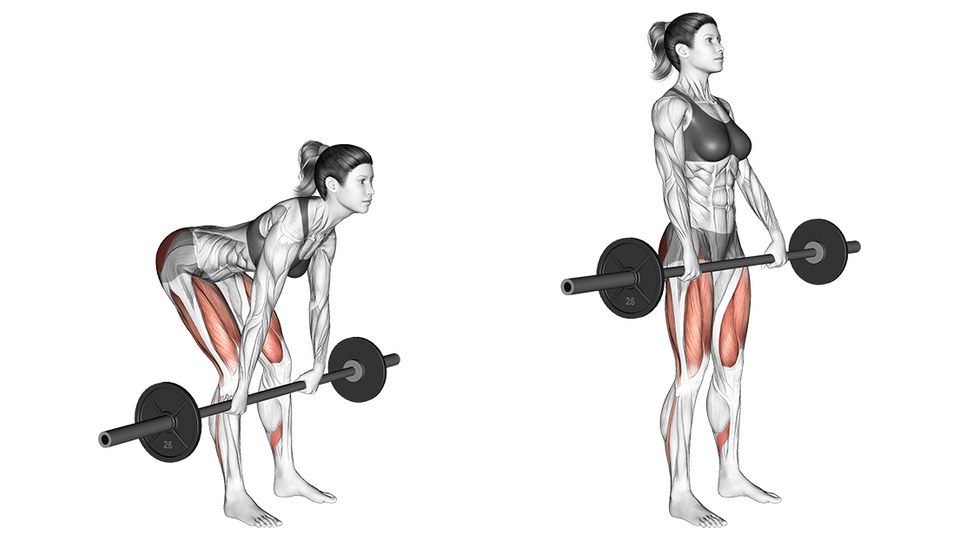
Romanian deadlift
Hands carry the load instead of the upper back
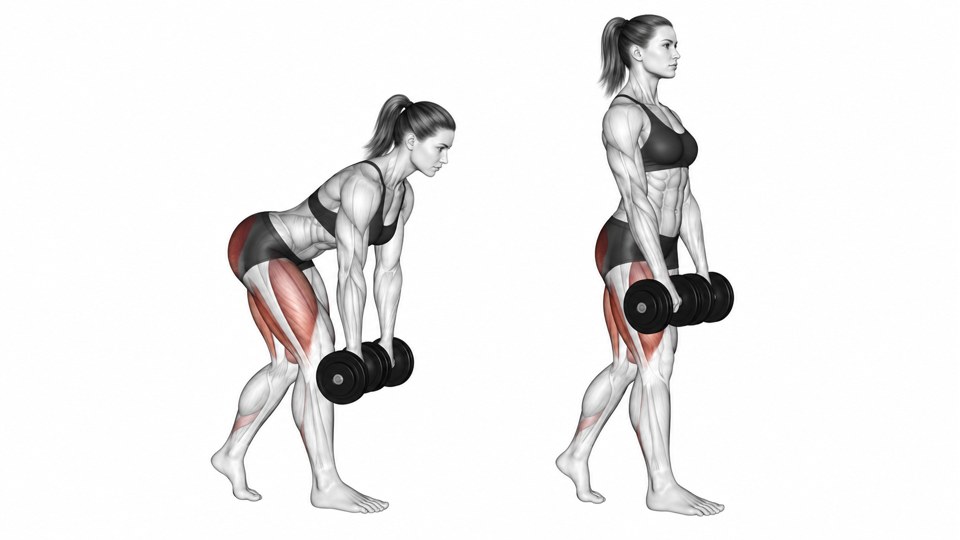
Use dumbbells at home
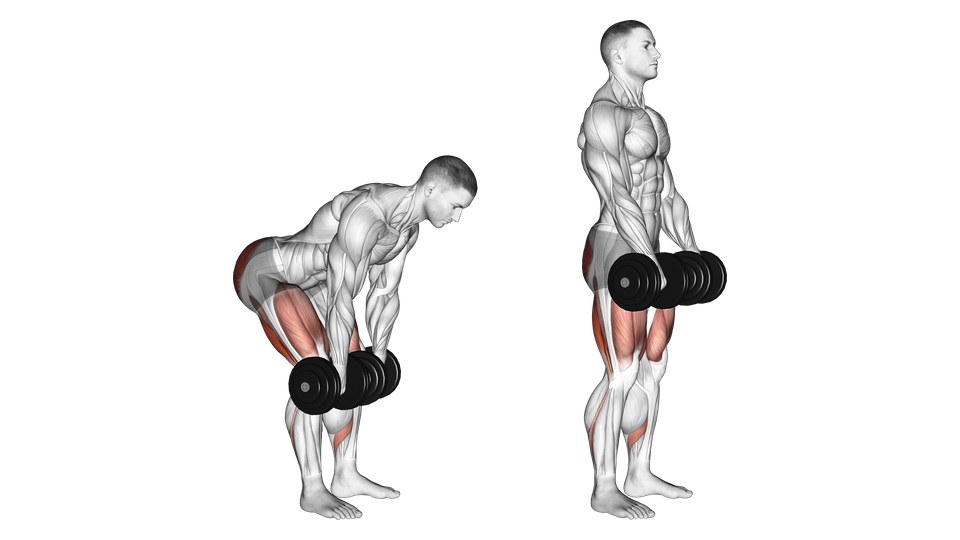
Dumbbell Romanian deadlift
Grip and available weight can limit loading
Emphasize one side with limited weight
B-stance RDL
Rear foot assists; it is not fully single-leg
Use a low cable
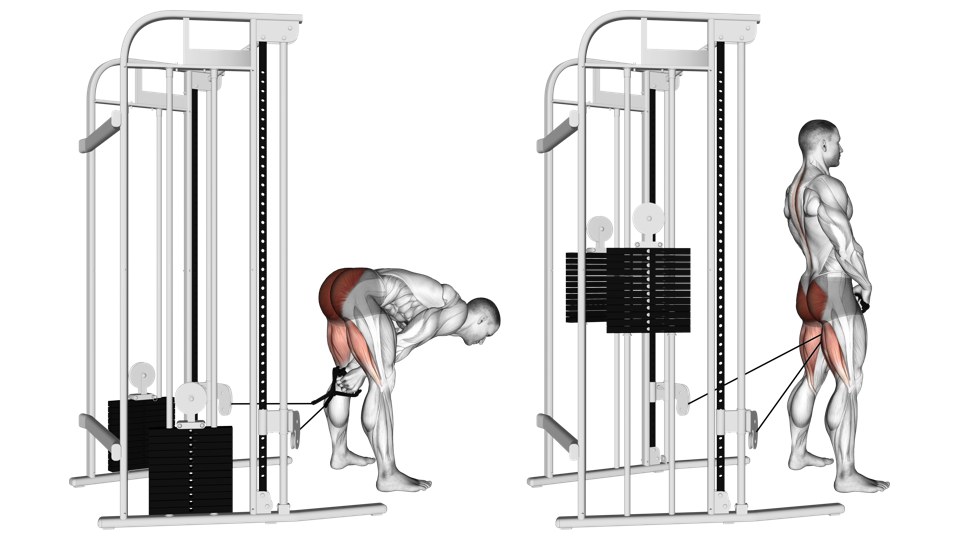
Cable pull-through
Backward cable pull changes the resistance direction
Use a supported station
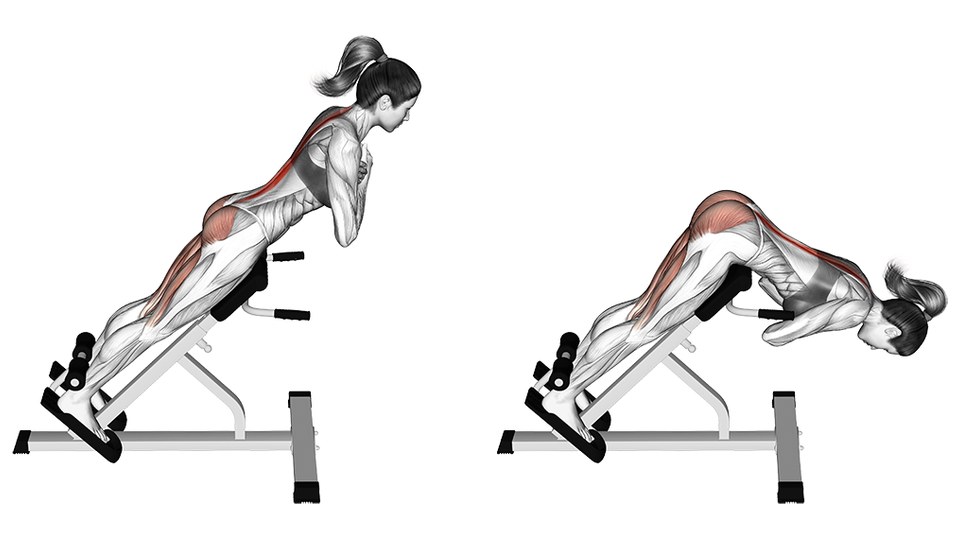
Back extension
Bench angle and pad position change the hinge

Choose a glute-focused accessory
Barbell hip thrust
Bent-knee hip extension changes the movement
Choose knee-flexion hamstring work
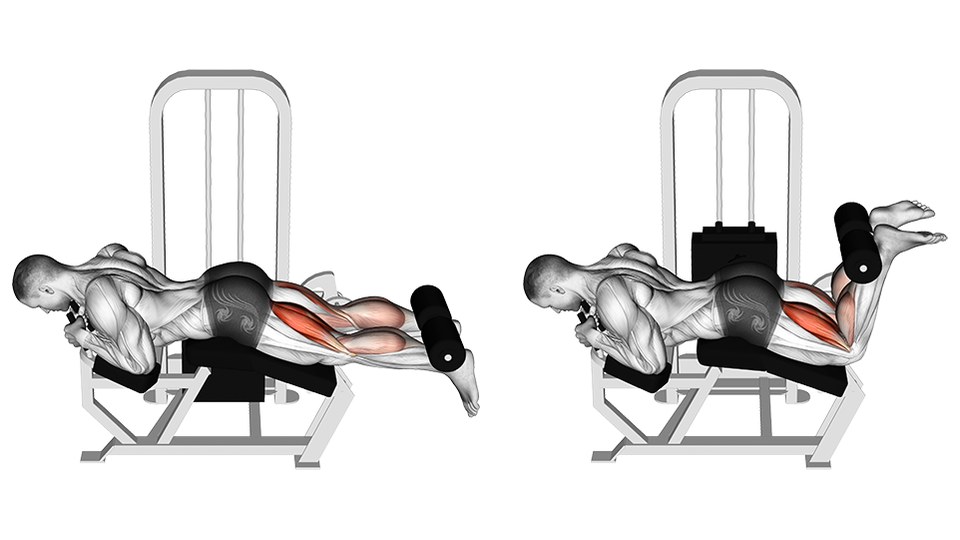
Leg curl
It replaces an accessory goal rather than the hinge
If the goal is simply removing the bar from your upper back, several options do that. If the goal is reducing every demand on your back, changing the implement does not establish that result. Standing hinges and hip-led bench work still require the trunk to support the movement.
Romanian deadlifts keep a standing free-weight hinge
A Romanian deadlift is a close practical substitute for the hinge portion of good mornings. Start standing with the bar in your hands, soften the knees, and move the hips backward while keeping the bar near your legs.
Lower until you reach the end of the range you can control, then stand upright. Reaching the floor is not the goal. Turning the descent into a deep knee bend changes the task toward a squat instead of preserving the hinge.
The changed bar position matters. A good morning carries the weight on the upper back; an RDL lets the arms carry it below the torso. Grip becomes part of the set, and the load's position relative to the hips changes through the movement.
Use the Romanian deadlift guide for setup, then choose the working load from the RDL's own warm-up sets. Sharing a hinge pattern does not create a dependable weight conversion.
Dumbbell and B-stance RDLs fit limited equipment
Dumbbell RDLs preserve the standing hinge without needing a bar across the back or a rack. Keep the weights close to the legs and let the arms hold them rather than pulling them upward as you stand.
If your dumbbells are light for a bilateral hinge, a B-stance RDL is another option. Place one foot slightly behind as a kickstand and perform the hinge mainly through the front leg. The rear foot contributes support and assistance, so this is not an unsupported single-leg exercise.
Keep the stance and rear-foot help consistent. If you push harder through the rear leg whenever the front side gets tired, the same recorded reps no longer describe the same task. Start with a light load while learning the arrangement.
Record sets per side and your dumbbell convention. If two dumbbells each weigh 15 kg, write that clearly rather than mixing a 15 kg entry in one workout with a 30 kg total in the next.
Cable pull-throughs change the direction of resistance
A cable pull-through uses a low pulley behind you and a rope passing between the legs. Face away from the station, walk forward until the cable has tension, and hinge backward with the arms long.
Stand by bringing the hips forward, finishing upright rather than leaning backward. If you need to bend the elbows and pull the rope to finish, reduce the stack setting and re-establish the hinge. The cable pull-through guide shows this setup.
The cable pulls toward the pulley rather than straight down like a free weight. Its effect at the hips changes with pulley height, your distance from the station and your position through the rep. Cable tension is not the same as an identical hip demand from start to finish.
Keep enough room for the rope and the full movement. Record the machine and starting distance, and check that the stack stays clear during the intended range. A different cable station may need a different setting.
Hip-led back extensions add a bench and anchored feet
A back extension can fill a hinge accessory slot when performed mainly through the hips. Adjust the pad so the hips can move, anchor the feet as the station requires, and lower and raise the torso through a controlled range.
Finish with the body in line rather than arching beyond it. The back extension guide distinguishes moving the spine from keeping the trunk relatively steady during a hip-led hinge. Those are different techniques, even on the same bench.
Support changes the task but does not switch off the back muscles. The hip extensors raise the torso in a hip-led repetition while the back remains loaded. Do not describe this option as isolating the glutes or eliminating trunk work.
Bench angle also affects where gravity creates the largest turning demand. A 45-degree bench and a horizontal station should not be treated as identical. Keep the station, pad setting and any weight held at the chest consistent in your records.
Leg curls and hip thrusts replace narrower accessory goals
A leg curl trains the hamstrings by bending the knee. A good morning uses the hip-crossing hamstrings during a hinge with relatively little change at the knee. Replacing one with the other changes the movement mix.
A hip thrust supplies hip-extension work with bent knees and the upper back supported. It may fit a glute-focused accessory goal, but it does not preserve the standing hinge or the same loading arrangement. Choose it for that narrower role, not because a muscle map overlaps.
Look at the whole workout before making either swap. If you already have an RDL and only want more hamstring work, a leg curl may be a useful change. If the good morning was your only hinge, removing it for curls means deciding deliberately whether the workout still needs hinge work.
Research supports treating these as different tasks
Schellenberg and colleagues' 2013 study measured movement and joint moments in 13 experienced lifters performing good mornings and deadlifts. The lower-body movement and loading patterns differed between the exercises under the tested conditions.
The study compared good mornings with its specified deadlift execution, not with every RDL, cable or bench option in this guide. It measured mechanics during lifting, not long-term muscle growth. It therefore supports caution about treating related exercises as mechanically identical; it does not establish a best replacement or an injury-prevention benefit.
Use muscle maps as anatomy, then track the new setup
The maps show the targets described by the exercise guides. Their primary and secondary labels do not measure activation or rank future growth. In hinge exercises, the hip-crossing hamstrings and gluteus maximus contribute to hip extension, while trunk support remains part of the task.
Explore the muscle maps
Good mornings
Primary
Secondary
Schematic surface view. Some muscles are partly visible or not shown.
| Exercise | Primary | Secondary |
|---|---|---|
| Good mornings | hamstrings, gluteus maximus, erector spinae | adductor magnus |
| Romanian deadlift | hamstrings (biceps femoris long head, semitendinosus, semimembranosus), gluteus maximus | erector spinae, adductor magnus, forearm flexors (grip) |
| Dumbbell Romanian deadlift | hamstrings, gluteus maximus | erector spinae |
| B-stance RDL | gluteus maximus, hamstrings | None listed in this guide |
| Cable pull-through | gluteus maximus, hamstrings | None listed in this guide |
| Back extension | erector spinae, gluteus maximus, hamstrings | None listed in this guide |
| Barbell hip thrust | gluteus maximus | hamstrings, quadriceps femoris |
| Leg curl | biceps femoris (long head), biceps femoris (short head), semitendinosus, semimembranosus | gastrocnemius |
Start the replacement with its own warm-up sets and manageable working difficulty. Keep the exercise long enough to compare sessions, noting cable settings, bench angle or stance where relevant. More weight with a changed setup is not automatically progress.
Download RepCount for iOS or Android to log sets, reps and weight. Give each replacement its own entry so your good morning records stay comparable when you return to the original movement.
Frequently asked questions
What is the closest alternative to good mornings?
A Romanian deadlift is a close practical alternative when the goal is a standing hip hinge without a bar on the upper back. The load is held in the hands instead, so grip and the new loading position require a separate working weight.
What can replace good mornings at home?
Dumbbell Romanian deadlifts are an option when suitable weights are available. B-stance RDLs can shift the task toward one leg, though the rear foot still assists. An unloaded hinge can practise the movement but is not automatically an equivalent loaded set.
Are back extensions the same as good mornings?
Back extensions use a bench with the feet anchored and a pad at the hips. A hip-led technique can fill a hinge accessory slot, but bench angle and support change the task. Back muscles remain involved; a supported position does not mean no back loading.
Can leg curls or hip thrusts replace good mornings?
Leg curls train knee flexion, while hip thrusts train hip extension in a bent-knee setup. Either may suit a specific accessory goal, but neither preserves the standing hip-hinge task of good mornings. Decide which part of the workout needs replacing.