
B-stance RDL
Also called kickstand RDL, B-stance Romanian deadlift, staggered-stance Romanian deadlift.
What is a b-stance RDL?
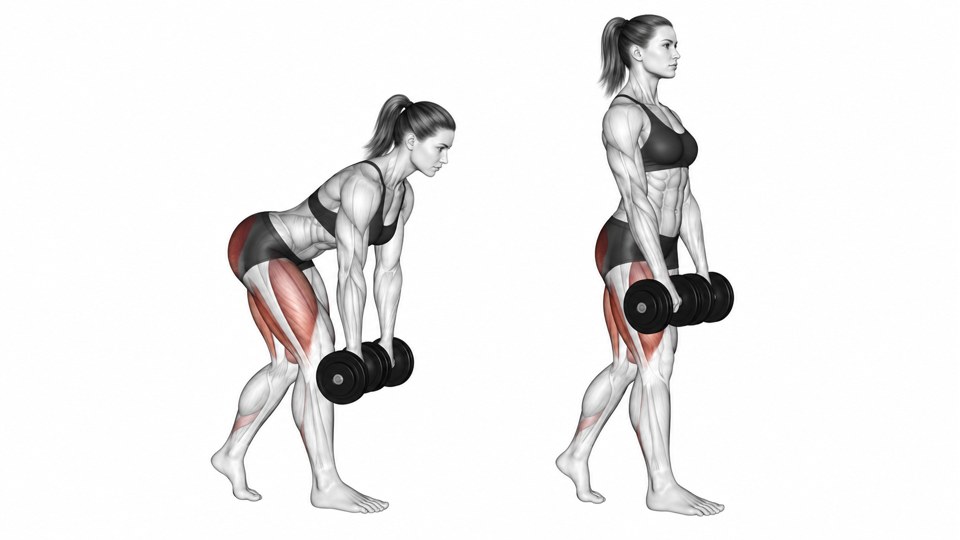
A B-stance RDL is a Romanian deadlift performed with one foot slightly behind the other. The front leg does most of the work while the rear toes stay down for balance. This guide uses two dumbbells and keeps the rear heel raised.
How do you perform a b-stance RDL?
Set up
- Stand holding a dumbbell beside each thigh. Move one foot a short distance back, keeping the feet on separate tracks rather than in a tightrope stance.
- Keep the front foot flat and rest the rear foot on its toes. Soften the front knee, place most of your weight over that leg and brace your torso.
Execution
- Move your hips backward as your chest tips forward. Let the dumbbells descend close to the front leg while the rear toes remain on the floor.
- End the descent before your back rounds or your hips turn. You do not need to put the weights on the floor.
- Press through the front foot and bring your hips forward until you are upright. Repeat, then switch which foot is in front.
Common mistakes
Pushing equally through both legs
Reset the stance so the rear toes provide support while you work through the front leg. Reduce the load if you keep shifting backward.
Dropping into a split squat
Keep the front knee softly bent and move the hips backward instead of lowering the rear knee toward the floor.
Chasing depth with the shoulders
Stop where you can keep your trunk steady; reaching the dumbbells farther down is not the goal.
Where it fits in a session
Use this where your session calls for a hip hinge.
Record the dumbbell load and repetitions for each working leg. Keep the stance consistent between sessions.
Muscles worked
Primary
Secondary
- None listed in this guide
Schematic surface view. Some muscles are partly visible or not shown.
Variations
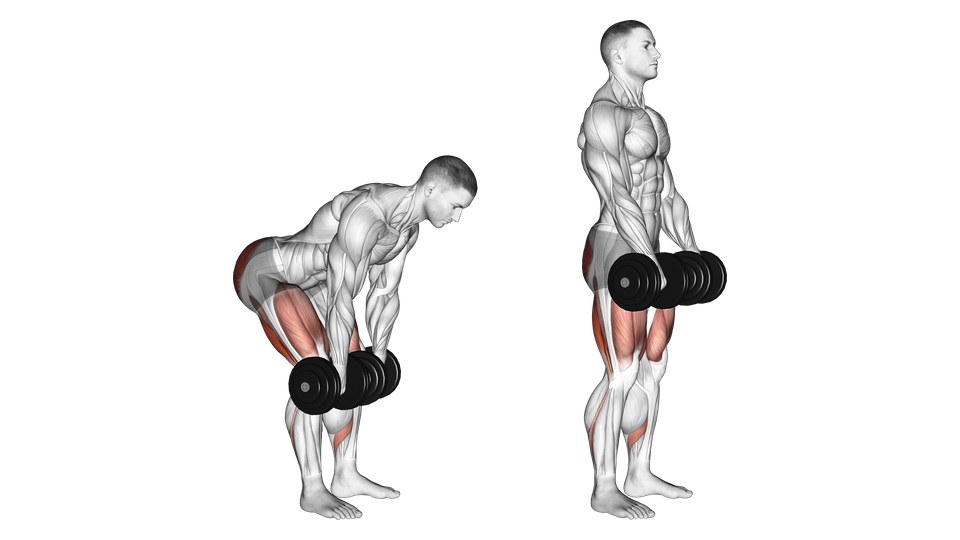
Frequently asked questions
Is a kickstand RDL the same as a B-stance RDL?
Yes. Both names describe the staggered setup with the rear toes supporting you while you work through the front leg.
Which leg should I feel working?
Use the leg with the flat, forward foot as the working side. Keep the rear toes light; if you keep pushing backward onto them, reset with lighter dumbbells.
Is this a single-leg RDL?
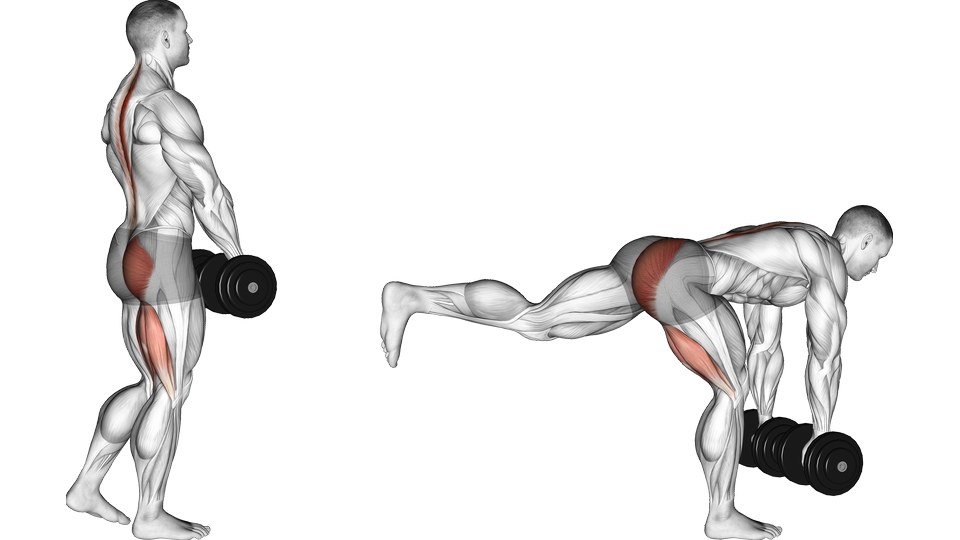
The rear foot stays grounded here. In a single-leg RDL it lifts off the floor. Keep separate exercise records if you train both versions.
Sources
- J. Gordon Betts et al. Anatomy and Physiology 2e: Appendicular Muscles of the Pelvic Girdle and Lower Limbs. 2022. https://openstax.org/books/anatomy-and-physiology-2e/pages/11-6-appendicular-muscles-of-the-pelvic-girdle-and-lower-limbs