Romanian deadlift alternatives for your workout
Dumbbell Romanian deadlifts are a practical Romanian deadlift alternative when a barbell is unavailable. Single-leg RDLs, cable pull-throughs and back extensions also provide hip-hinge options with different equipment and support. Leg curls train knee flexion, so they can complement hinge work rather than copy the Romanian deadlift.
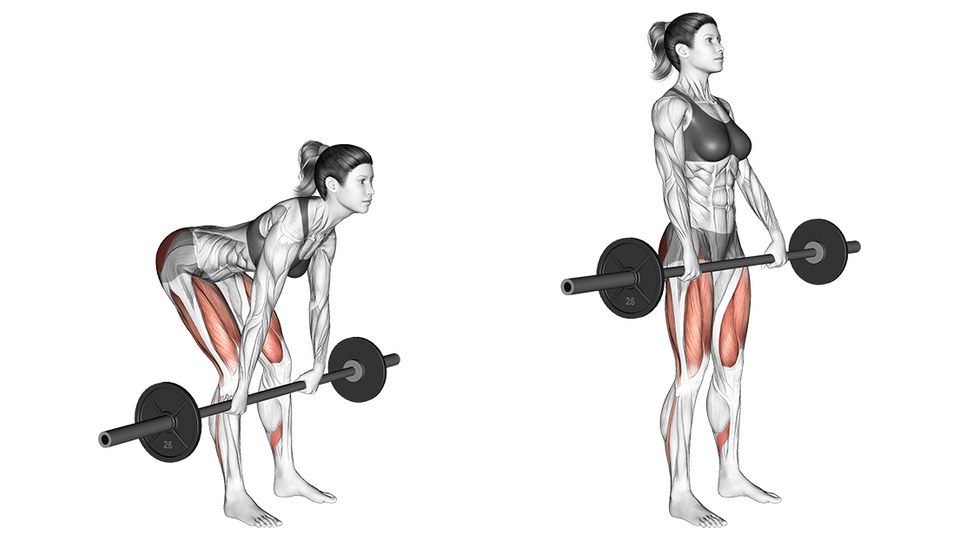
The RDL starts from standing and lowers through a hip hinge with a small knee bend. The goal is a controlled range you can repeat, not reaching the floor with the plates. Keep that distinction when choosing a replacement.
A conventional deadlift starts from the floor and involves a different starting task. It may belong in your program, but changing from RDLs to conventional deadlifts is more than swapping the implement. Choose according to the reason the original RDL was in the session.
Choose Romanian deadlift alternatives that keep a hinge
| Your goal | Alternative | Equipment | Main tradeoff |
|---|---|---|---|
| Replace the barbell with dumbbells | Dumbbell Romanian deadlift | Two dumbbells | Grip and available weights can limit loading |
| Use limited weight one side at a time | Single-leg RDL | One or two dumbbells | Balance and pelvic control become larger demands |
| Use a low cable | Cable pull-through | Rope and low pulley | Cable direction replaces a free-weight load |
| Use a hip-supported station | Back extension | 45-degree bench | Bench angle and pad position matter |
| Keep a standing hinge with a bar on the back | Good morning | Barbell and rack | Different bar position requires its own practice |
Your starting point
Romanian deadliftCompare Romanian deadlift alternatives for dumbbells, cables and supported benches. Preserve hip-hinge work and distinguish it from leg curls.
Choose by your goal and equipment
Replace the barbell with dumbbells
Dumbbell Romanian deadlift
Grip and available weights can limit loading
Use limited weight one side at a time
Single-leg RDL
Balance and pelvic control become larger demands
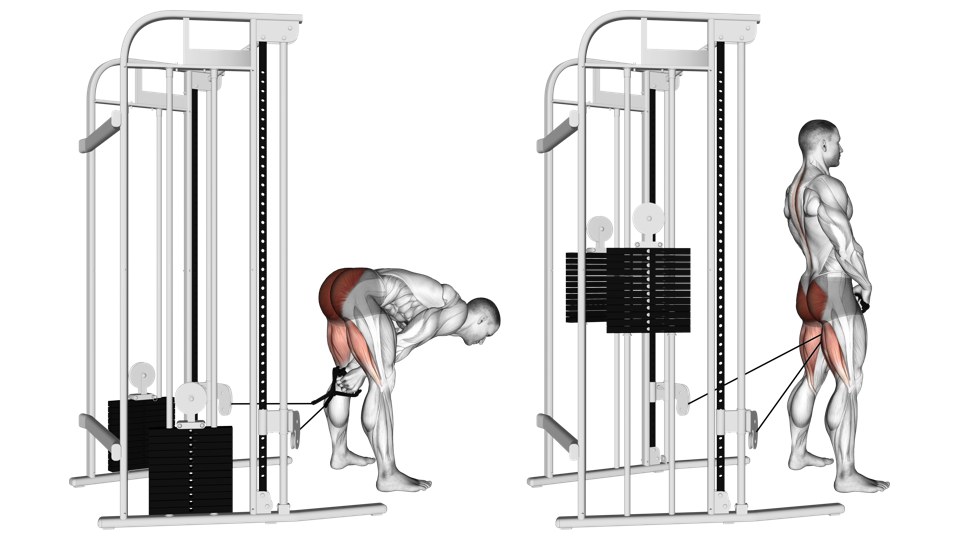
Use a low cable
Cable pull-through
Cable direction replaces a free-weight load
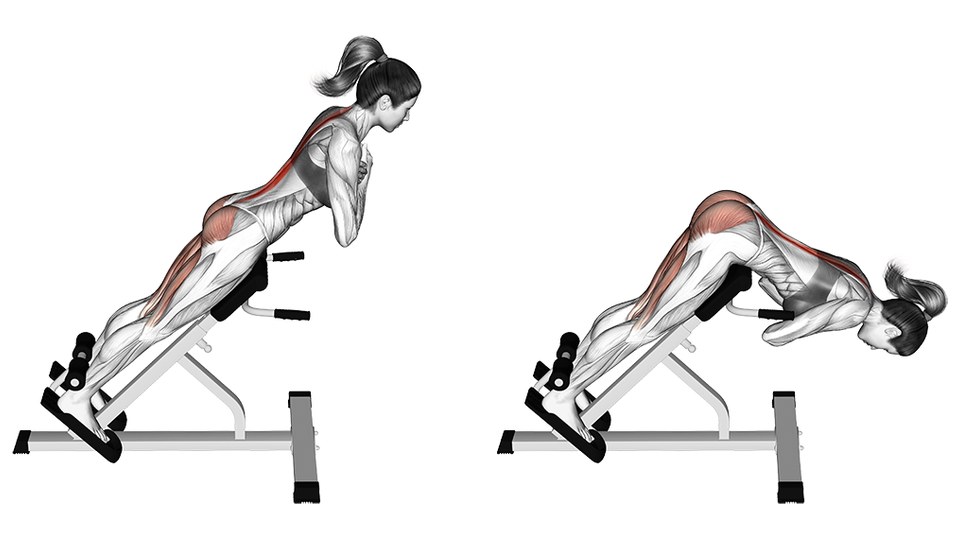
Use a hip-supported station
Back extension
Bench angle and pad position matter
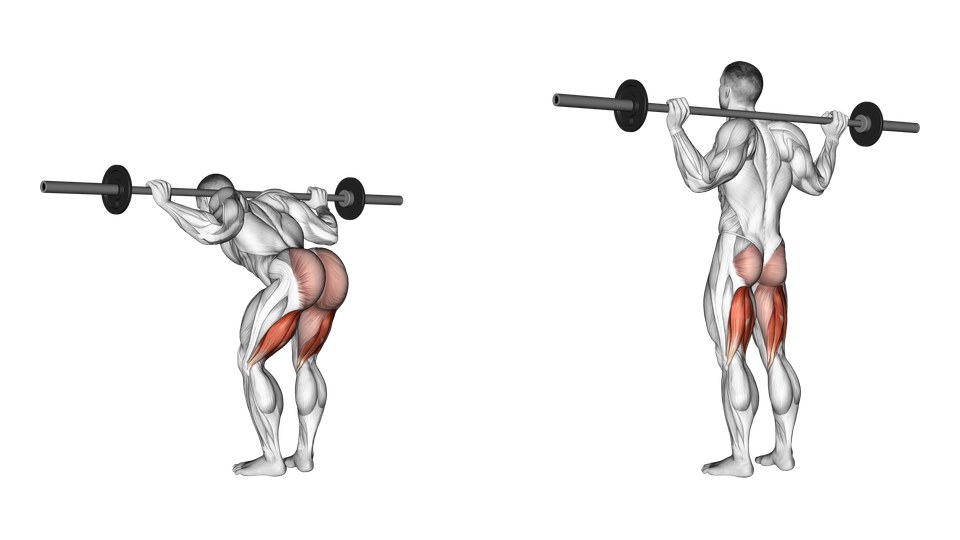
Keep a standing hinge with a bar on the back
Good mornings
Different bar position requires its own practice
Dumbbell RDLs are a straightforward implement change
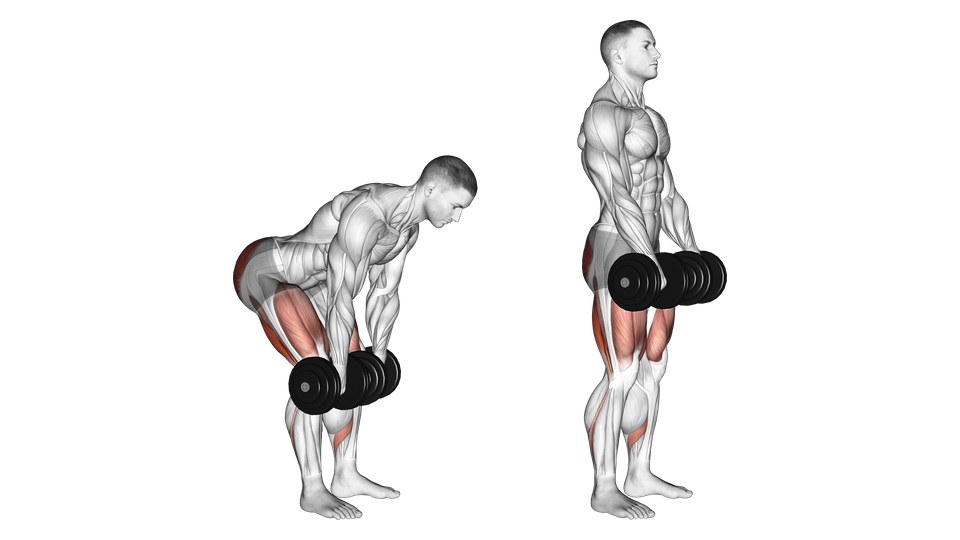
A dumbbell Romanian deadlift keeps the standing hinge while replacing the barbell with two weights. Hold them close to the legs, move the hips backward and lower only as far as you can maintain the position.
Keep the knee bend modest and consistent rather than turning the descent into a squat. Stand by extending the hips, without leaning farther back at the top. The dumbbells should move with the body, not swing independently away from it.
Available dumbbell size and grip can become the limit. Record how the weights are counted, since two dumbbells labelled with the same number can be logged per hand or as a combined total. Use one method consistently rather than making progress appear larger by switching conventions.
Single-leg RDLs use less external weight with a different balance task
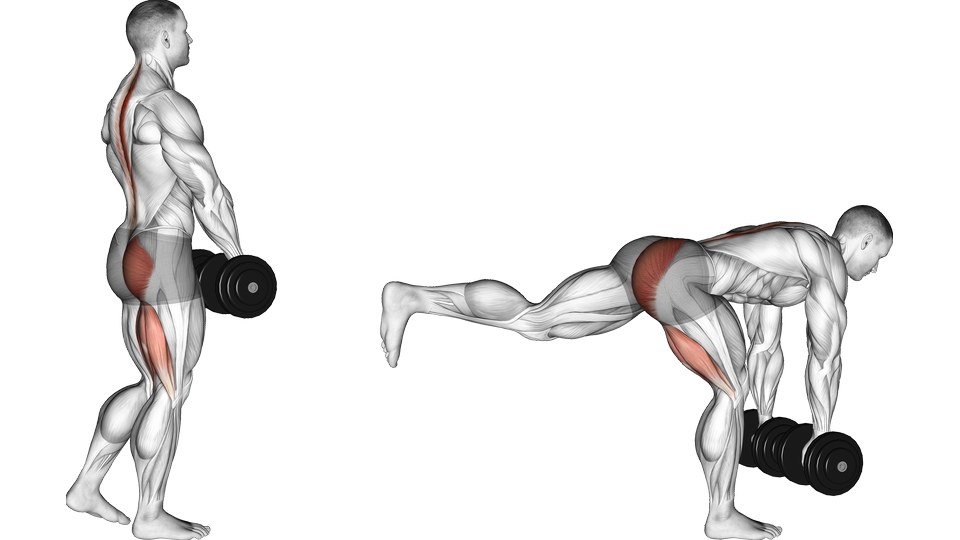
A single-leg RDL hinges on one standing leg while the other moves behind you. Begin with a controlled, modest range and keep the pelvis from opening to the side. You do not need to reach a particular floor point to make the movement count.
Balance may limit the set before the intended leg work. That matters when limited dumbbells are the problem you are trying to solve. A lighter-looking exercise is not automatically an easier one to learn or a better match for every session.
Count and record reps for each side. Note whether you use one or two dumbbells and which hand holds a single weight. Those choices change the setup and should stay consistent while you compare sessions.
Cable pull-throughs replace the free bar with a rear cable
A cable pull-through uses a rope attached to a low pulley behind you. Face away from the station, keep the cable path clear and move far enough forward to maintain tension. Hinge at the hips and return to a controlled standing position.
The cable pulls from a different direction than a barbell or dumbbells. Keep the knees slightly bent rather than making the movement a repeated squat. Choose a resistance that lets you stay balanced without being pulled backward during the return.
The cable-stack number is specific to the machine. Record the station and rope setup, and establish the load through warm-up sets. Do not convert a former RDL barbell weight directly to a pin setting.
Back extensions provide hinge work around a hip pad
A back extension uses a bench and ankle support while the torso lowers and rises. Adjust the pad so the hips can hinge and begin with a controlled bodyweight version. Finish in a straight line rather than lifting into an exaggerated backward bend.
The bench angle and pad position affect the movement. Keep them the same when comparing sessions and choose any added weight so you can hold it securely. The torso still needs control even though the station supplies support.
This can replace accessory hinge work, but it does not reproduce holding a bar near the legs while standing on the floor. If that specific RDL pattern is the training goal, a dumbbell RDL preserves more of it.
Good mornings change where the bar is held
A good morning places the bar across the upper back while you hinge. It keeps a standing hip-hinge pattern but changes how you support the load. Learn the bar position and rack setup separately instead of treating it as an RDL without a hand grip.
Start with a light practice load and set the rack safeties appropriately. Keep a small knee bend, move the hips back and use a range you can control without losing the intended torso position. Stand tall rather than finishing with a backward lean.
Do not copy the RDL working weight onto the back. The different bar position changes the task. A good morning can be a useful trained movement, but it is not an automatic answer when unfamiliarity with a loaded hinge is the reason for avoiding RDLs.
Leg curls and hip thrusts change the movement mix
A leg curl bends the knees against resistance. It trains the hamstrings without copying the visible hip hinge of an RDL. If the program has both exercises, they are not redundant just because both involve the backs of the thighs.
A hip thrust uses upper-back support and bent knees while the hips rise. It can fill a glute-focused slot, but it changes the setup and does not preserve a standing hinge with the weight held in the hands.
Decide whether you are replacing general muscle work or the hinge pattern itself. If the hinge is the purpose, pick a hinge option first. If you deliberately reorganize the session around different movements, record that as a program change rather than claiming the exercises are identical.
Compare the muscle maps without treating them as scores
The muscle maps show the anatomical targets listed in the linked guides. Primary and secondary labels describe those guide roles, not measured muscle activation or predicted growth. A highlighted region does not establish that one alternative is better than another.
Use the maps to locate muscles, then choose the exercise by its movement, support and available equipment. These are practical comparisons, not a trial ranking every replacement.
Explore the muscle maps
Romanian deadlift
Primary
Secondary
Schematic surface view. Some muscles are partly visible or not shown.
| Exercise | Primary | Secondary |
|---|---|---|
| Romanian deadlift | hamstrings (biceps femoris long head, semitendinosus, semimembranosus), gluteus maximus | erector spinae, adductor magnus, forearm flexors (grip) |
| Dumbbell Romanian deadlift | hamstrings, gluteus maximus | erector spinae |
| Single-leg RDL | hamstrings, gluteus maximus | erector spinae, adductor magnus, forearm flexors (grip) |
| Cable pull-through | gluteus maximus, hamstrings | None listed in this guide |
| Back extension | erector spinae, gluteus maximus, hamstrings | None listed in this guide |
| Good mornings | hamstrings, gluteus maximus, erector spinae | adductor magnus |
Start the replacement with a new working load
Use warm-up sets on the new exercise to find a manageable load. Keep some good reps available while learning the setup, and preserve a controlled return. The initial aim is a movement you can repeat, not matching an old number immediately.
Keep range, equipment and loading method steady before progressing. More depth in an RDL is not automatically improvement if it comes from a different knee bend or loss of position. More weight on a back extension is not directly comparable with more weight on a standing RDL.
RepCount lets you record sets, reps and weight and look back at earlier training. Save the alternative separately, including machine or per-hand loading notes. Download RepCount for Android if that is your workout phone.
Frequently asked questions
What is the closest Romanian deadlift alternative without a barbell?
A dumbbell Romanian deadlift retains the standing hip hinge while changing the implement. Keep the weights close and use a controlled range rather than trying to reach the floor.
Can leg curls replace Romanian deadlifts?
Leg curls provide hamstring work through knee flexion, while Romanian deadlifts use a hip hinge. Replacing RDLs with curls changes the movement mix, so choose according to the intended training slot.
Are conventional deadlifts and RDLs interchangeable?
Conventional deadlifts start with a stationary load on the floor. RDLs start standing and lower through a hinge. They can both belong in training, but they practise different tasks and need separate progressions.
Can I use my RDL weight for good mornings?
Do not assume an RDL load is suitable for good mornings. Good mornings place the bar on the upper back, changing how the load is supported. Learn the rack and hinge setup with a light practice load.