Leg press alternatives

A hack squat keeps a supported machine setup. Goblet squats, front squats and split squats offer options with free weights, while bodyweight squats work without equipment.

The aim here is a leg exercise that bends and straightens both the hips and knees. If you chose the leg press specifically for its torso support, read each alternative carefully: free-weight squats add balance and bracing demands.

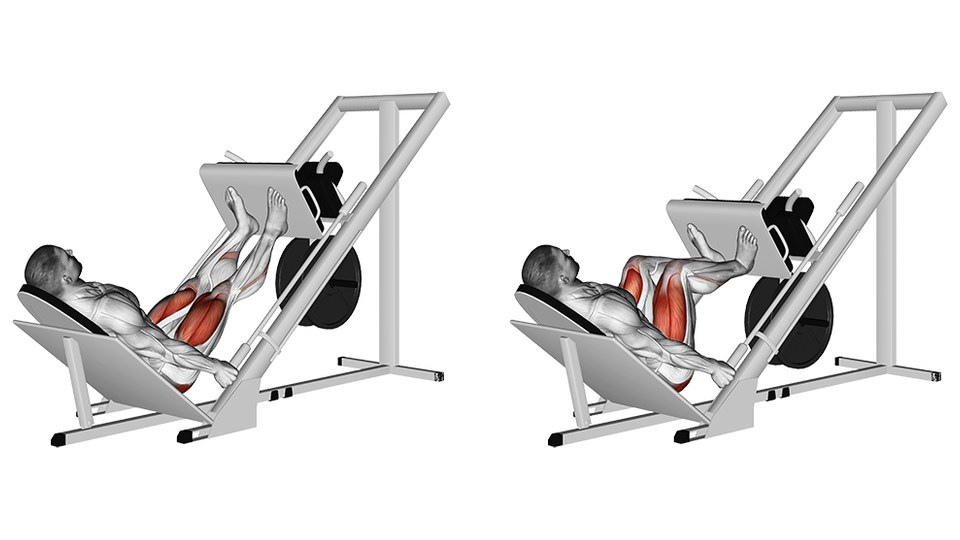
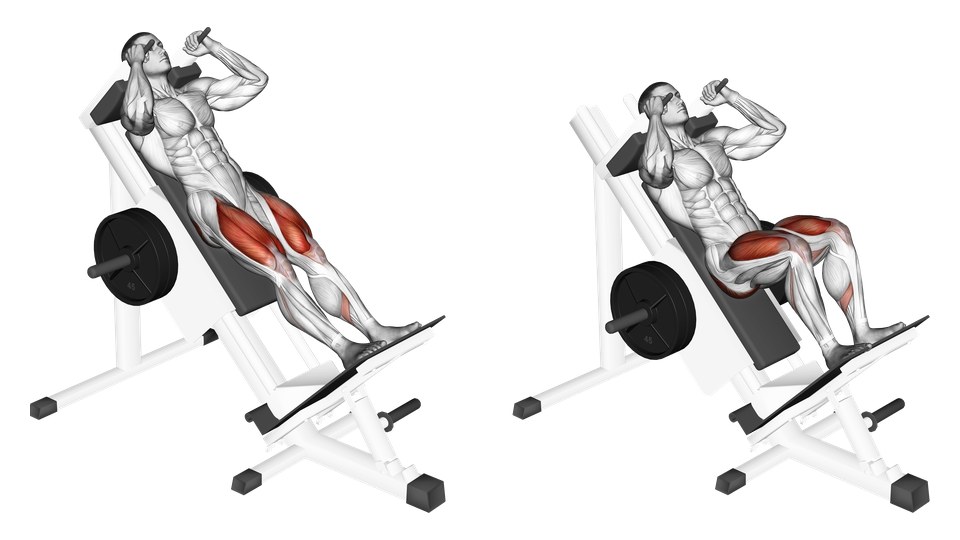
Anatomical illustration of a 45-degree sled leg press, shown as two frames side by side. In both, a grey muscle-anatomy figure lies back on the angled seat of a plate-loaded sled machine with a weight plate on the carriage and both feet flat on the footplate. On the left the legs are almost straight at the top of the push, the sled high on the rails; on the right the carriage has come down and the knees are bent past a right angle, thighs close to the chest. The muscles of the thighs are highlighted in red along their whole length, the upper inner thigh at the hip most strongly; the buttocks are pressed against the pad and are not visible.
What equipment can you use?

Choose everything you have. Some exercises need two items, such as dumbbells and a flat bench. Choose floor space for options without equipment.

Your replacements

Choose your equipment above to see replacements.

Compare all alternatives

These options need different equipment. Use the finder above to show only the setups you can use.

  • Anatomical illustration of a man lowering and pressing a hack squat sled, with the front thighs and glutes highlighted.

    Similar movement

    Hack squat

    You need: Hack squat machine

    Why it fits
    Keeps a supported machine exercise that straightens the hips and knees, training the quads and hip extensors together.
    What changes
    You stand on a platform with the sled at your shoulders rather than sit behind a footplate. The machine angle, sled and depth change the loading; start with a fresh weight selection.
    See exercise guide
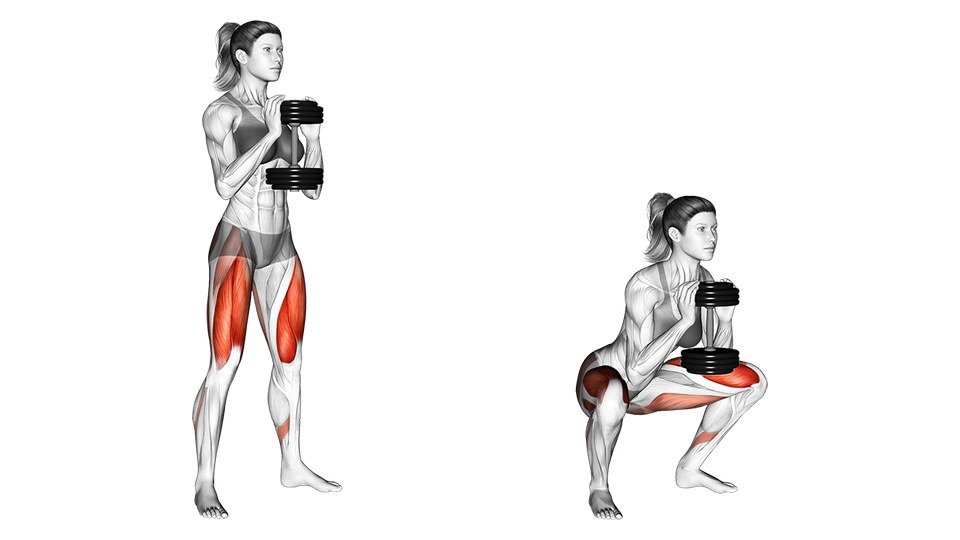
  • Anatomical illustration of a woman holding one dumbbell at her chest while performing a goblet squat, with the thighs and glutes highlighted.

    Similar movement

    Goblet squat

    You need: Dumbbells or Kettlebell

    Why it fits
    Keeps knee and hip extension for leg training using a dumbbell or kettlebell held at the chest.
    What changes
    Your torso has no backrest, so you must balance and brace. Holding the weight can become limiting before your legs do. It is a practical free-weight option, without reproducing heavy supported leg pressing.
    See exercise guide
  • Two anatomical illustrations of a man performing a barbell front squat against a white background. In the left frame he stands upright with a loaded bar resting across the fronts of his shoulders, fingertips under the bar and elbows pointing forward. In the right frame he holds the same front-rack position at the bottom of a deep squat, with his heels down, knees following his slightly turned-out feet and hips below knee height. The quadriceps are highlighted bright red in both frames. The glute area, inner thighs and part of the lower legs are also shaded red in the bottom frame. No squat rack, safety arms or collars are shown.

    Similar movement

    Front squat

    You need: Barbell and plates + Squat rack with safeties

    Why it fits
    Provides a barbell option that trains the quads and hip extensors by bending and straightening the knees and hips.
    What changes
    You support the bar on the fronts of your shoulders, with no back pad. The rack position, balance and torso control take practice. Use a rack with safeties and choose a fresh load you can control.
    See exercise guide
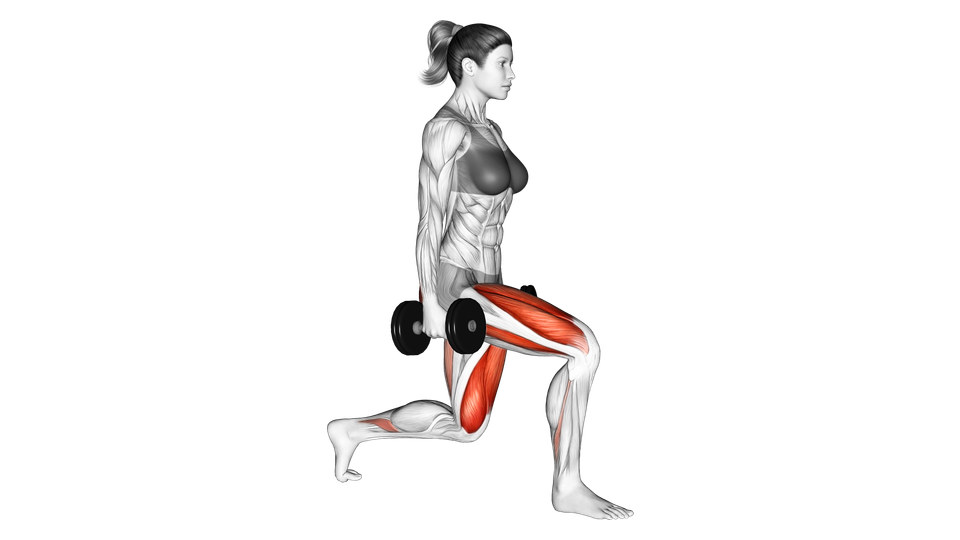
  • Side-view anatomical illustration of the bottom position of a dumbbell split squat, with a dumbbell held at each side, both feet on the floor and the thigh muscles highlighted.

    Similar movement

    Dumbbell split squat

    You need: Dumbbells

    Why it fits
    Keeps knee and hip extension, with most of the work on the front leg. Dumbbells allow you to add resistance without a machine.
    What changes
    You train each side separately in a split stance. Balance and grip add demands that the seated leg press does not have. Plan reps for each side rather than treating one set as a two-leg press.
    See exercise guide
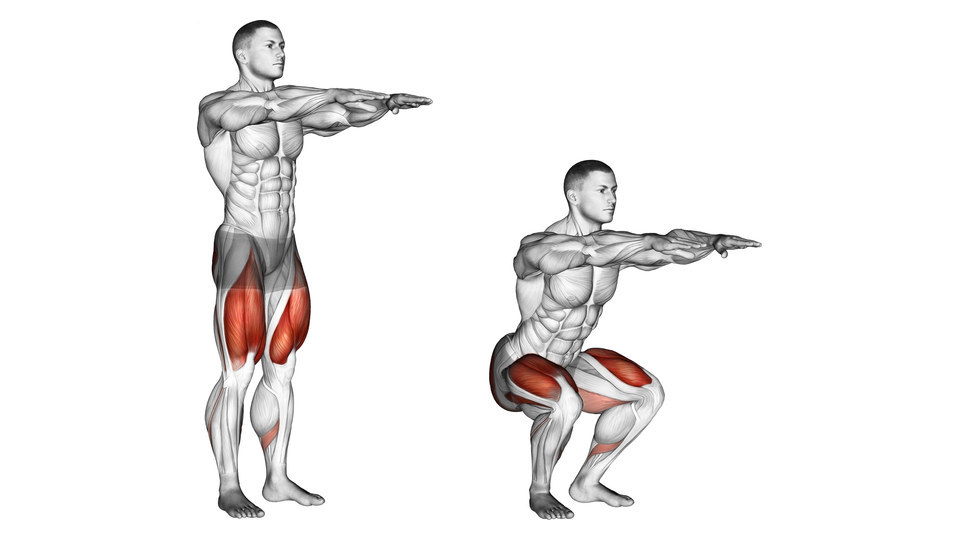
  • Two-frame anatomical illustration of a bodyweight squat on a white background. On the left, a man stands with his feet a little wider than his hips, toes turned slightly out and both arms extended forward at shoulder height. On the right, the same man is in a deep squat with his heels planted, knees bent outward over his feet, hips below his knees and torso leaning forward while his arms remain extended. No equipment or external weight is shown. The quadriceps, glute area, inner thighs and part of the lower legs are highlighted red.

    Similar movement

    Bodyweight squat

    You need: Floor space (no equipment)

    Why it fits
    Keeps a two-legged knee-and-hip movement when you have floor space and no equipment.
    What changes
    There is no external load or torso support. It may be too easy to replace a heavy leg-press set at the same reps. Judge whether the effort fits your workout instead of assuming equal training from the same rep count.
    See exercise guide
See the original exercise guide

How we choose replacements

These are curated alternatives, chosen for the movement and the job the exercise does in a workout. A shared muscle group is not enough. Read what changes before choosing: support, range of motion, balance and resistance can all differ. If your goal is to improve a specific lift, alternatives do not replace practice of that lift.

Explore alternatives by exercise