Cable rear delt fly
Shoulders
Cable
Exercises by muscle
Choose rear-delt work that fits your equipment and the way you like to train. Compare supported flyes, cable setups and a wide-elbow row, then open the illustrated guides for technique details.
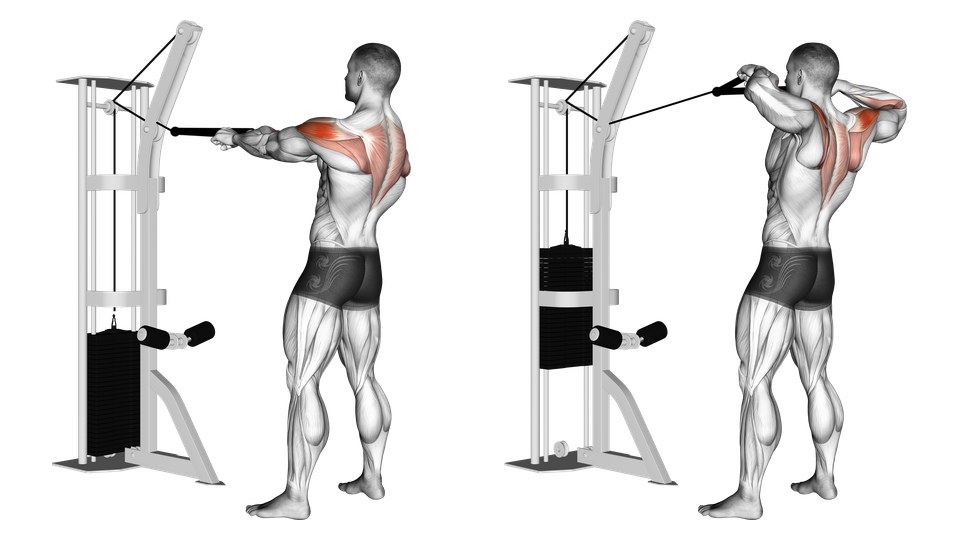
The back view highlights the rear delts. This surface map locates the muscle; it does not compare activation or predict growth.
The rear delts are the back portion of your shoulder muscles. The exercises below involve this area, but they also involve other muscles around the shoulder and upper back. Choose by movement and setup rather than expecting any option to work the rear delts alone.
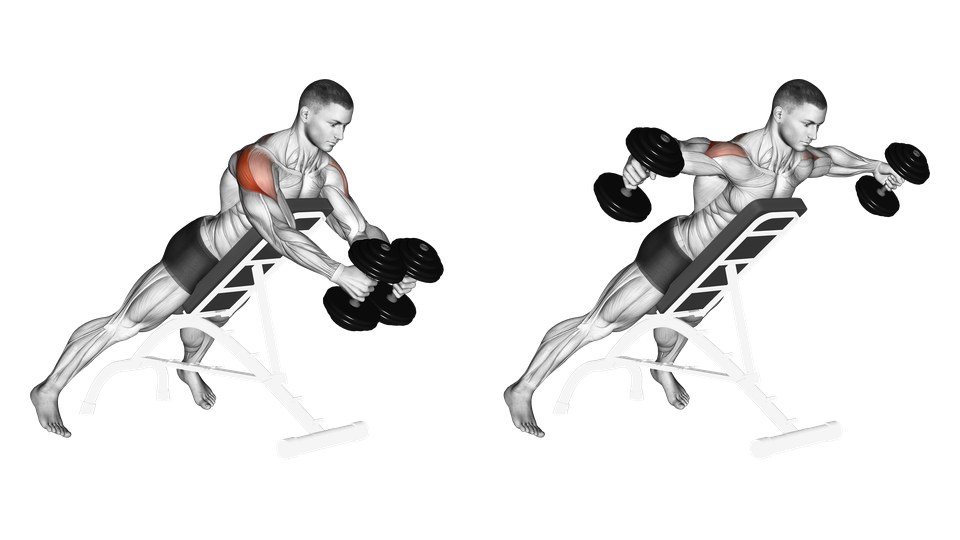
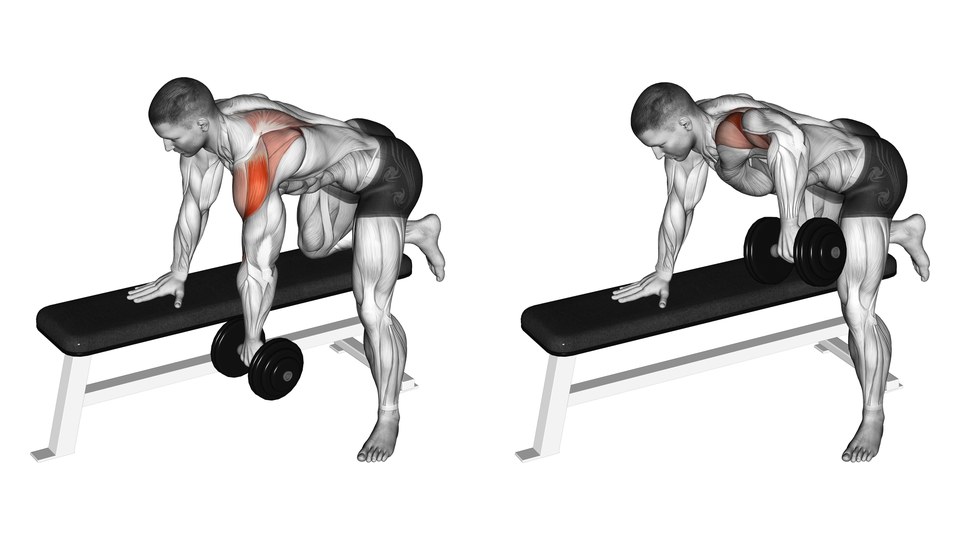
Choose the rear delt fly if you want both arms moving wide while your chest rests on an incline bench. Choose the rear delt row if you prefer one arm at a time, bracing the other hand and knee on a flat bench. The row bends the elbow during the pull; the fly keeps a small, nearly fixed bend.
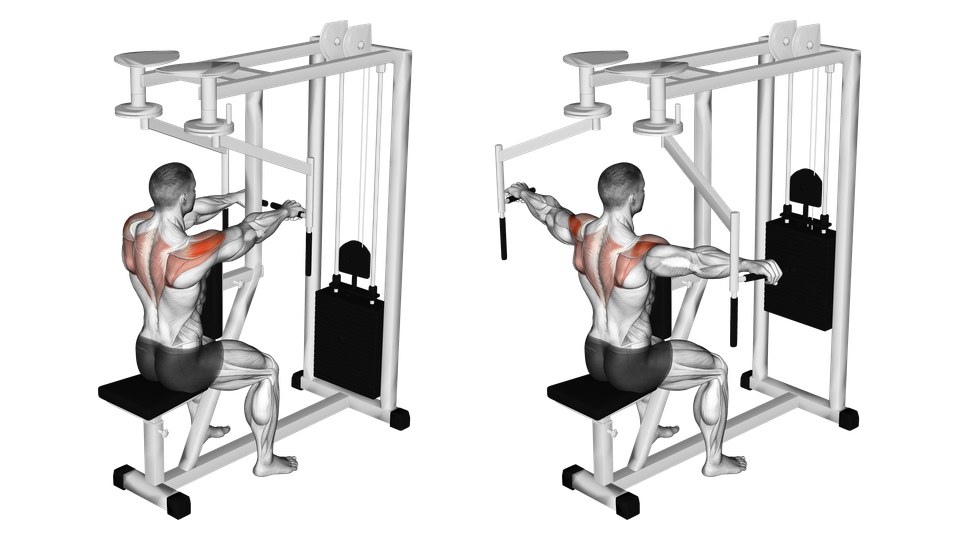
The reverse pec deck gives you a seat, chest pad and guided arm path. It suits someone who prefers a supported fly with less equipment to arrange. The tradeoff is that the machine sets the path and available weight increments, so check that its seat and handles fit your setup.
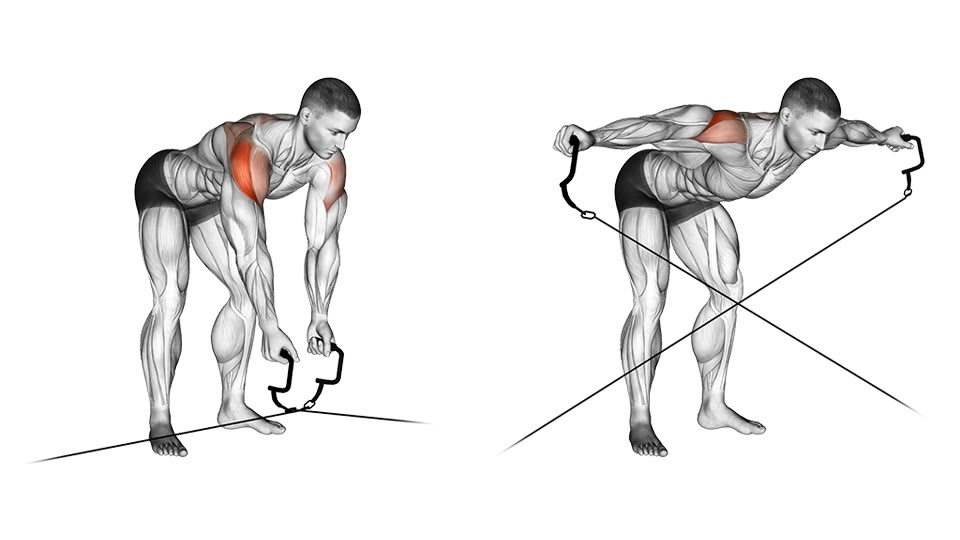
The cable rear delt fly shown here needs two low pulleys and individual handles. You hold a hip hinge while opening the arms wide. With one high pulley and a rope, consider face pulls: they bend the elbows and finish with the hands separating beside the head. Choose that combined pull and rotation deliberately; it is a different movement from a fly.
A fly keeps the elbow angle nearly fixed as the upper arms move wide. A row adds elbow bending. In this rear-delt row, the elbow travels out to the side rather than close to the ribs. Keep separate working weights and training histories for the two movements; a heavier row is not evidence of a better rear-delt exercise.
If holding a bent-over position distracts you from the arm movement, try the chest-supported dumbbell fly or reverse pec deck. Their bench or pad supports your torso. The illustrated row uses a hand-and-knee brace instead. Support changes what you have to hold steady; it does not establish which exercise grows more muscle.
Keep the same exercise, support position, range of motion and equipment settings across sessions. Record weight and reps, plus the bench, seat or pulley setting you used. As a practical progression rule, add reps within your planned range, then try the smallest available weight increase once you can repeat the top end without changing the movement. Start a new comparison when you change the setup or machine.
A study of 19 resistance-trained men found higher average rear-delt muscle activation with a neutral grip than a palms-down grip on a reverse-fly machine. It measured electrical activity during the exercise, not muscle growth over a training program. That result does not rank these five exercises for growth or establish the best grip for every dumbbell and cable setup.
Read the hand-position study (Schoenfeld et al., 2013)Guides: 5
Master the fundamental principle behind muscle growth and strength gains with our comprehensive guide for anyone who wants real results.
Most people should train each muscle with 10 to 20 hard sets a week. The number is the easy part. Counting your sets honestly is where it usually goes wrong.
Start with the equipment you can use regularly and a setup you can repeat. If you prefer chest support, compare the dumbbell fly and reverse pec deck. If you prefer working one side at a time, look at the bench-braced row. You do not need all five options in one workout.
A standing rear delt fly uses a hip hinge instead of chest support. It is listed as a variation in the rear delt fly guide; the main illustration shows the supported version. Treat the standing setup as its own variation when recording progress, because you also have to hold your torso steady.
They both involve the rear shoulders, but they do different things. A face pull bends the elbows and adds a rotation finish beside the head. If you want to preserve a fly movement, compare the dumbbell, cable and machine fly options. Choose face pulls when you want their combined movement.
Log every set, see plate loading in context, and track your strength over time. Available on iOS and Android.