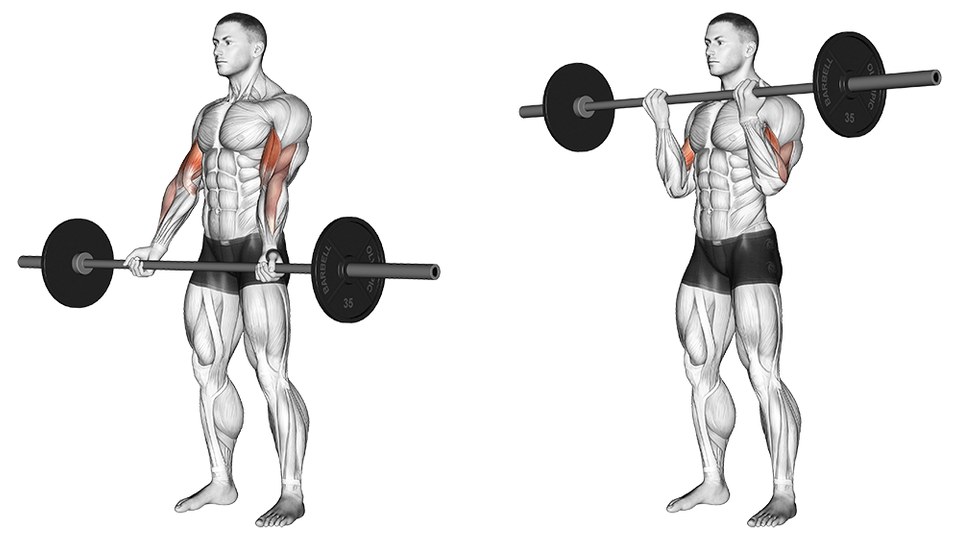
Barbell biceps curl
Biceps · Forearms
Barbell
Exercises by muscle
Choose between wrist movement, elbow flexion with a neutral or palms-down grip, and holding a load. These train different forearm tasks rather than being identical substitutes.
The map shows the forearm flexors and brachioradialis. It is a partial overview rather than every forearm muscle.
The forearms contain muscles that move the wrist and fingers as well as muscles contributing to elbow movement. A wrist curl moves the wrist, a hammer curl bends the elbow, and a hang asks the finger flexors to maintain a grip. Choose the task you want to train.
Support the forearms and let the wrists move against resistance.
These are curls at the elbow, rather than wrist curls.
Compare hanging bodyweight with carrying external weights.
A hang does not reproduce wrist flexion. A hammer curl does not reproduce carrying a load. Decide which demand you need before selecting a replacement.
For carries, keep the implement and route length consistent. For hangs, record duration and grip. For curls, compare weight and reps within the same setup.
Guides: 13
Biceps · Forearms
Biceps · Forearms
Forearms
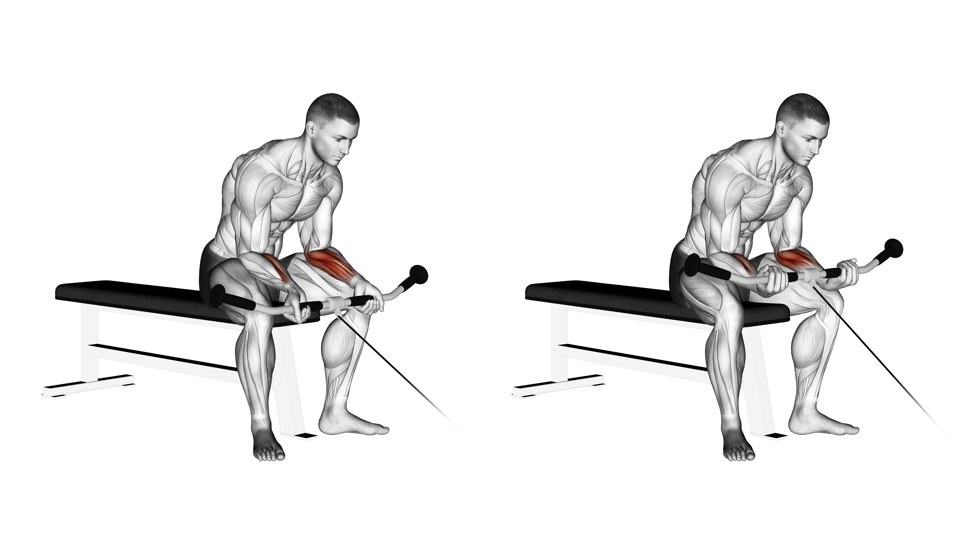
Forearms
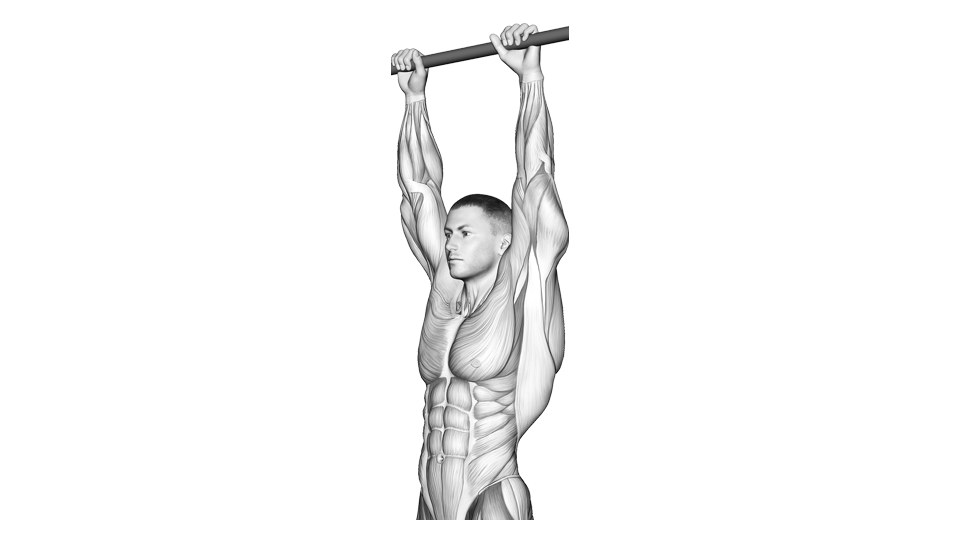
Forearms
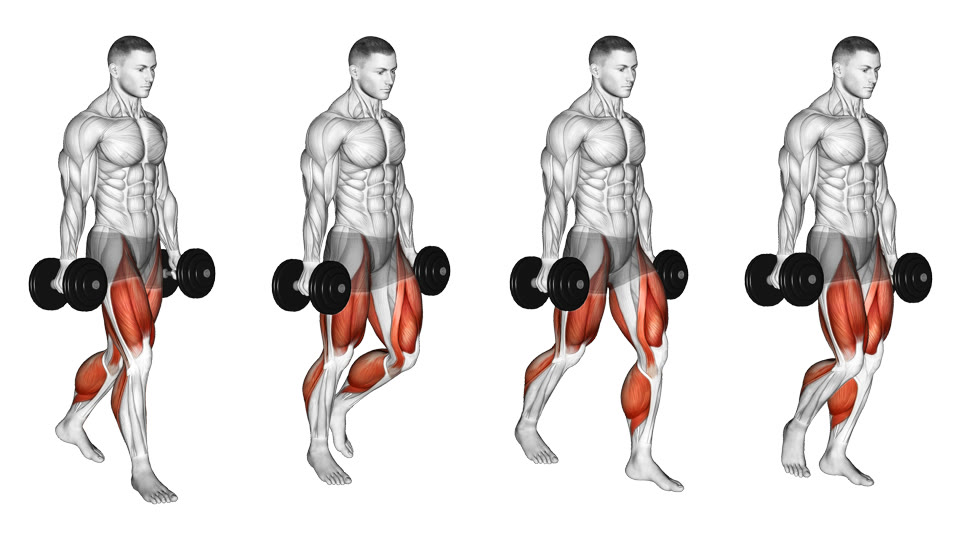
Back · Forearms
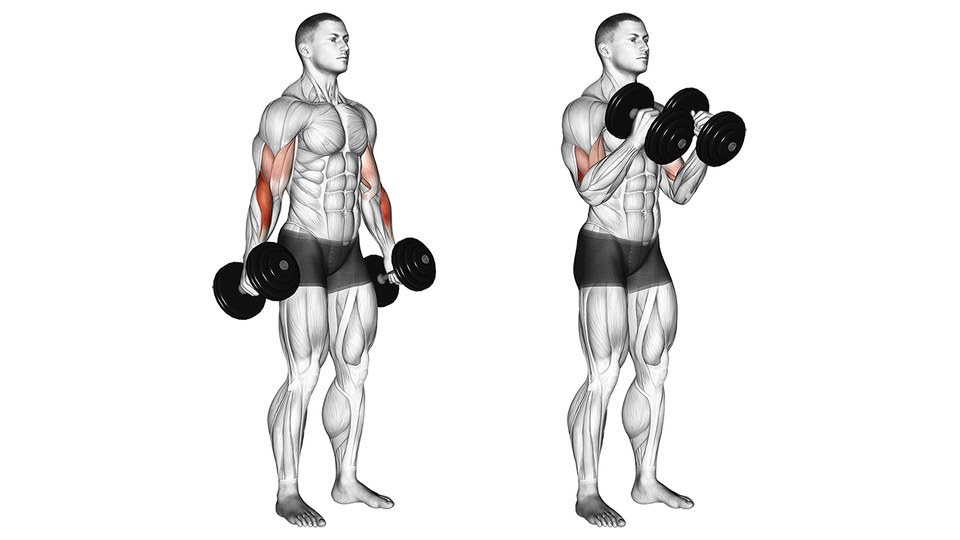
Biceps · Forearms
Variations
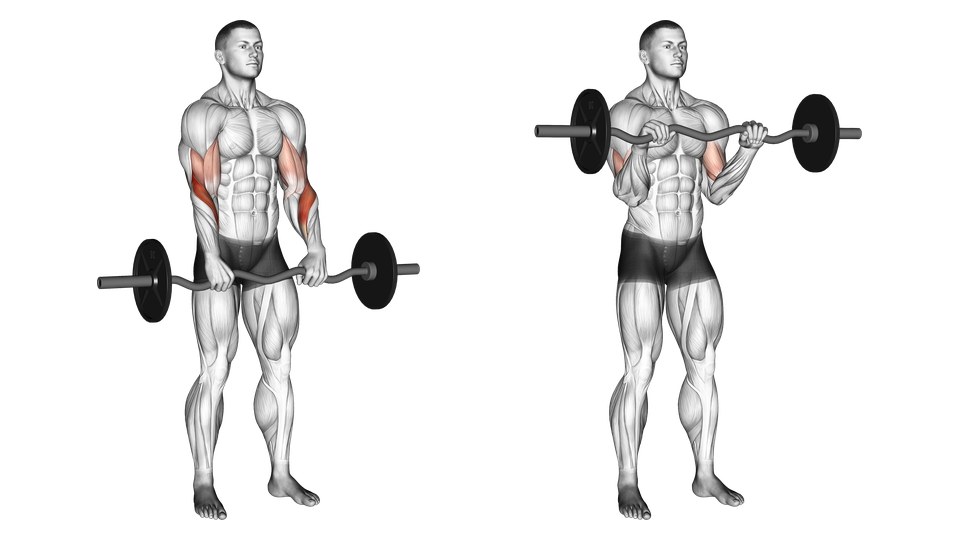
Biceps · Forearms
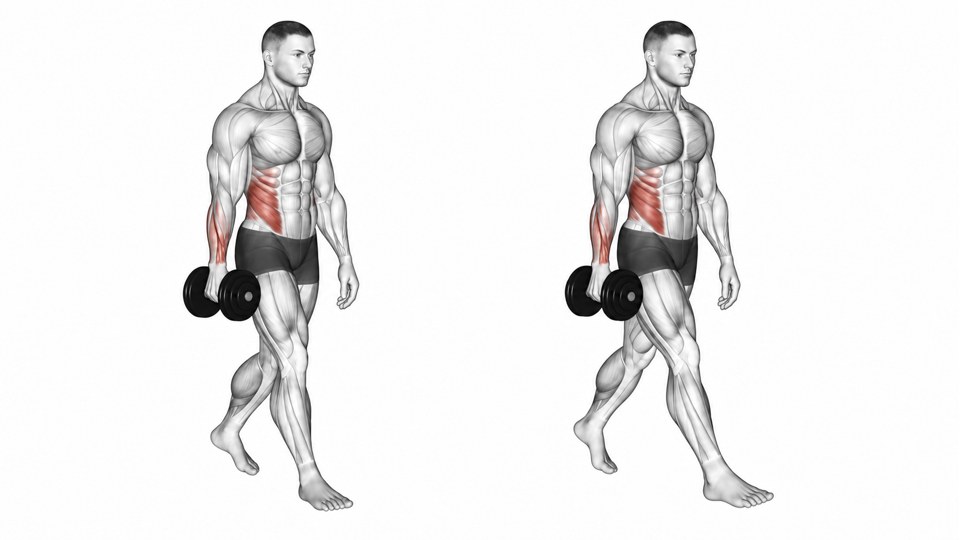
Forearms · Core
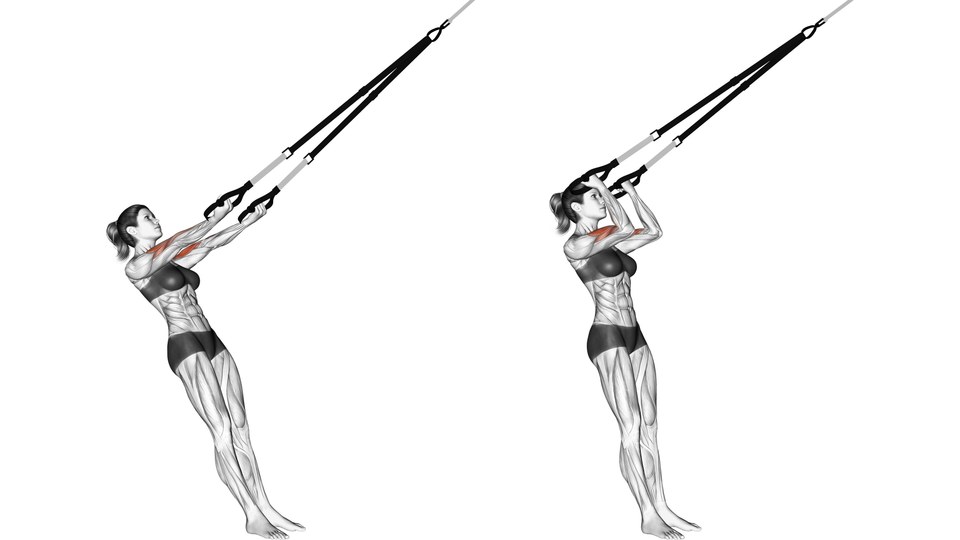
Biceps · Forearms
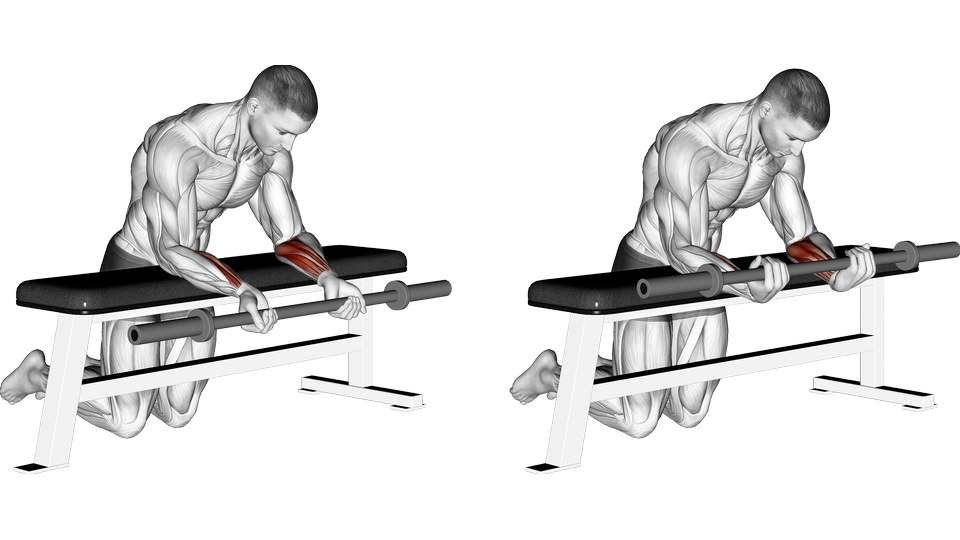
Forearms
Most people should train each muscle with 10 to 20 hard sets a week. The number is the easy part. Counting your sets honestly is where it usually goes wrong.
Master the fundamental principle behind muscle growth and strength gains with our comprehensive guide for anyone who wants real results.
They train elbow flexors including the brachioradialis. They do not replace every wrist or grip exercise.
Both require sustained grip, but a hang supports bodyweight from a bar while a carry holds weights during walking. The load, support and progression differ.
Log every set, see plate loading in context, and track your strength over time. Available on iOS and Android.