Tibialis raise
Shins
Bodyweight
Exercises by muscle
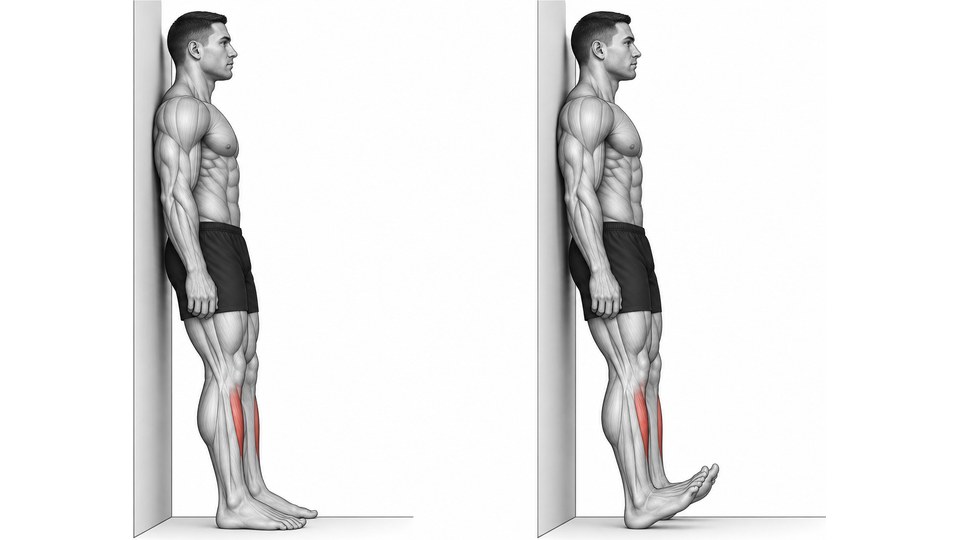
Train lifting the front of the foot with a wall-supported tibialis raise. This is a different ankle action from rising onto the balls of your feet in a calf raise.
The front view locates the tibialis anterior. It does not show every muscle that helps move or support the ankle.
The tibialis anterior runs along the front of the lower leg and helps lift the foot toward the shin. The wall-supported tibialis raise trains that dorsiflexion movement while the heels stay on the floor.
Use a wall and floor support to lift the forefeet while the heels stay down. The bodyweight setup lets you start without a dedicated machine.
Lift the forefeet while the heels remain down. Rising onto the toes turns the task into plantarflexion, the action trained by a calf raise.
Foot distance from the wall changes the setup. Keep it consistent when comparing reps, and avoid using a shorter range just to extend the set.
Guides: 1
Most people should train each muscle with 10 to 20 hard sets a week. The number is the easy part. Counting your sets honestly is where it usually goes wrong.
Master the fundamental principle behind muscle growth and strength gains with our comprehensive guide for anyone who wants real results.
No. A tibialis raise lifts the front of the foot with the heel down. A calf raise lifts the heel by pushing through the front of the foot.
No. The illustrated wall-supported version uses bodyweight. Equipment-based versions are different setups and are not illustrated in this guide.
Log every set, see plate loading in context, and track your strength over time. Available on iOS and Android.