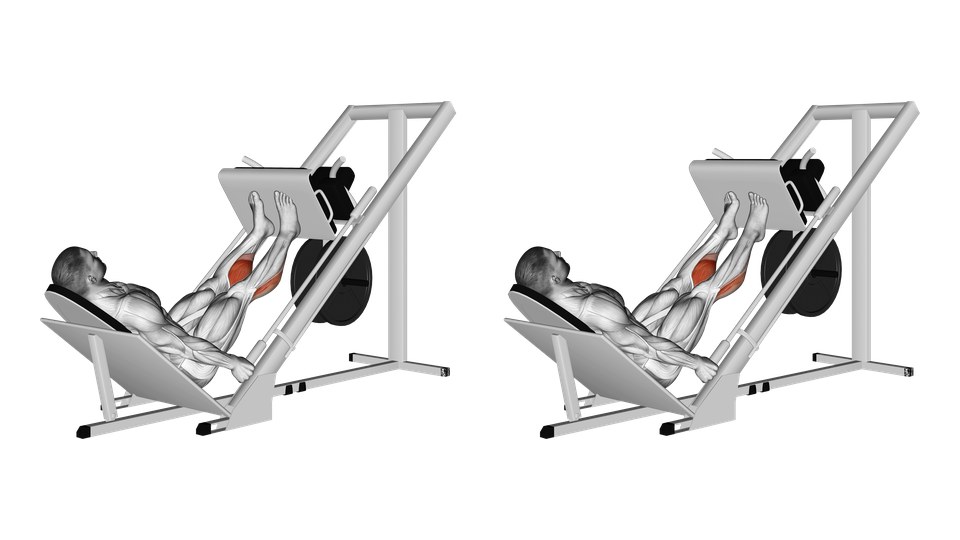
Calf press
Calves
Machine
Exercises by muscle
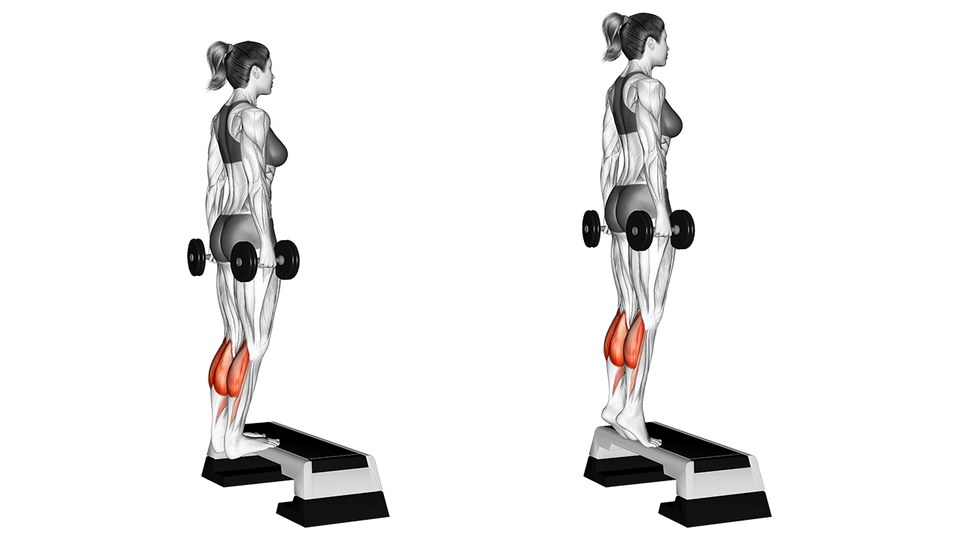
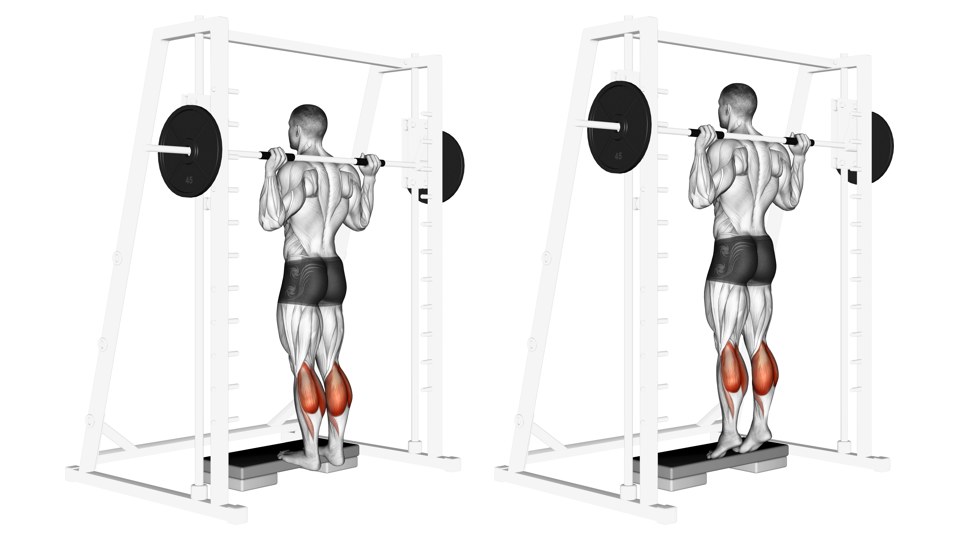
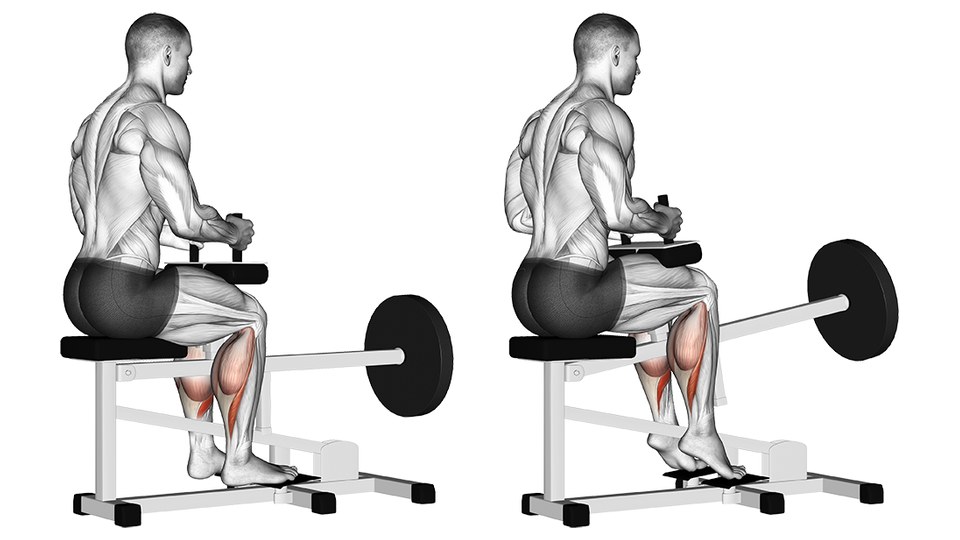
Compare straight-knee raises, calf presses and seated raises. The knee position changes the task, while the machine or free-weight setup changes how you support and load it.
The back view locates the gastrocnemius; visible soleus regions appear in the front view. This is a partial surface overview of the calf muscles.
The gastrocnemius and soleus help raise the heel. The gastrocnemius crosses both the knee and ankle; the soleus does not cross the knee. Bending the knee changes the gastrocnemius length, but a seated raise is not proof of greater soleus growth.
Compare a dedicated standing machine with a Smith-machine setup.
A calf press uses the ankle rather than repeating a leg-press rep.
A seated raise changes knee position and support.
Switching from standing to seated changes more than comfort or equipment. Choose the version deliberately and keep separate progress records.
Use a range you can control and avoid turning the rep into a bounce or knee bend. A larger weight with a shorter movement is a different comparison.
Guides: 4
Most people should train each muscle with 10 to 20 hard sets a week. The number is the easy part. Counting your sets honestly is where it usually goes wrong.
Master the fundamental principle behind muscle growth and strength gains with our comprehensive guide for anyone who wants real results.
No. The soleus contributes strongly without crossing the knee, but the gastrocnemius and other ankle muscles still contribute. The map is not an isolation claim.
A bodyweight or single-leg dumbbell calf raise is an option described in the standing-raise guide. Use stable foot and hand support and treat it as its own setup.
Log every set, see plate loading in context, and track your strength over time. Available on iOS and Android.