Flutter kicks
Quads · Hip flexors
Bodyweight
Exercises by muscle
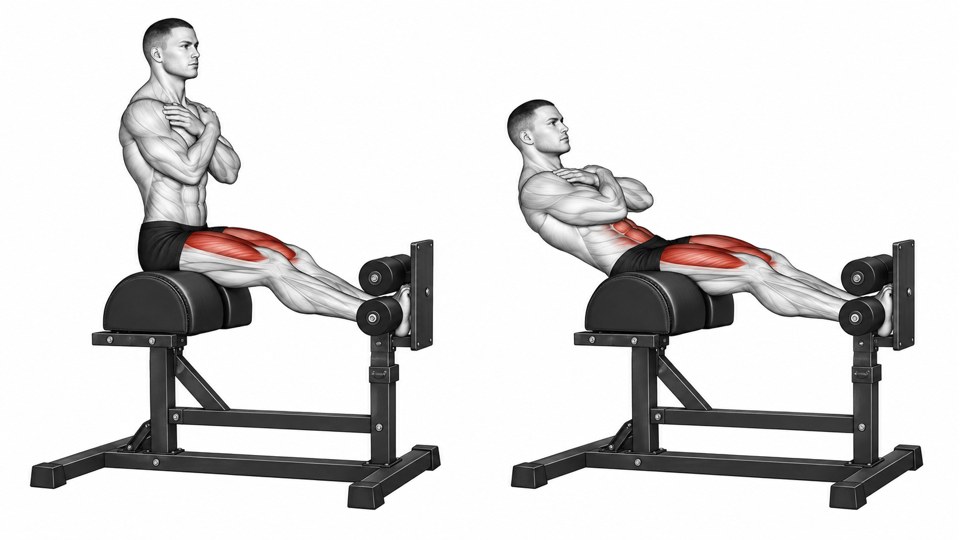
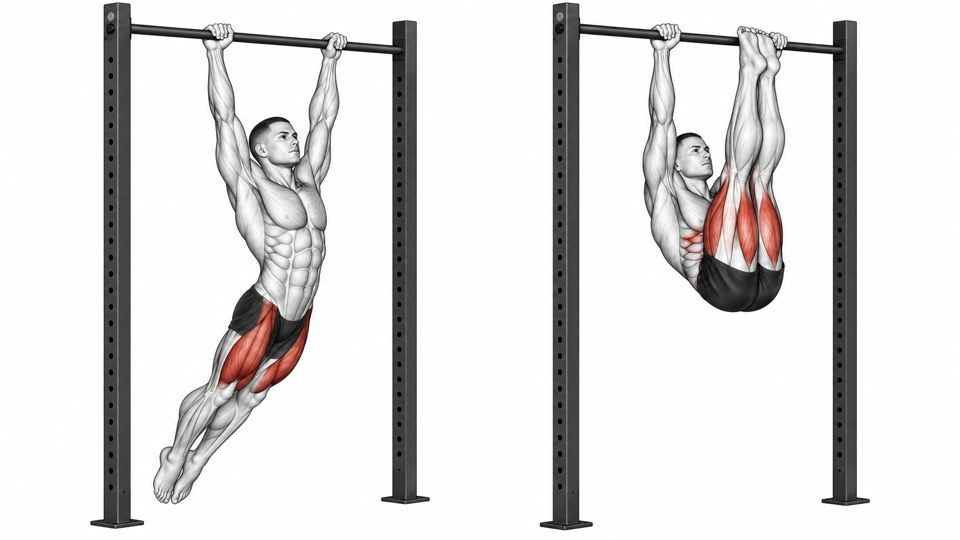
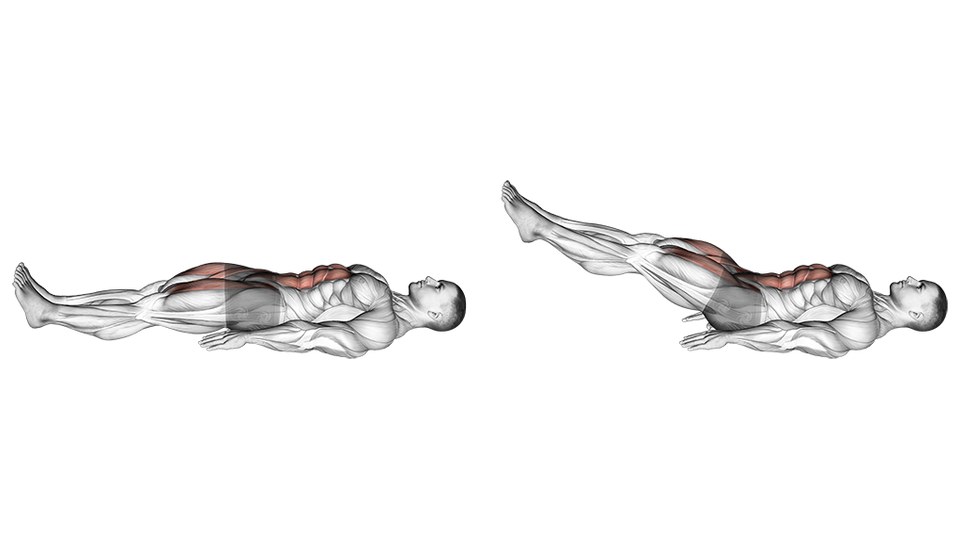
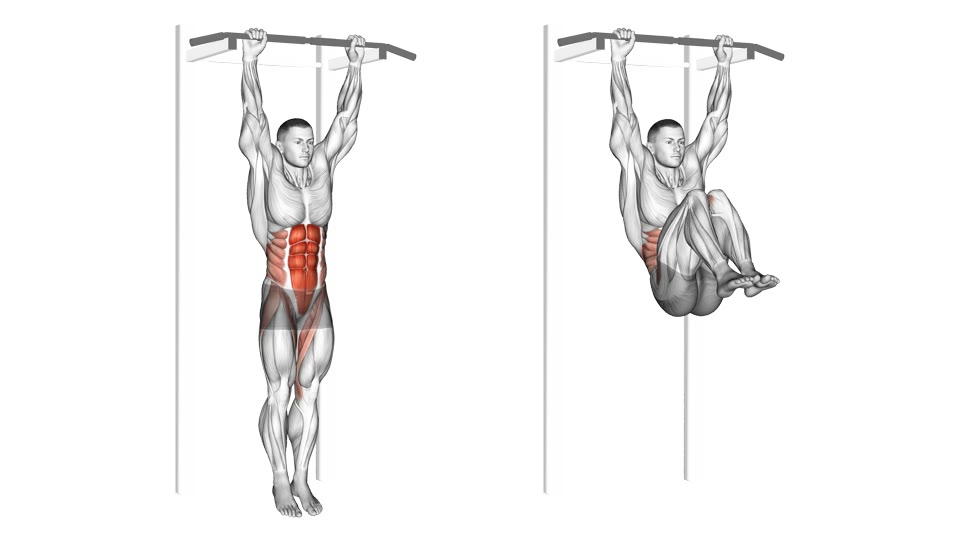
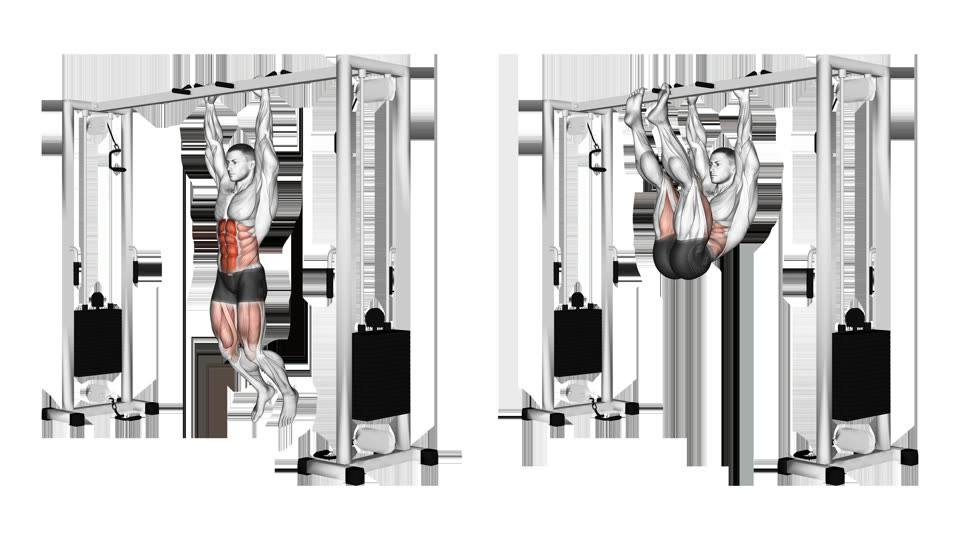
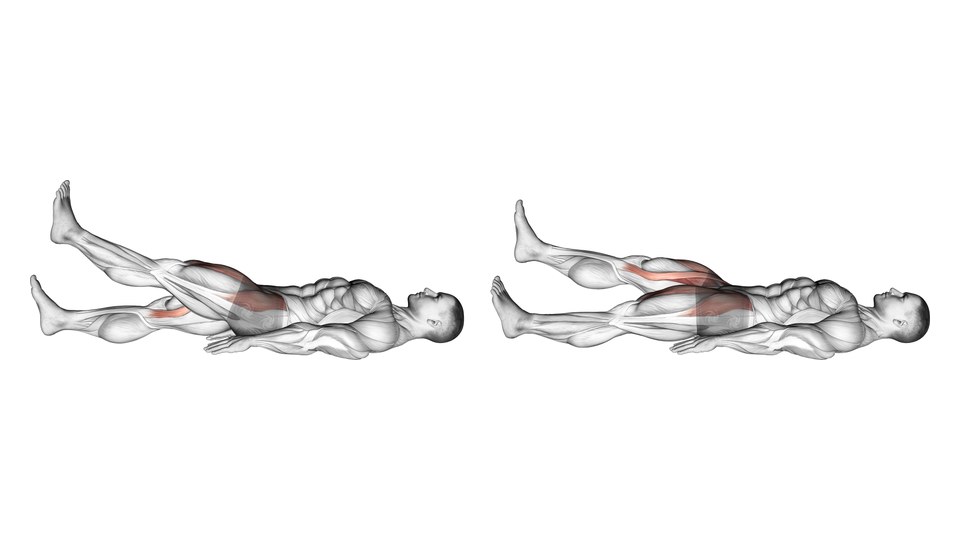
Compare floor-supported and hanging leg-raise options. Raising the thighs trains hip flexion, while the abdominal muscles help control the pelvis and trunk.
The surface map shows the rectus femoris at the front of the thigh. The deeper iliopsoas is not shown; the highlight is not the entire hip-flexor group.
Hip flexion brings the thigh toward the torso. The iliopsoas contributes to this action, as does the rectus femoris, which also straightens the knee. Hanging knee raises combine thigh movement with an upward pelvic curl, so they also involve the abdominal wall.
These movements remove the need to hang from the hands.
Grip and shoulder support become part of the task.
If hanging limits your grip before the intended movement, floor support changes that demand. It does not reproduce every aspect of the hanging version.
Lifting the thighs and curling the pelvis are different actions. Check the guide to understand which finish is shown rather than adding momentum to raise the feet higher.
Guides: 6
Most people should train each muscle with 10 to 20 hard sets a week. The number is the easy part. Counting your sets honestly is where it usually goes wrong.
Master the fundamental principle behind muscle growth and strength gains with our comprehensive guide for anyone who wants real results.
Yes. Hip flexors raise the thighs, and the controlled pelvic curl involves the abdominal wall. Grip and shoulders also support the hang.
No. The options here use floor support or a pull-up bar. They combine hip flexion with other demands rather than isolating every hip-flexor muscle.
Log every set, see plate loading in context, and track your strength over time. Available on iOS and Android.