
Curtsy lunge
Also called curtsey lunge, drop lunge.
What is a curtsy lunge?
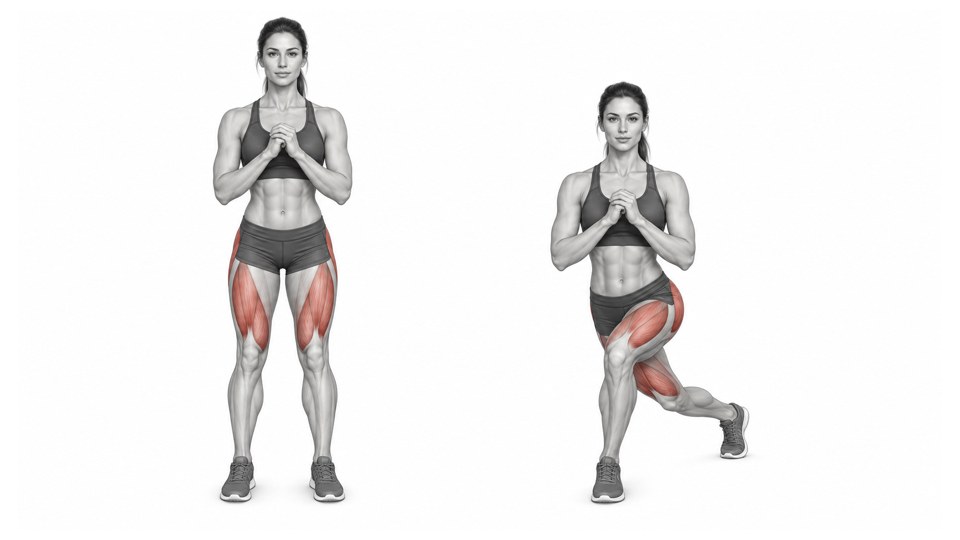
A curtsy lunge is a lunge with a diagonal step behind the standing leg. Bend both knees, then return to standing through the front leg. This guide covers the bodyweight version.
How do you perform a curtsy lunge?
Set up
- Stand with your feet about hip-width apart and leave clear space behind you.
- Choose one leg to stay in front and keep that foot planted. Hold your hands in front of you for balance.
Execution
- Step the other foot diagonally behind the standing leg, landing on the ball of that foot.
- Bend both knees to lower into a comfortable lunge, keeping the front knee pointing in the same general direction as the front toes.
- Push through the front foot and bring the rear foot back beside it. Repeat, then switch sides.
Common mistakes
Crossing so far that the front leg twists
Shorten the diagonal step and lower less deeply until the front knee and foot stay aligned.
Dropping onto the back knee
Slow the descent and stop with space between the rear knee and the floor.
Where it fits in a session
Include this exercise where it fits your planned lower-body or home session.
Log repetitions for each side and use a repeatable range.
Muscles worked
Primary
Secondary
- None listed in this guide
Schematic surface view. Some muscles are partly visible or not shown.
The listed muscles contribute to the movement; no isolation or activation ranking is implied.
Frequently asked questions
How far should I cross the rear leg?
Begin with a modest diagonal step. Adjust it so you can lower and stand without twisting the front knee or lifting the front heel.
What if the movement feels awkward?
Reduce the depth and the amount of crossover. If you cannot find a comfortable path, choose a reverse lunge instead.