
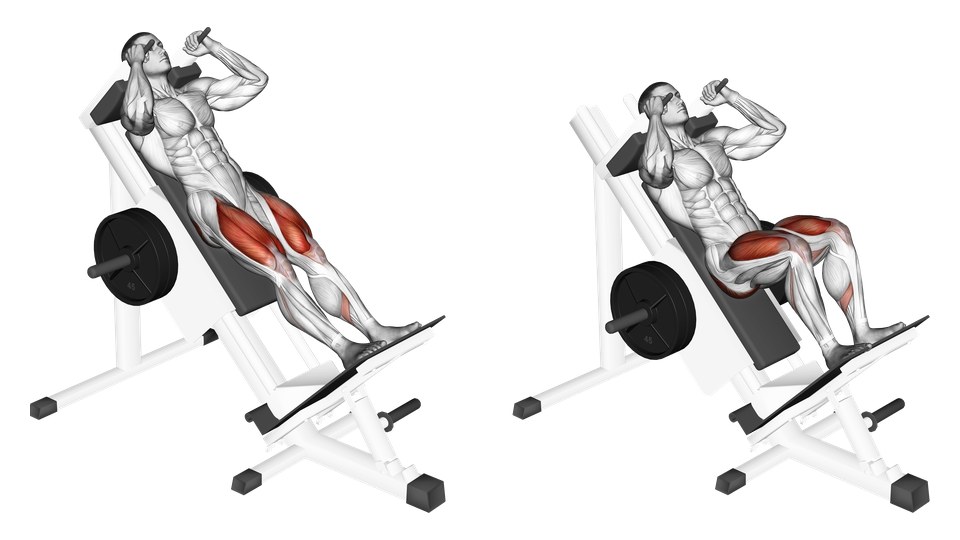
Hack squat
The hack squat is a machine squat performed with the back supported and the shoulders under a moving sled.
- Equipment in the guide
- hack squat machine
Choosing between two exercises? Compare their setup and muscles worked, then explore a detailed comparison to decide how they fit your training.
The hack squat is a machine squat performed with the back supported and the shoulders under a moving sled.
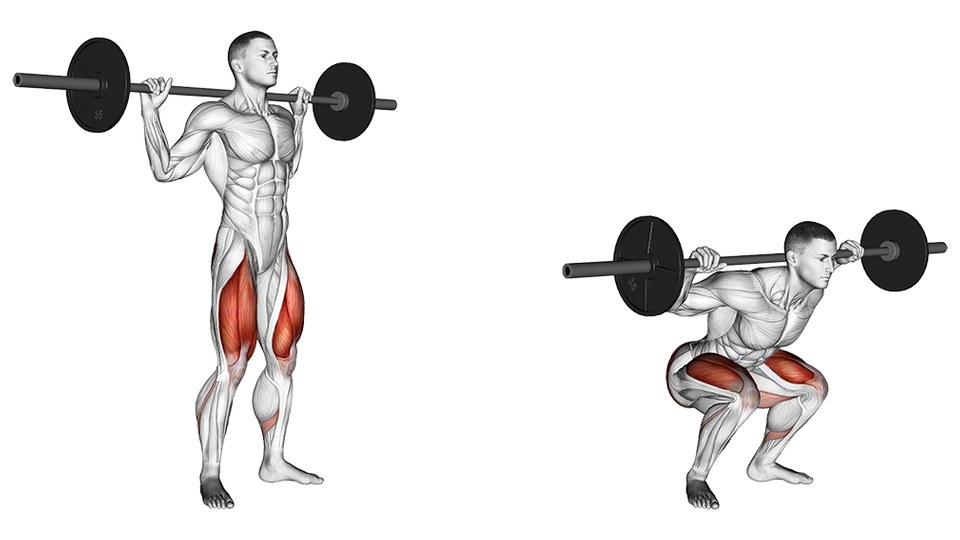
A barbell back squat is a bilateral squat performed with a barbell resting across the upper back.
Choose the hack squat when you want a squat with back support and a guided sled. Choose the barbell back squat when you want to train the free-weight lift itself. Both involve the knees and hips, but the support and balance demands differ. Neither is a universal winner.
You want supported leg work and have a machine that fits your movement. It can fill a squat slot or provide additional leg work after a free-weight lift.
You want to improve your barbell squat or prefer a free-weight movement. You support the bar and control its path, using a rack and appropriate safeties.
The highlights locate muscles involved in each exercise. They do not measure effort, muscle growth or how closely the exercises match.
Schematic surface view. Some muscles are partly visible or not shown.
The quadriceps are the main target; the gluteus maximus and adductor magnus assist hip extension on the sled.
Schematic surface view. Some muscles are partly visible or not shown.
Grouped by what the training evidence measured, not ranked: the MRI trial this page leans on tested each muscle group against its own baseline and never compared one against another, so no ordering is claimed here. The hamstrings are under secondary because they were measured and did not grow, but they stay on the list because they do work during the lift, as hip extensors. Rectus femoris is there for a different reason: one trial measured no growth and a second did find it, so that one is unsettled rather than settled either way. The trunk extensors and the calves are absent because neither trial measured them, which is not the same as ruling them out.
Choose the hack squat when you want a squat with back support and a guided sled. Choose the barbell back squat when you want to train the free-weight lift itself. Both involve the knees and hips, but the support and balance demands differ. Neither is a universal winner.
An RDL starts standing and lowers the bar through a hip hinge, with a small knee bend and no floor reset between reps. A conventional deadlift starts on the floor and uses both knee and hip extension to stand. Choose around the movement you want to train, rather than treating the names as interchangeable.