Glute kickback machine
Also called machine glute kickback, standing glute kickback machine.
What is a glute kickback machine?
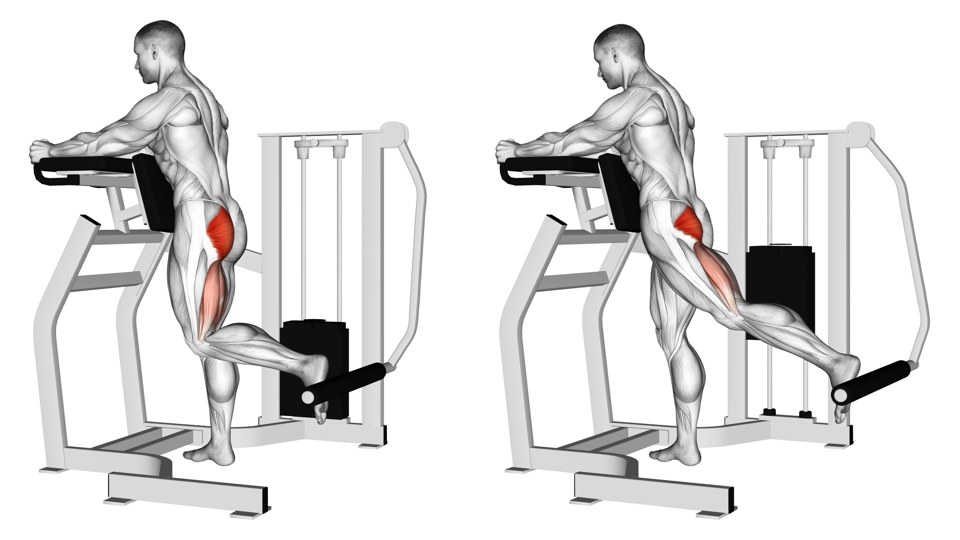
A glute kickback machine lets you move one leg behind your body against a weighted lever. This guide uses a standing model with torso and forearm supports and a roller against the lower working leg. Keep your body supported as the leg moves at the hip.
How do you perform a glute kickback machine?
Set up
- Adjust the supports and choose a manageable weight. Stand on the platform with your torso against the pad, forearms supported, and hands around the handles.
- Set the working leg against its padded lever as the machine directs, with the knee bent. Keep the other foot planted and both sides of your pelvis facing forward.
Execution
- Move the working leg backward from the hip, maintaining contact with the supports rather than turning your body.
- Stop before the pelvis rotates or your lower back arches to create extra travel.
- Guide the lever forward to the start without letting the stack slam. Finish the planned repetitions, then set up for the other leg.
Common mistakes
Leaning away from the pad to finish
Reduce the weight or shorten the movement until the torso can remain supported.
Turning the hips toward the working side
Keep your belt line facing the machine and stop the leg earlier if it pulls you around.
Where it fits in a session
Include this exercise where it fits your planned lower-body session.
Record the machine settings and controlled range along with repetitions.
Muscles worked
Primary
Secondary
- None listed in this guide
Schematic surface view. Some muscles are partly visible or not shown.
The gluteus maximus is the main target. This guide uses a supported standing machine.
Variations
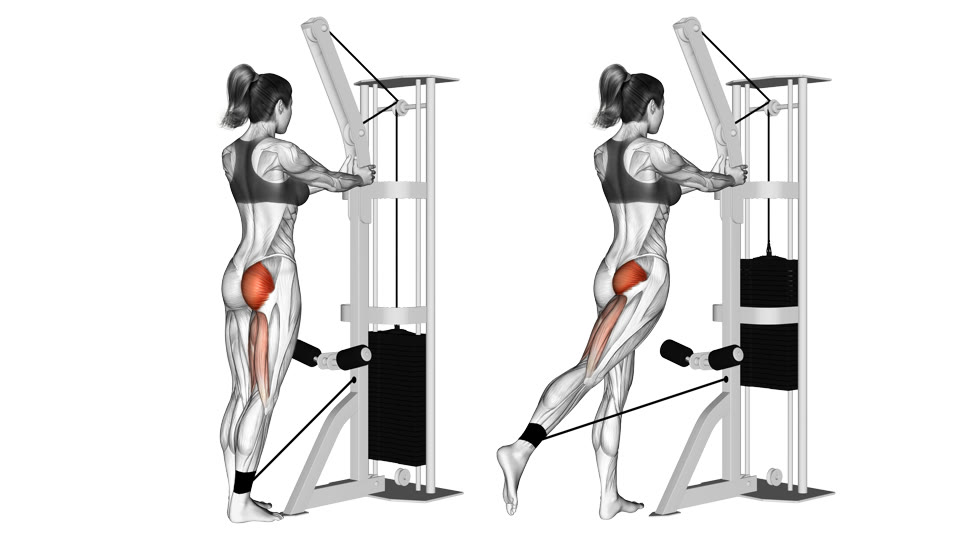
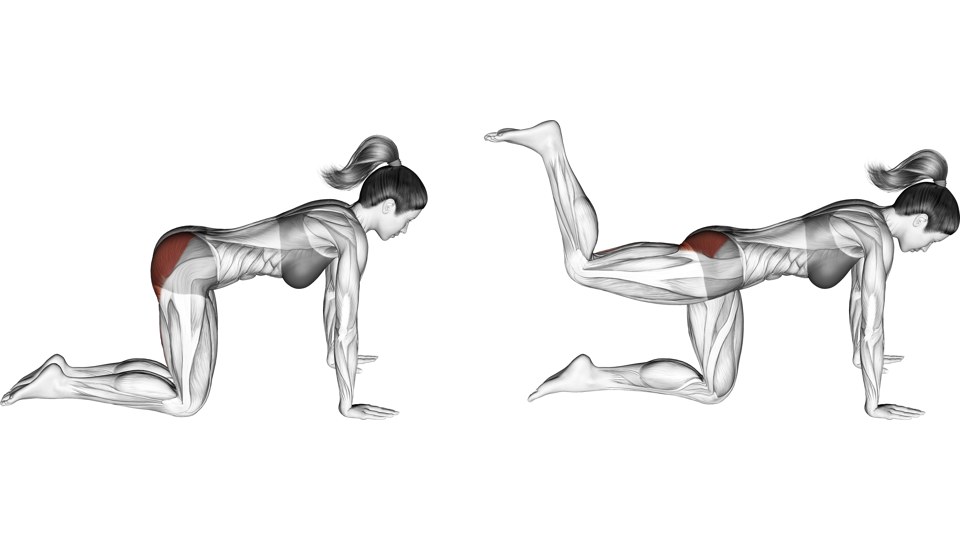
Frequently asked questions
Why does my gym's kickback machine look different?
Machines may use a footplate, a lower-leg roller, or a pad behind the knee, and some use a kneeling position. Follow that machine's adjustment instructions; this guide illustrates the supported standing model.
Should the working knee straighten?
Let the machine's path guide the leg without forcing the knee straight. On the pictured model it stays bent; keep the movement centred at the hip.
Sources
- Anatomy, Bony Pelvis and Lower Limb, Gluteus Maximus Muscle. Adel Elzanie, Judith Borger. StatPearls. https://www.ncbi.nlm.nih.gov/sites/books/NBK538193/