Hang power snatch
Also called barbell hang power snatch, hang power snatches.
What is a hang power snatch?
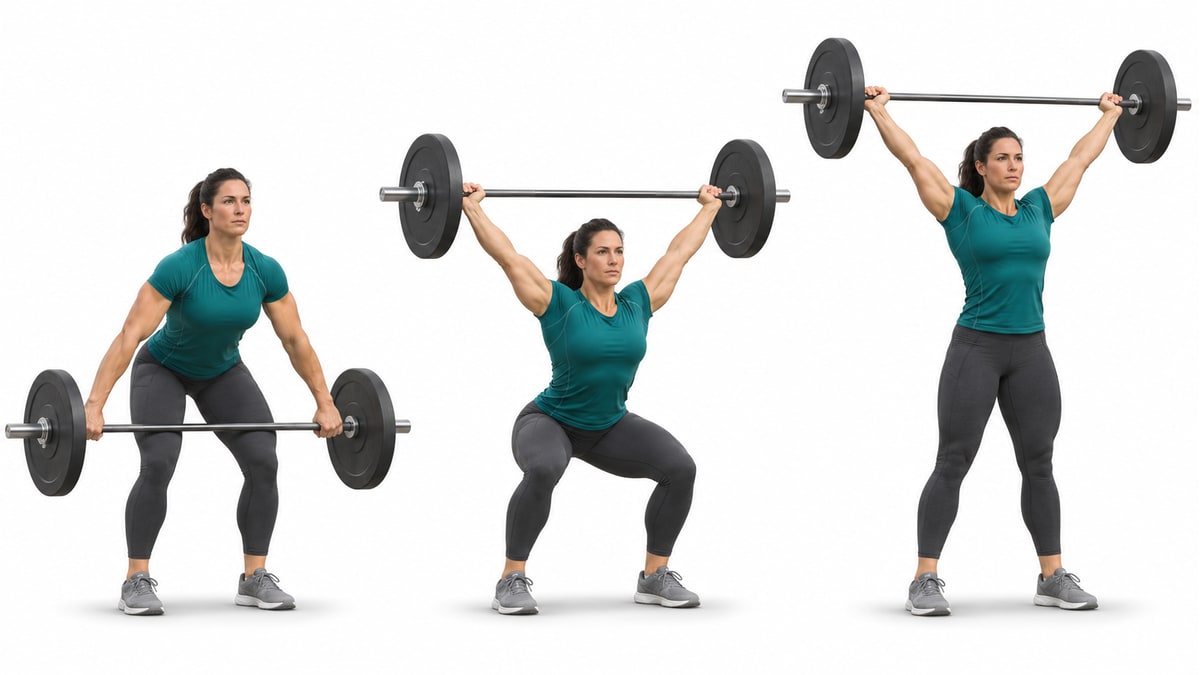
A hang power snatch moves a held barbell overhead and receives it in a shallow squat. Here, the pull begins just above the kneecaps and the hip crease stays higher than the knees at the catch. Stand with the bar overhead to finish.
How do you perform a hang power snatch?
Set up
- Use collars and bumper plates on a clear lifting platform that permits releases. With a technique bar and a qualified coach, rehearse a wide grip, the overhead position and how to release a missed lift before adding weight.
- Place your feet about hip-width apart with the bar over the middle of your feet. Bend your hips and knees to take a wide overhand grip outside your knees. Brace your trunk and lift the bar to standing with straight arms, extending your knees and hips while keeping your back steady.
- Bend at the hips and soften your knees until the bar reaches just above your kneecaps. Keep it near your legs, your shoulders slightly in front of it and your feet evenly loaded. Settle before starting the pull.
Execution
- Accelerate upward by straightening your legs and hips, keeping your arms long during the drive. Then guide the rising bar close as you move underneath it.
- Meet the bar with straight elbows overhead while bending into a shallow squat. Receive on flat feet with your hip crease above your knees and the bar balanced over your stance; let your feet move into your squat stance.
- Once the catch is steady, stand tall. Guide the bar down in front of you to the thighs, bending your knees and hips to cushion its return. Restore your grip and balance before lowering to the same hang for another repetition.
- To finish, lower the bar from your thighs to the platform with your hips and knees bending. If a lift gets away from you, use the release you practiced and move clear; do not grab at the falling bar.
Common mistakes
Pulling before establishing the hang
The pickup is preparation. Bring the bar to the chosen height and regain balance before accelerating it overhead.
Spreading the feet very wide to stay high
Receive in a stance you can squat in. Reduce the load if you need a wide sideways jump or a full-depth squat to get under the bar.
Lowering an uncontrolled bar back to the hang
Repeated lifts need a controlled return. Put the bar down between attempts if that return is not consistent, and have a coach teach the release rather than improvising it.
Where it fits in a session
Practice after your warm-up, while you can concentrate on a consistent pull and receive.
Use a technique bar while learning the sequence. Choose a load you can receive above parallel and return under control; reset or end the set when either changes.
Muscles worked
Primary
Secondary
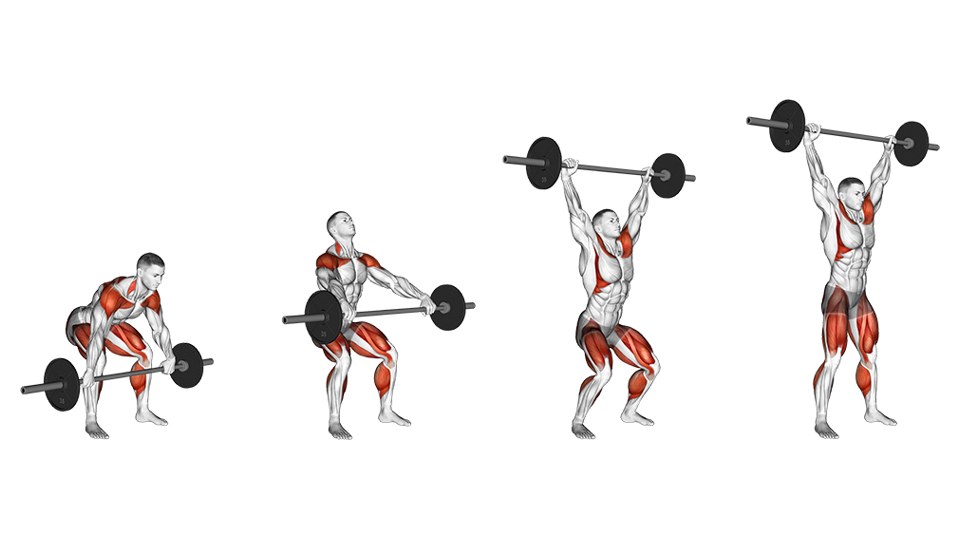
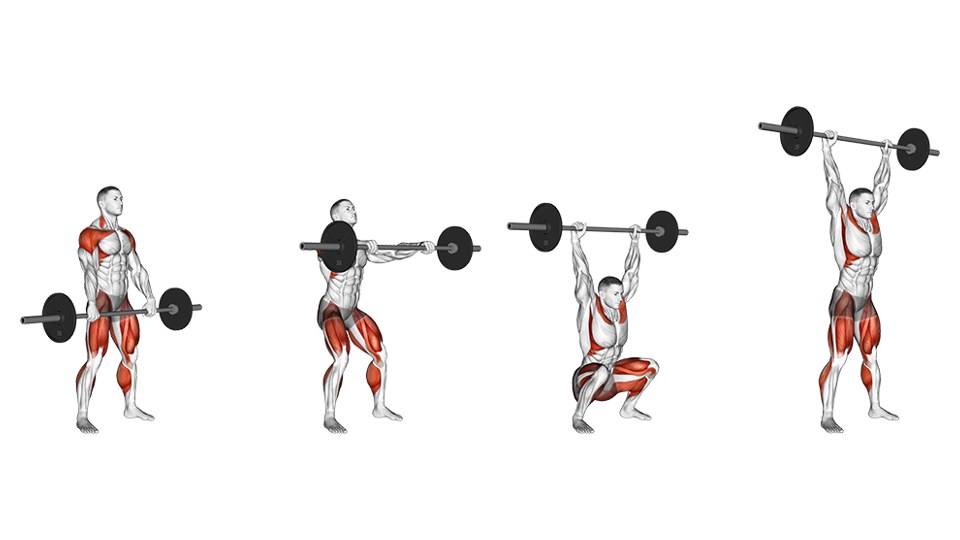
Schematic surface view. Some muscles are partly visible or not shown.
The quadriceps straighten the knees, while the gluteus maximus and hip-extending hamstrings extend the hips. The trapezius moves the shoulder blades, and the triceps straighten the elbows for the overhead receive. These roles describe participation rather than measured muscle emphasis.
Variations
- High-hang power snatch — Starts higher on the thighs while retaining the shallow receive. Specify the height you are practicing.
Frequently asked questions
How does this differ from a hang snatch?
Hang names the held starting position. Power names the higher receiving squat. The full hang snatch continues into a deep overhead squat; this version stops the catch with the hip crease above the knees.
Is the first repetition a power snatch from the floor?
No. First stand up with the bar without snatching it, then lower to the above-knee hang. Begin the fast lift only after that setup. A floor-start power snatch accelerates from the platform instead.
Can I use a different hang height?
Yes. A coach may use a higher thigh position or a lower hang. Use the just-above-knee start for the sequence above; changing that height changes the setup, while the power receiving depth stays the same.
How wide should I hold the bar?
Find a wide grip that places the bar near the crease of your hips when you are upright with long arms. Rehearse the overhead receive with a light bar. A coach can help you learn a hook grip; it does not change the hang or catch.
Does the bar touch the floor between repetitions?
It can stay off the floor when you can guide it back to the thighs and reset the hang. Returning it to the platform between attempts is also an option. Repeat the standing pickup and hang setup before each new lift.
Sources
- OpenStax. Anatomy and Physiology 2e, 11.6: Appendicular muscles of the pelvic girdle and lower limbs. https://openstax.org/books/anatomy-and-physiology-2e/pages/11-6-appendicular-muscles-of-the-pelvic-girdle-and-lower-limbs
- OpenStax. Anatomy and Physiology 2e, 11.5: Muscles of the pectoral girdle and upper limbs. https://openstax.org/books/anatomy-and-physiology-2e/pages/11-5-muscles-of-the-pectoral-girdle-and-upper-limbs
- Miniato MA, Anand P, Varacallo MA. Anatomy, Shoulder and Upper Limb, Shoulder. StatPearls. Updated July 24, 2023. https://www.ncbi.nlm.nih.gov/sites/books/NBK536933/