Hip thrust machine
Also called machine hip thrust, lever hip thrust, glute drive machine.
What is a hip thrust machine?
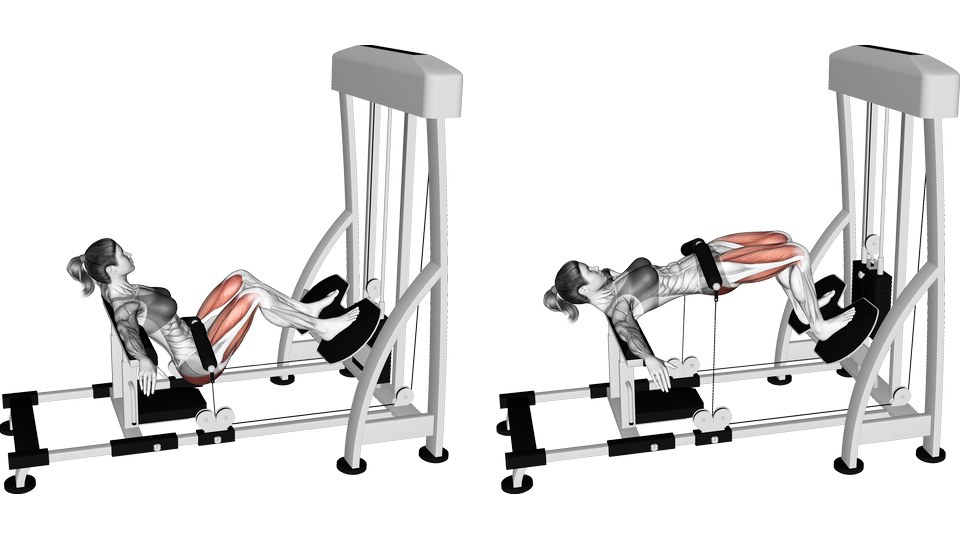
The hip thrust machine is a loaded hip-extension exercise. You sit beneath the machine's padded lever, plant your feet, lower your hips and drive them upward until your trunk and thighs are roughly level. It mainly trains the gluteus maximus.
How do you perform a hip thrust machine?
Set up
- Adjust the seat, back support or belt so the machine's pad sits securely across the crease of your hips.
- Plant your feet about shoulder-width apart with your knees bent and your upper back supported.
- Brace your midsection and release the machine's safety catch only after the pad and feet feel secure.
Execution
- Lower your hips under control while keeping your feet planted and your knees tracking over them.
- Drive through your feet and extend your hips to raise the padded lever.
- Finish when your trunk and thighs form a level line, then lower without letting the weight stack or lever bounce.
Common mistakes
Setting the pad too high on the abdomen
The pad should load the hips securely; a poor adjustment makes the machine uncomfortable and changes where the lever presses.
Finishing by arching the lower back
Hip extension is complete when the hips reach the line of the torso; leaning farther back adds spinal motion rather than more hip extension.
Letting the knees collapse inward
Keeping the knees tracking with the feet makes the setup steadier from the bottom to the top.
Where it fits in a session
As a main glute exercise or after squats and hinges in a lower-body session.
Machine designs differ, so repeat the same seat, pad and foot settings before judging load progress. Use a load that reaches full hip extension without a bounce from the bottom.
Muscles worked
Primary
Secondary
Schematic surface view. Some muscles are partly visible or not shown.
The gluteus maximus drives hip extension while the quadriceps help maintain the bent-knee setup.
Variations
- Smith machine hip thrust — Uses a Smith bar over the hips and a separate bench for upper-back support.
- Glute bridge machine — Uses a similar machine but may begin from a flatter torso position depending on the design.

Related tools
Frequently asked questions
What muscles does the hip thrust machine work?
It mainly trains the gluteus maximus through hip extension. The quadriceps assist in maintaining the bent-knee position as you press through the feet.
Where should the machine pad sit?
Secure it across the crease of the hips, low enough that it moves with the pelvis rather than pressing into the abdomen. Follow the machine's adjustment and safety instructions because designs vary.
How high should I thrust?
Raise the hips until the trunk and thighs are roughly level. Stop there instead of chasing extra height by arching the lower back.
Is a hip thrust machine the same as a barbell hip thrust?
They use the same basic hip-extension pattern, but the machine guides the load and provides its own support. A barbell version uses a bench and a free bar across the hips.
Where should my feet be?
Start around shoulder width and place them where you can keep the whole foot planted and the knees tracking over the feet through the repetition.