
Kettlebell floor press
Also called single-arm kettlebell floor press, one-arm kettlebell floor press.
What is a kettlebell floor press?
A kettlebell floor press is a chest press done lying on the floor. This guide uses one kettlebell, with its round body resting against the back of the forearm. You press with one arm and lower until the upper arm meets the floor, keeping your hips down and your legs straight.
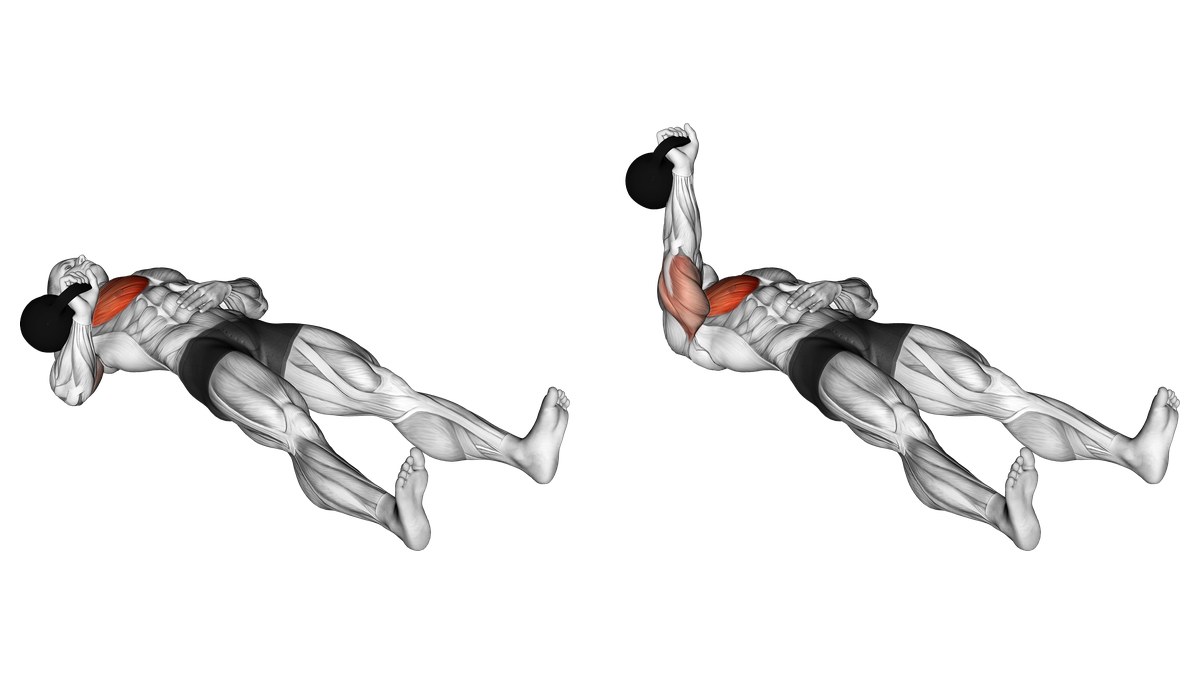
How do you perform a kettlebell floor press?
Set up
- Choose a bell you can control from the first lift to the final put-down. Lie on your side facing it, with your knees bent and the bell close to your lower ribs.
- Slide your lower hand through the handle so it lies diagonally across your palm. Close your grip, cover that hand with your other hand and roll onto your back, keeping the bell close and its round body against your forearm.
- Extend your legs comfortably apart and keep your head, upper back and hips on the floor. Rest the loaded upper arm slightly away from your side, with your wrist above your elbow. Place your free hand on your abdomen.
Execution
- Press the bell upward until the loaded arm is straight above your chest. Keep your wrist in line with your forearm and your torso facing the ceiling.
- Bend the elbow and lower slowly until the back of your upper arm touches the floor softly. Keep the wrist above the elbow rather than letting the bell pull the hand backward.
- Press again from that gentle floor contact, keeping your hips down and using the same path each time.
- Finish with your upper arm on the floor. Bend your knees, use both hands to bring the bell close to your ribs, then roll toward the bell and set it down under control. Release it before setting up on the other side.
Common mistakes
Letting the wrist fold back
Set the handle deeper in the palm and keep your knuckles in line with your forearm. Reduce the load if the bell pulls you out of that position.
Lifting the hips to finish a repetition
A bridge changes the version being practised. Keep your hips down and finish the set when you can no longer press without lifting them.
Dropping the bell beside you
Leave enough control for the two-hand return and side roll. Rehearse getting in and out with a light bell before adding weight.
Where it fits in a session
Use it in the pressing portion of your session, with enough space to roll the bell into and out of position.
Record the bell's weight and the repetitions for each arm. Keep the same leg position and floor contact across sessions, and stop while you can still set the bell down deliberately.
Muscles worked
Primary
Secondary
Schematic surface view. Some muscles are partly visible or not shown.
The chest moves the upper arm through the press, while the triceps straighten the elbow. The front deltoid assists at the shoulder. Listing chest and triceps together does not rank their activity or predict muscle growth.
Variations
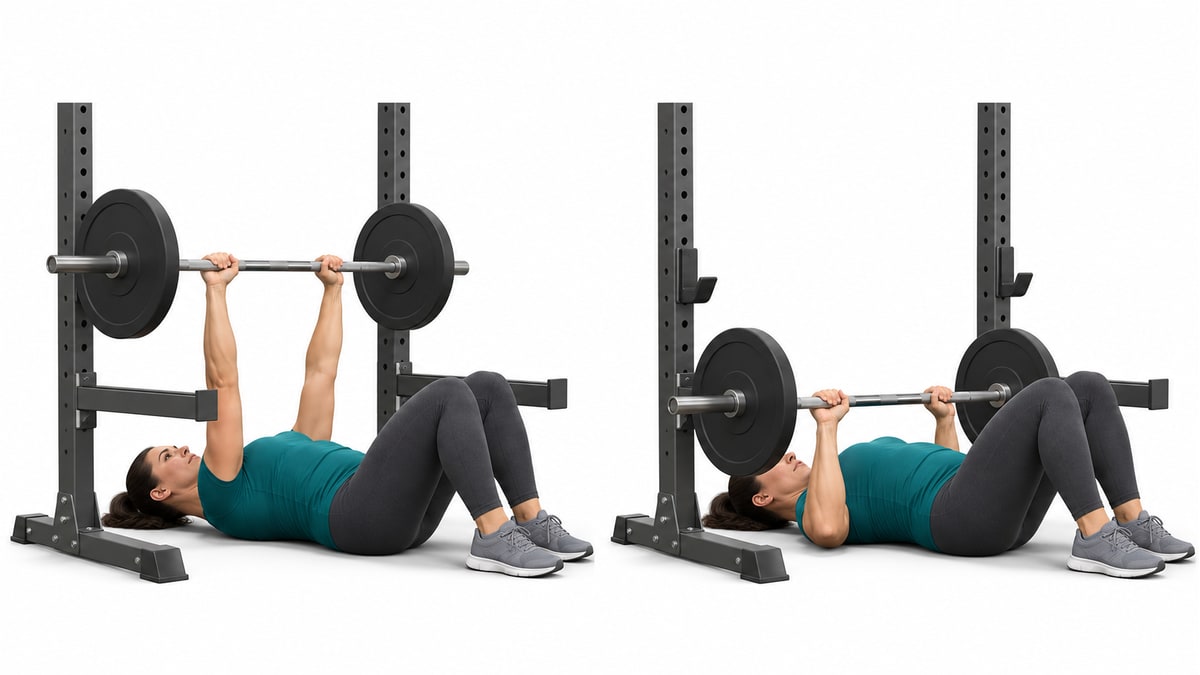
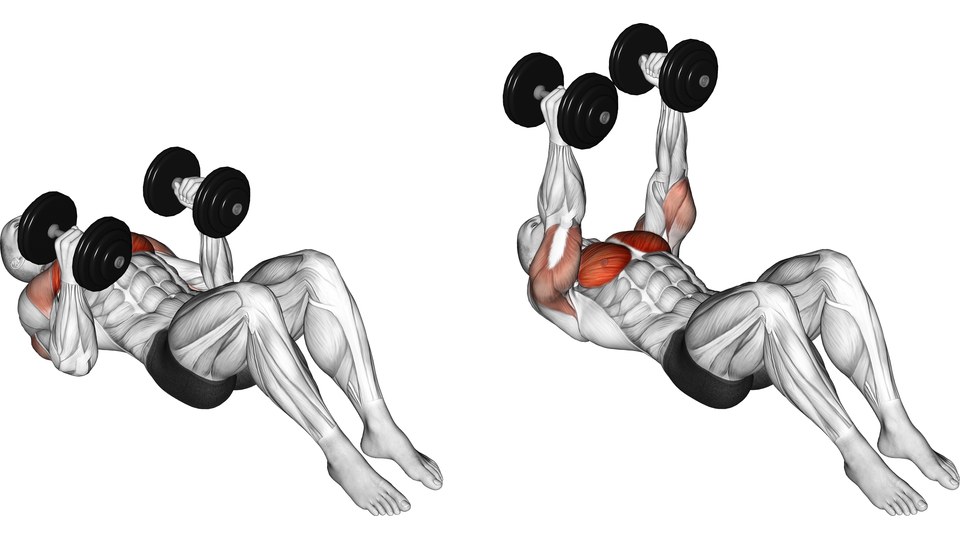
- Double-kettlebell floor press — Presses one bell in each hand; its two-bell setup and loading differ from this single-arm version.
Frequently asked questions
Which muscles does a kettlebell floor press work?
The pectoralis major moves the upper arm through the press, the triceps straighten the elbow, and the front deltoid assists at the shoulder. These roles do not establish an activity ranking or a growth advantage over another kind of press.
Can I bend my knees?
Yes. Straight legs are the version taught and pictured here; bent knees with your feet on the floor are another option. Keep your hips down and record the position consistently. Raising the hips makes it a bridge press.
How should the kettlebell sit on my arm?
Put your hand through the handle so it runs diagonally across the palm, with the bell's round body resting behind the wrist against the forearm. Keep a closed grip and the wrist aligned with the forearm. This guide does not use a bottoms-up hold, with the bell balanced above its handle.
Should I lower the kettlebell all the way to my chest?
Use the back of the upper arm meeting the floor as the bottom of the repetition. Do not twist your torso or raise a shoulder to reach farther down. A bench-supported kettlebell press has a different bottom position.
Can I use two kettlebells instead?
A double-kettlebell floor press is a separate version. It needs a different way to bring both bells into position and put them down. This guide covers one bell at a time; keep the versions separate in your exercise history.
Sources
- Solari F, Burns B. Anatomy, Thorax, Pectoralis Major Major. StatPearls. Updated July 24, 2023. https://www.ncbi.nlm.nih.gov/books/NBK525991/
- Tiwana MS, Sinkler MA, Bordoni B. Anatomy, Shoulder and Upper Limb, Triceps Muscle. StatPearls. Updated August 28, 2023. https://www.ncbi.nlm.nih.gov/books/NBK536996/
- Elzanie A, Varacallo MA. Anatomy, Shoulder and Upper Limb, Deltoid Muscle. StatPearls. Updated January 30, 2024. https://www.ncbi.nlm.nih.gov/books/NBK537056/