
Stability ball rollout
Also called Swiss ball rollout, exercise ball rollout.
What is a stability ball rollout?
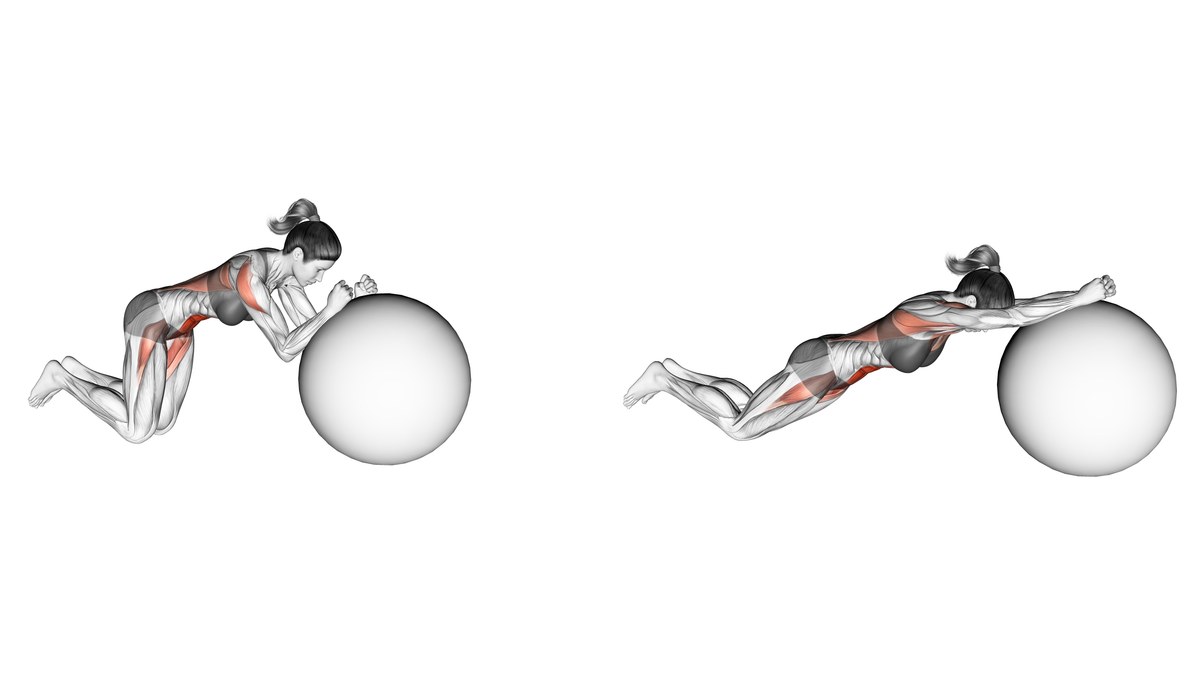
A stability ball rollout is a kneeling abdominal exercise with your forearms supported on a large exercise ball. Roll the ball forward, then bring it back without letting your lower back dip. This guide covers the knees-down version, with forearm support rather than an ab wheel held in the hands.
How do you perform a stability ball rollout?
Set up
- Put the ball on a clear, nonslip floor and kneel on padding behind it. Rest both forearms near the top of the ball with your elbows bent and hands together.
- Set your knees about hip-width apart, lift your hips away from your heels and brace your abdomen before moving the ball.
Execution
- Press your forearms into the ball and roll it forward slowly. Let your elbows open as your torso and hips travel forward from your knees.
- Keep your knees planted and stop while you can still hold your torso steady, before your lower back begins to dip.
- Roll the ball back toward you, bringing your chest and hips back together rather than pulling your hips onto your heels first.
- Finish with your elbows bent and forearms resting on the ball. Settle the ball before starting the next repetition.
Common mistakes
Chasing the fully stretched position
The picture shows a long reach. Start with a smaller roll and turn back as soon as you cannot keep the same torso position.
Sitting onto the heels to return
Avoid leaving your chest stretched out over the ball while your hips move back alone. Bring the ball and your torso back together.
Letting the ball drift to one side
Reposition both forearms evenly and use a shorter reach if you cannot roll directly forward and back.
Where it fits in a session
Use it during core work, before fatigue makes the ball hard to control.
Record the repetitions and use a consistent reach. Add distance gradually only when you can stop and reverse smoothly without your lower back dipping.
Muscles worked
Primary
Secondary
Schematic surface view. Some muscles are partly visible or not shown.
The abdominal muscles brace the torso while the ball rolls away and back.
Variations
- Short-range stability ball rollout — Keep the same kneeling setup and roll forward only a small distance before returning. Use this as the starting version when a longer reach is hard to control.
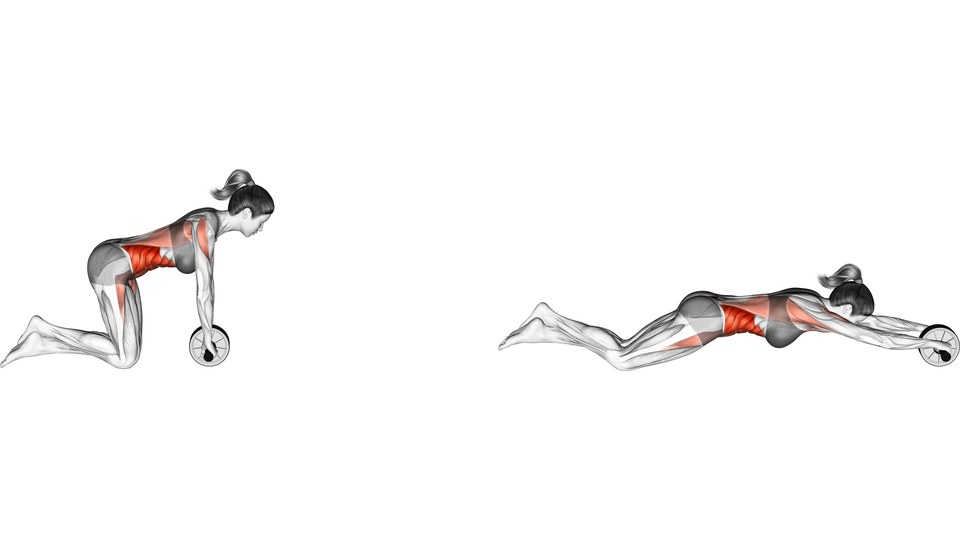
- Ab-wheel rolloutHold the handles of a small wheel close to the floor instead of supporting your forearms on a large ball. Keep a separate training record for the two setups.
Frequently asked questions
What muscles does a stability ball rollout work?
It trains the abdominal muscles, including the rectus abdominis and obliques. Keep the torso braced while the arms and hips move through the repetition.
How far should I roll the ball?
Use the distance you can reverse without your lower back dipping or the ball escaping forward. You do not need to reach as far as the illustration.
How can I make the stability ball rollout easier to start?
Keep both knees down and make a very small forward roll, then return. Repeat that distance consistently before extending the reach. Keep the ball close enough that you can pause with your forearms supported between repetitions.
Is a stability ball rollout the same as an ab-wheel rollout?
Both roll forward from a kneeling setup, but the ball supports your forearms above the floor. With an ab wheel, your hands hold the wheel handles near the floor. Treat them as different exercises rather than transferring your range or repetitions directly between them.
Sources
- Betts JG et al. Anatomy and Physiology 2e. 11.4 Axial muscles of the abdominal wall, and thorax. OpenStax, 2022. https://openstax.org/books/anatomy-and-physiology-2e/pages/11-4-axial-muscles-of-the-abdominal-wall-and-thorax