Overhead press alternatives

Seated dumbbells, a shoulder press machine, a single kettlebell or a band can keep overhead pressing in the workout when a barbell setup is unavailable.

These choices retain strict overhead pressing without leg drive. They change torso support, grip or arm independence and do not replace practice of the standing barbell press.

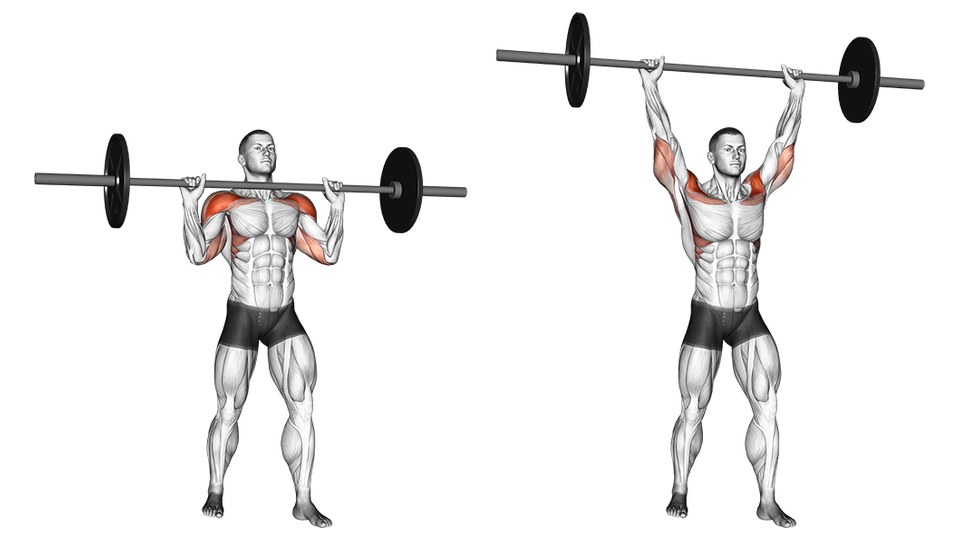
Anatomical illustration of a standing barbell overhead press, drawn as two frames side by side. On the left the figure stands upright with feet about hip-width apart, holding a loaded barbell across the front of the shoulders with the elbows under the bar and the forearms vertical. On the right the same figure has pressed the bar to straight arms above and slightly behind the head. The bar is lifted from the front of the shoulders rather than taken out of a rack, and the figure is standing, not seated. In both frames the shoulder muscles are shaded red over the front and side of each shoulder; in the overhead frame the shading continues down the back of each upper arm over the triceps. The rest of the body is drawn in plain grey.
What equipment can you use?

Choose everything you have. Some exercises need two items, such as dumbbells and a flat bench. Choose floor space for options without equipment.

Your replacements

Choose your equipment above to see replacements.

Compare all alternatives

These options need different equipment. Use the finder above to show only the setups you can use.

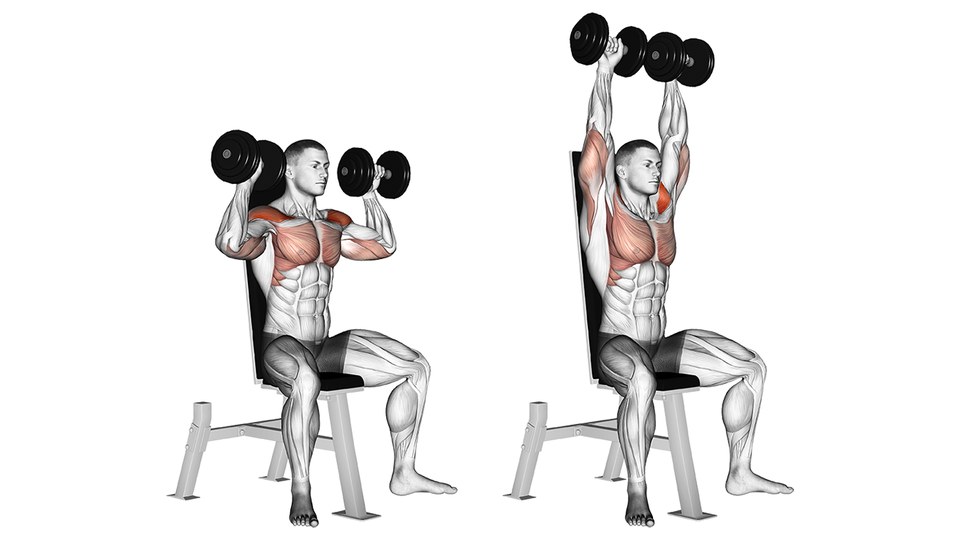
  • Two-frame anatomical illustration of a seated dumbbell shoulder press. A muscled figure sits on a bench with the back pad upright, feet flat on the floor, holding a dumbbell in each hand with the palms facing forward. In the left frame the dumbbells are at shoulder height, elbows bent and out to the sides. In the right frame the arms are pressed to straight overhead, the dumbbells almost touching above the head. The shoulders and the chest are shaded red in both frames; in the overhead frame the shading extends down the upper arms as well. The legs, torso and bench are left grey.

    Similar movement

    Dumbbell shoulder press

    You need: Dumbbells + Adjustable bench with incline and upright settings

    Why it fits
    Keeps overhead pressing with a free weight in each hand.
    What changes
    The linked guide teaches the seated version against an upright back pad. Two independent weights and torso support change the setup from a standing barbell press.
    See exercise guide
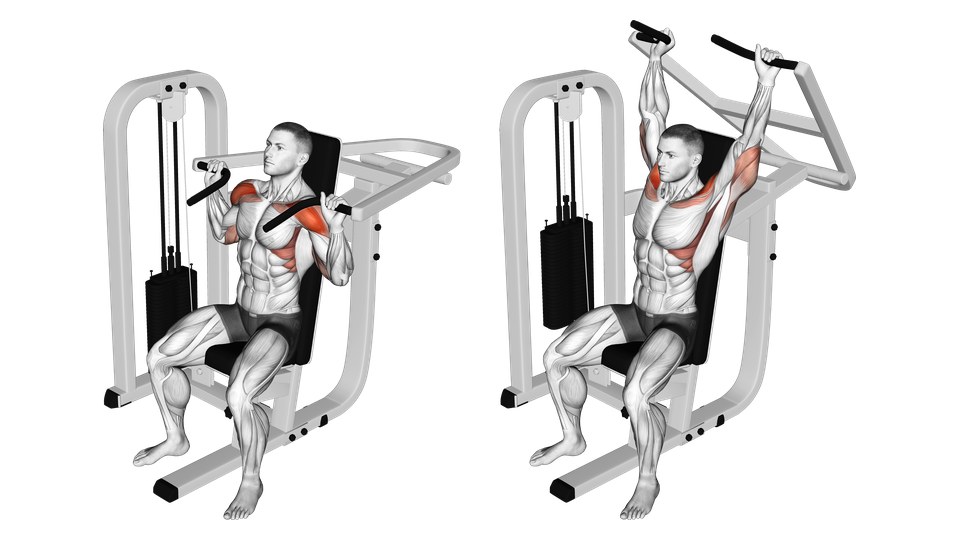
  • Anatomical illustration of a seated machine shoulder press shown at the bottom and overhead positions, with the shoulders and triceps highlighted.

    Similar movement

    Machine shoulder press

    You need: Shoulder press machine

    Why it fits
    Keeps a supported overhead press with machine handles.
    What changes
    The torso rests against a pad and the handles follow a guided path. Seat height and machine resistance replace the rack and free bar.
    See exercise guide
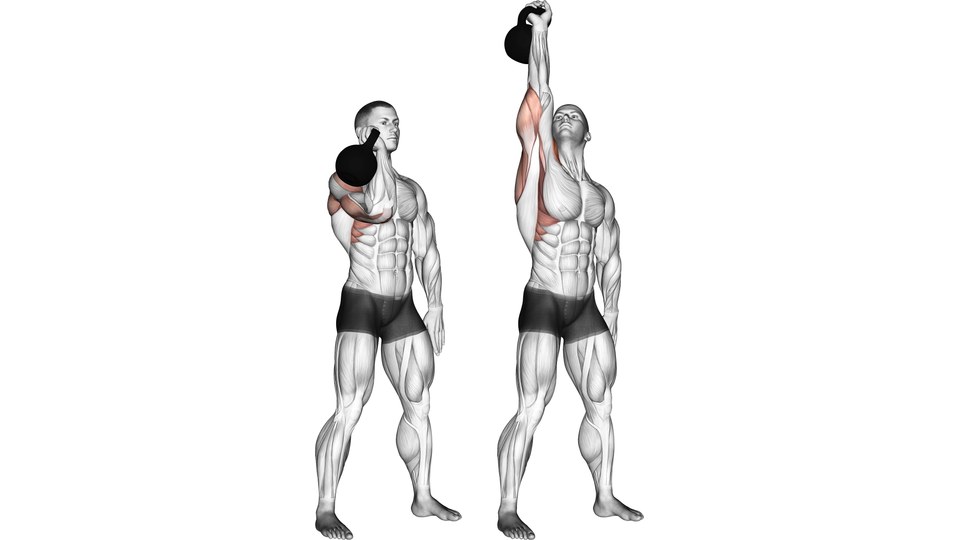
  • Two anatomical figures demonstrate a standing one-arm kettlebell press, from shoulder height on the left to overhead on the right.

    Similar movement

    Kettlebell overhead press

    You need: Kettlebell

    Why it fits
    Keeps a strict standing overhead press with a free weight.
    What changes
    You press one arm at a time with the bell behind the forearm. Grip and torso control change, and each side needs its own repetitions.
    See exercise guide
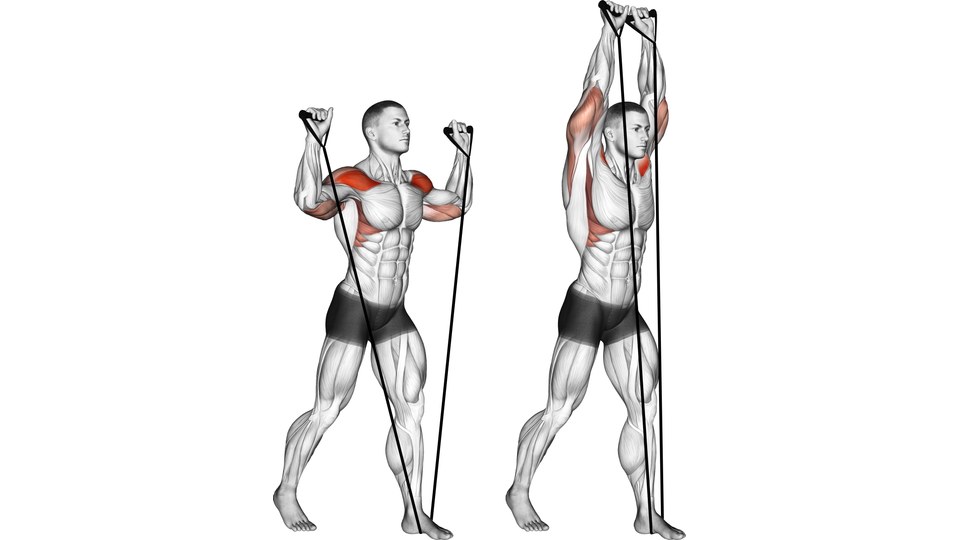
  • Male anatomical model pressing two band handles overhead from a staggered stance, with shoulder and triceps regions shaded red.

    Similar movement

    Band overhead press

    You need: Resistance band

    Why it fits
    Keeps a strict standing overhead press using a handled band beneath the front foot.
    What changes
    A split stance secures the band, and tension increases with stretch. Choose a band that lets you complete the controlled press rather than infer its resistance from barbell numbers.
    See exercise guide
See the original exercise guide

How we choose replacements

These are curated alternatives, chosen for the movement and the job the exercise does in a workout. A shared muscle group is not enough. Read what changes before choosing: support, range of motion, balance and resistance can all differ. If your goal is to improve a specific lift, alternatives do not replace practice of that lift.

Explore alternatives by exercise