Standing calf raise alternatives

Smith calf raises and a leg-press calf press retain nearly straight-knee ankle work. Seated calf raises provide a bent-knee option with a different calf-training emphasis.

Preserve the straight-knee position when that is the purpose of the slot. A seated option still trains the calves, but changes knee position and should not be treated as identical.

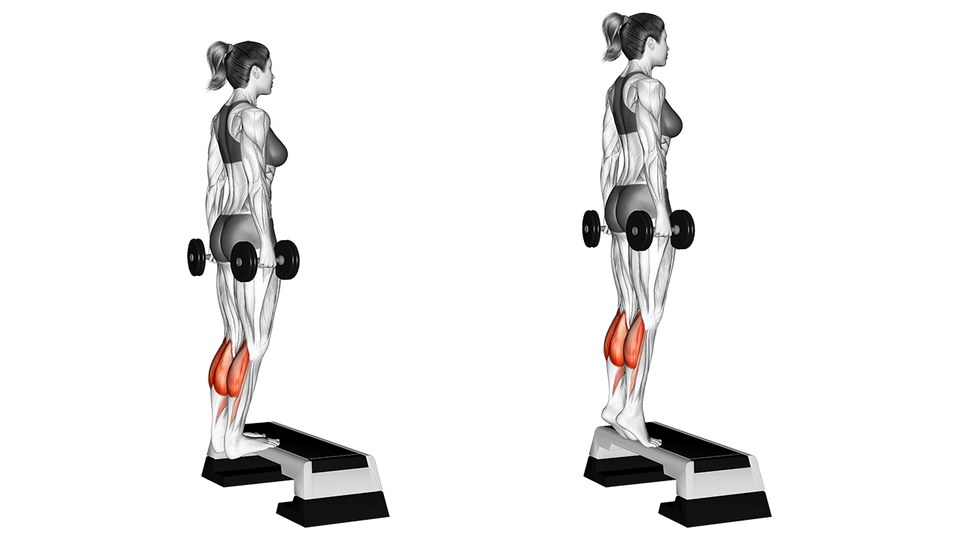
Side-by-side anatomical illustration of a woman doing a standing calf raise with a dumbbell in each hand on an exercise step. The left frame shows her standing with straight knees and feet flat; the right shows her raised onto the balls of her feet, with both calves shaded red.
What equipment can you use?

Choose everything you have. Some exercises need two items, such as dumbbells and a flat bench. Choose floor space for options without equipment.

Your replacements

Choose your equipment above to see replacements.

Compare all alternatives

These options need different equipment. Use the finder above to show only the setups you can use.

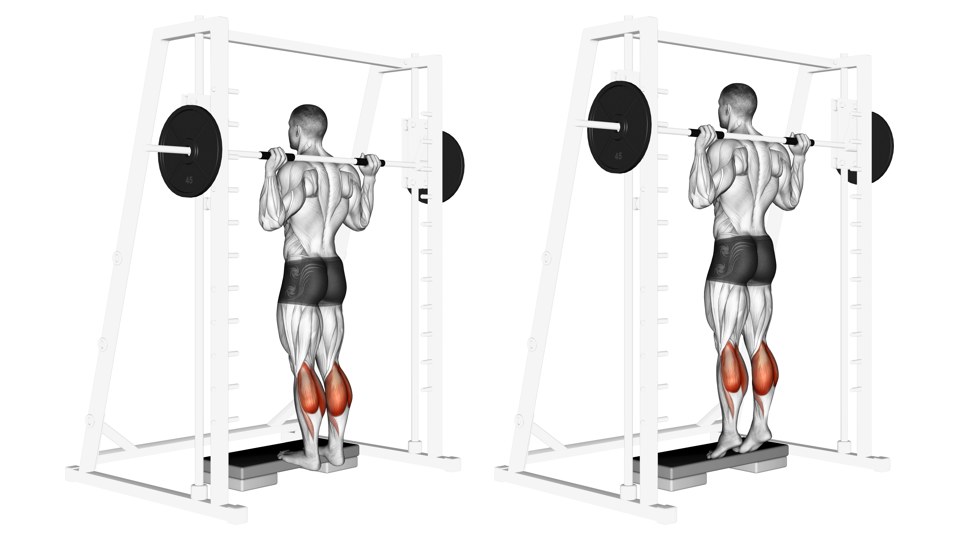
  • Anatomical illustration of a man with a Smith bar on his upper back and forefeet on a calf block, lowering and raising his heels.

    Similar movement

    Smith machine calf raise

    You need: Smith machine + Stable raised calf block

    Why it fits
    Keeps a nearly straight-knee calf raise with a raised surface for the heels to move below the forefeet.
    What changes
    A Smith bar rests across the upper back, while a stable calf block and the machine safeties provide the setup. This is a different load from a standing calf machine or handheld dumbbell.
    See exercise guide
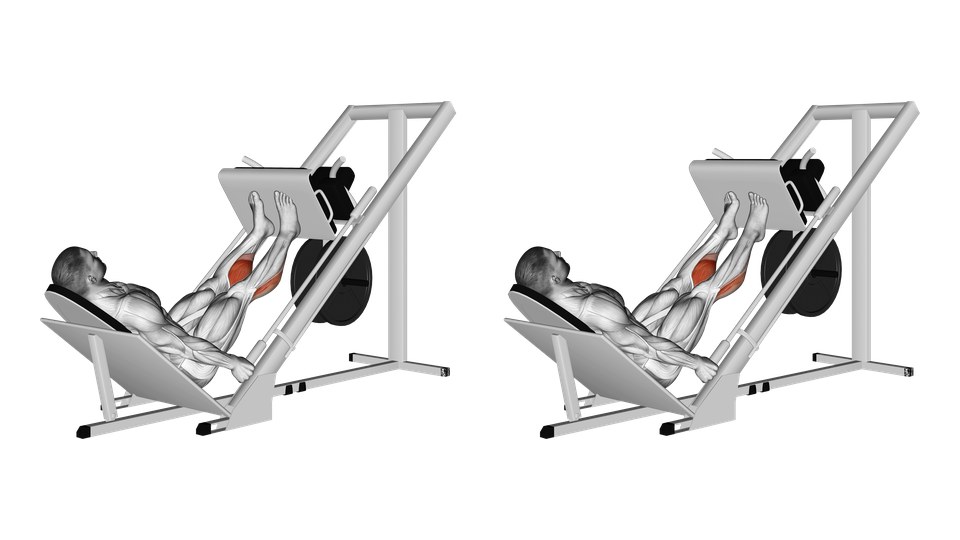
  • Anatomical illustration of a man performing calf presses on a 45-degree leg press, with the calves highlighted.

    Similar movement

    Calf press

    You need: 45-degree leg press with a suitable calf-press footplate

    Why it fits
    Keeps ankle plantarflexion with the knees nearly straight and the heels free to move.
    What changes
    The torso is supported in a 45-degree leg press rather than standing. Only use a machine with a suitable footplate and secure forefoot placement; sled numbers are not calf-raise loads to copy.
    See exercise guide
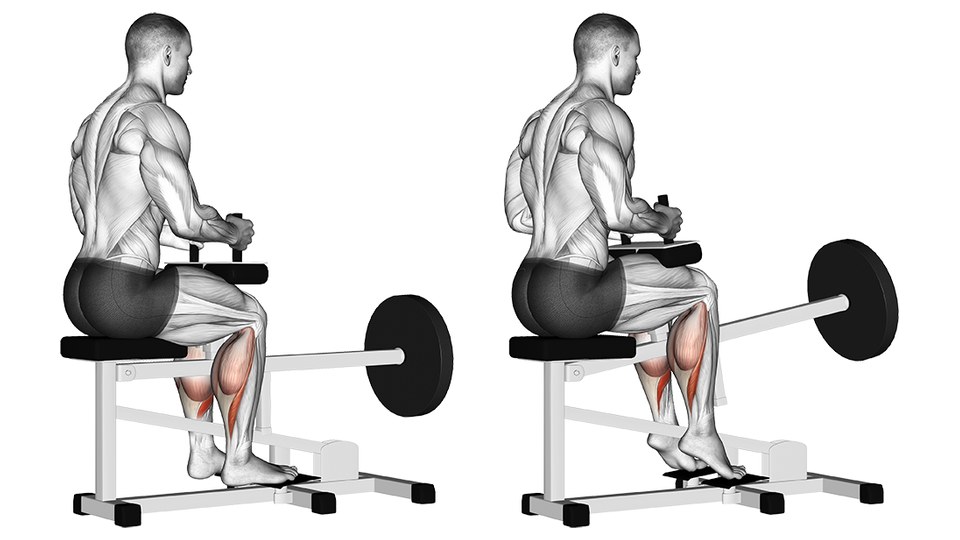
  • Anatomical illustration of a seated calf raise on a plate-loaded machine, seen from the side in two frames. A seated figure sits on the bench with the lower thighs under a pad, the pad connected to a lever arm carrying a weight plate, hands on the handles at the front of the pad, and the balls of the feet on the low platform with the toes pointing straight ahead. In the left frame the heels are dropped and the ankle is bent; in the right frame the heels are driven up and the ankle is extended. In both frames the muscle mass of the upper calf is shaded red against the otherwise pale grey body.

    Similar movement

    Seated calf raise

    You need: Seated calf raise machine

    Why it fits
    Offers calf training through ankle plantarflexion with the torso seated.
    What changes
    The knees are bent and a pad loads the thighs. This changes the role of the knee-crossing gastrocnemius, so it is a bent-knee alternative rather than a substitute that preserves straight-knee calf work.
    See exercise guide
See the original exercise guide

How we choose replacements

These are curated alternatives, chosen for the movement and the job the exercise does in a workout. A shared muscle group is not enough. Read what changes before choosing: support, range of motion, balance and resistance can all differ. If your goal is to improve a specific lift, alternatives do not replace practice of that lift.

Explore alternatives by exercise