
Captain's chair leg raise
Also called captains chair leg raise, captain chair leg raise, captain's chair straight leg raise.
What is a captain's chair leg raise?
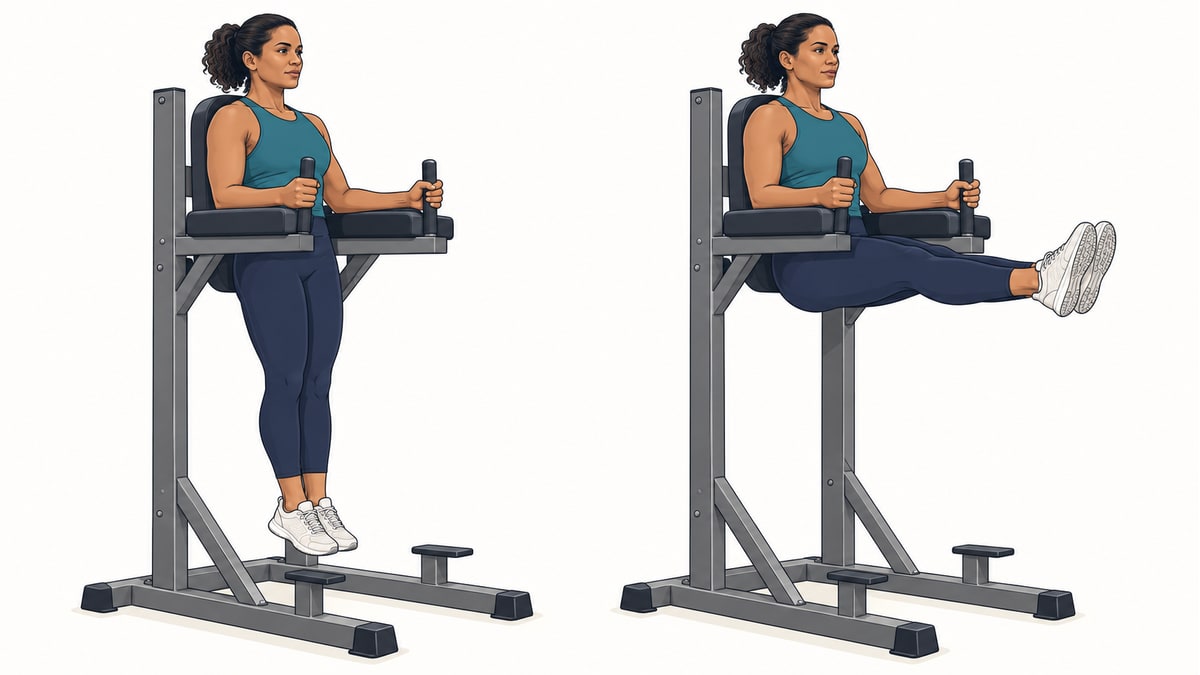
A captain's chair leg raise lifts both legs forward with the knees nearly straight while the forearms rest on pads and the back rests against a support. It trains the hip flexors and abdominal wall. The station supports you through your forearms, so you do not have to suspend your bodyweight from an overhead bar.
How do you perform a captain's chair leg raise?
Set up
- Use the station's steps to get into position, resting your forearms along the pads and taking hold of the handles.
- Set your back against the rear pad, press into the forearm rests and lift your feet clear of the steps.
- Bring your legs together beneath you with your knees nearly straight, then brace your middle and settle before lifting.
Execution
- Lift both legs forward together, keeping your knee angle steady and your back supported.
- Aim to bring your feet level with your hips; finish lower if going higher makes your back arch or your body rock.
- Bring your legs down steadily to beneath your hips, let any swing settle, and begin the next repetition.
Common mistakes
Turning each repetition into a knee raise
If the knees bend farther as the legs rise, you are changing the movement halfway through. Choose a knee raise deliberately when you need it, or shorten the range while keeping your knee angle steady.
Chasing height by rocking away from the pad
A higher finish is not the goal if it costs you the supported starting position. End the lift where you can still control your trunk, then lower from there.
Letting the feet sweep behind the hips
This starts a pendulum that carries into the next repetition. Bring the legs back beneath you and reset instead of using the backswing to start the next lift.
Where it fits in a session
Use it in the part of your session set aside for direct core work.
Pick a rep target you can repeat without rocking. Build consistent reps and range before adding difficulty. If you cannot control nearly straight legs, practice the bent-knee chair raise and gradually straighten the legs as you gain control. End the set when you can no longer keep the chosen knee angle and supported position.
Muscles worked
Primary
Secondary
Schematic surface view. Some muscles are partly visible or not shown.
The hip flexors lift the thighs while the abdominal wall steadies the trunk and pelvis. With the torso held against the pad, the abs work mainly to hold position rather than to curl the trunk. These roles differ even though both muscle groups are involved.
Variations
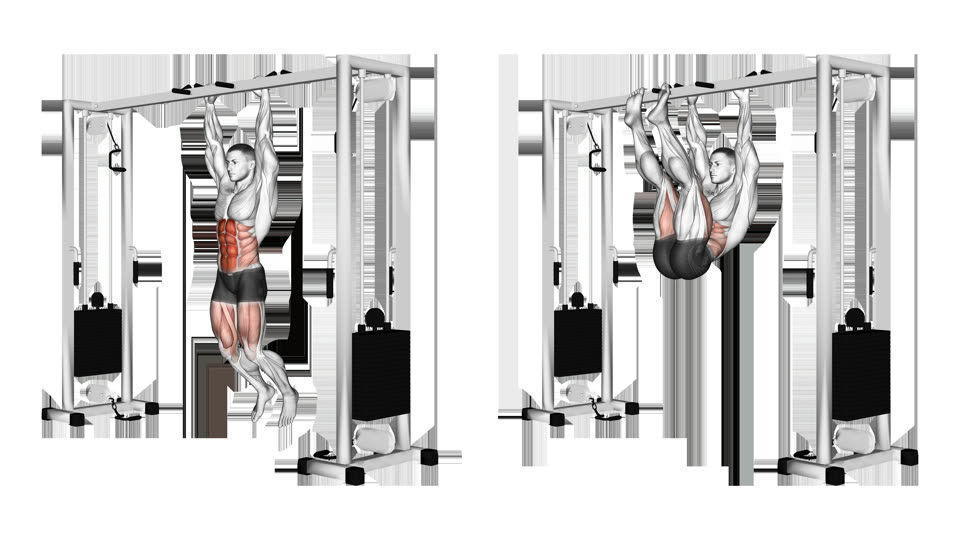
- Hanging leg raiseUses an overhead bar in place of forearm and back pads, adding the requirement to hold a hang.
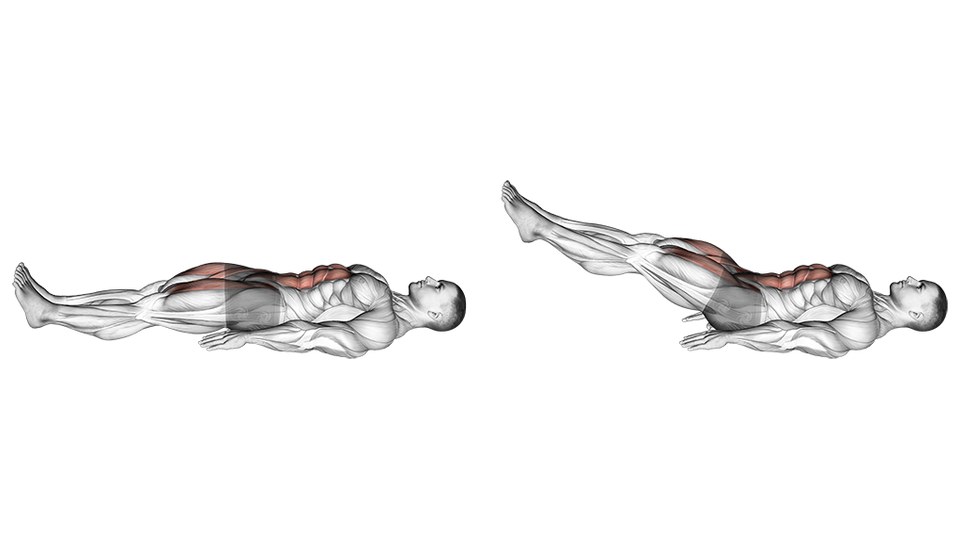
- Lying leg raiseMoves the leg raise to the floor, without needing a captain's chair or a hanging grip.
- Shorter-range captain's chair leg raise — Stop below hip height while learning to keep the knee angle and trunk position steady. Build the range gradually.
Frequently asked questions
What muscles do captain's chair leg raises work?
The iliopsoas is a hip flexor that raises the thighs. The rectus abdominis and obliques help keep the trunk and pelvis steady. In a supported leg raise, abdominal bracing and lifting the legs are different jobs; the abs do not move the thigh at the hip joint.
How is a captain's chair leg raise different from a hanging leg raise?
The chair uses forearm pads and a back pad for support. A hanging leg raise uses an overhead bar, so holding the hang is part of the exercise. Both involve raising the legs, but they have different support demands.
Should my knees stay completely straight?
Keep them nearly straight, with a small bend if needed. Maintain that angle during the rep. A chair knee raise deliberately uses bent knees; it is a useful alternative when you cannot control the straight-leg version yet.
How high should I raise my legs?
Work toward feet level with your hips while keeping your back supported and the lift smooth. Stop lower if you start to rock or arch. Reaching your chest is not required for this supported leg raise.
How do I make progress without adding weight?
Keep the same knee angle and range so your reps are comparable. Add controlled reps, then gradually increase a limited range toward hip height. If you are starting with bent knees, lengthen the legs a little at a time instead of adding a kick.
Sources
- Bordoni B, Varacallo MA. Anatomy, Bony Pelvis and Lower Limb: Iliopsoas Muscle. StatPearls. Updated June 8, 2026. https://www.ncbi.nlm.nih.gov/sites/books/NBK531508/
- Flynn W, Vickerton P. Anatomy, Abdomen and Pelvis: Abdominal Wall. StatPearls. Updated July 24, 2023. https://www.ncbi.nlm.nih.gov/sites/books/NBK551649/