
Lying leg raise
Also called leg raises, lying leg raises, floor leg raise, supine leg raise.
What is a lying leg raise?
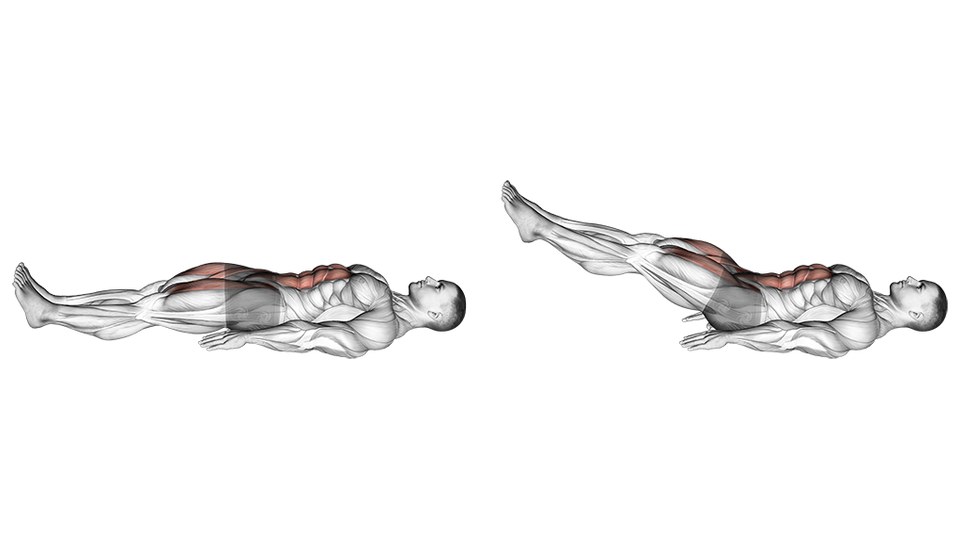
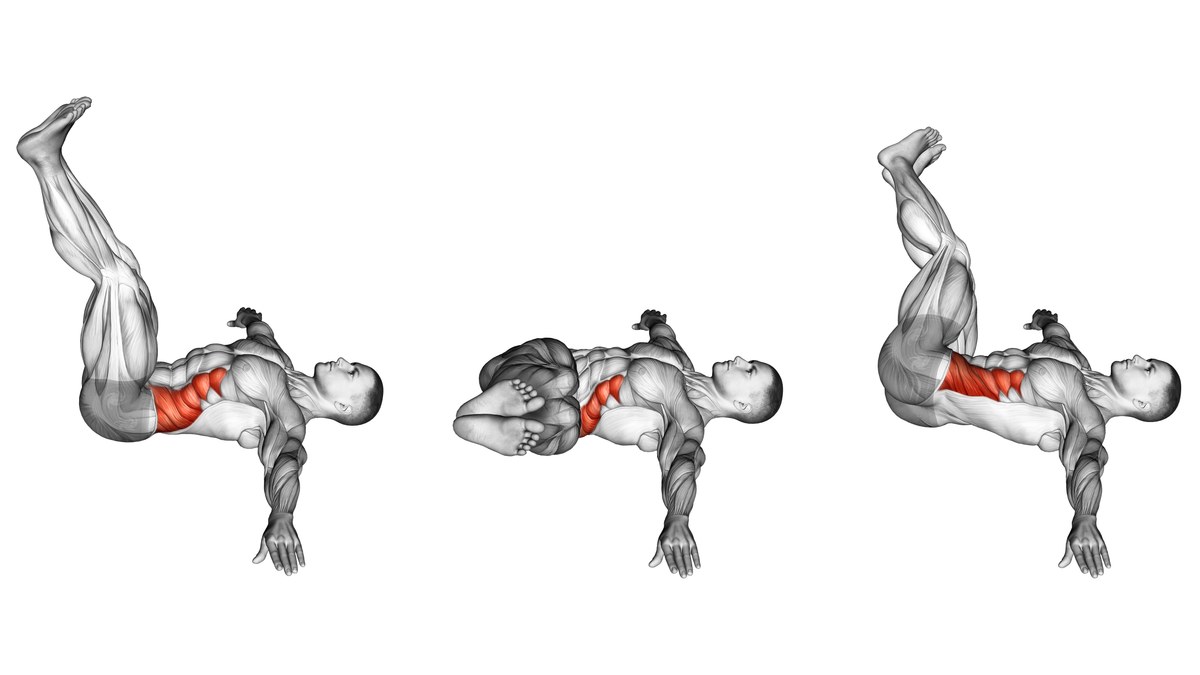
A lying leg raise is a bodyweight core exercise: lie face up, lift both legs until they point roughly up over your hips, then lower them under control. The hip flexors move the legs while the abdominal wall helps control your pelvis and trunk. Keep your lower back against the floor and end the descent when it starts to lift.
How do you perform a lying leg raise?
Set up
- Lie face up with your legs straight and together, and place your hands palms down beside your hips.
- Press your lower back into the floor and lift your heels just off it.
Execution
- Raise both legs together until they point roughly up over your hips, keeping your knees straight or at the same small bend.
- Lower your legs together and under control.
- Stop as soon as your lower back starts to lift, then begin the next rep without bouncing your heels off the floor.
Common mistakes
Letting the lower back arch off the floor
If the lower back starts to arch, the pelvis and trunk have moved away from the position this guide asks you to hold. Shorten the descent or bend the knees to regain control. It does not mean that your abs have stopped contracting.
Bouncing the heels off the floor to start each rep
The hardest part of a leg raise is the legs just off the floor, where the lever is longest and the pelvis is closest to being pulled out of position. Momentum carries you through exactly that part. It also hides the arch, because a fast rep is finished before you notice the back lift.
Adding a pelvic curl without intending to
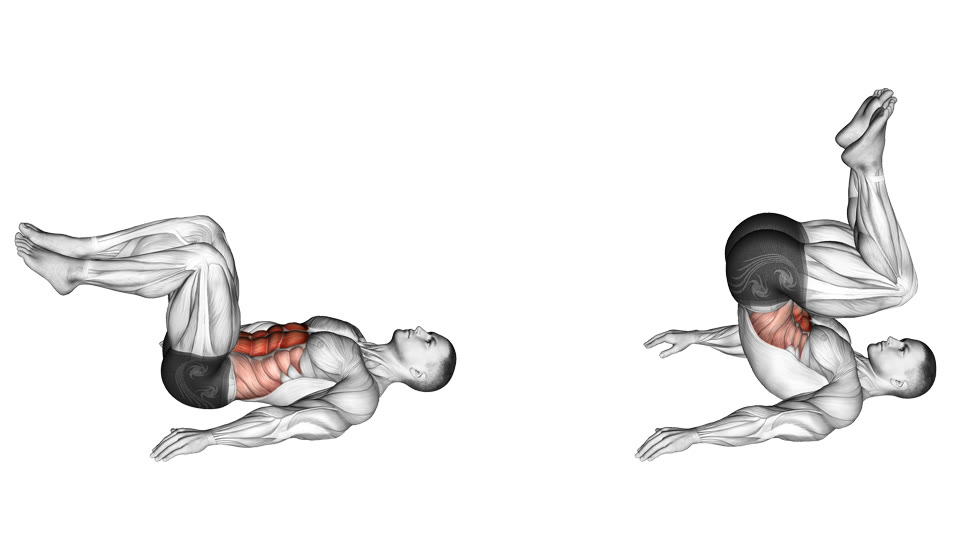
The hip flexors lift the legs while the abdominal wall helps control your position. Curling the pelvis off the floor adds a reverse-crunch movement. Keep that distinction clear when comparing reps; feeling a contraction does not tell you which movement you performed.
Letting the knees bend a little more with every rep
A bent knee shortens the lever and makes the movement substantially easier, which is a fine way to scale it but not something that should creep in unnoticed mid-set. Pick the knee angle before the set and hold it, so that the reps you count are the same exercise.
Where it fits in a session
Core work at the end of a session. In the logs it most often lands at the end of a lower-body day.
Bodyweight and awkward to load, so progress it by range and tempo before weight: get the heels lower with the back still flat, then slow the descent, then add ankle weights — or a dumbbell squeezed between the feet, if you trust the squeeze, since it is above your face for the whole set. Two or three sets of eight to fifteen reps, counting only the reps where the back stayed down.
Muscles worked
Primary
Secondary
Schematic surface view. Some muscles are partly visible or not shown.
The hip flexors raise the legs: iliopsoas is the main hip flexor, with rectus femoris, sartorius and pectineus assisting. The rectus abdominis does not cross the hip. Its role here is to help control the pelvis and trunk alongside the rest of the abdominal wall. With the trunk and pelvis held steady, that is stabilising work. Listing it alongside iliopsoas reflects the purpose of this exercise, not a measured ranking or a claim that the muscle never changes length during a real repetition.
What lifters actually do
About a third of regular RepCount users have logged a lying leg raise at some point, and it appears in roughly one workout in thirty — tried widely, used sparingly. Where it appears is more revealing than how often. Apart from crunches, every movement that commonly shares a session with it is lower-body work: leg extensions, squats, leg curls and the leg press. Leg raises are not usually part of a dedicated core session. They are added to the end of a leg day, about three sets of them, in workouts that run slightly longer than average.
Most often trained alongside
Share of lying leg raise sessions that also include each exercise.
- Crunches20.8%
- Leg extension19.6%
- Squat15.7%
- Leg curl15.3%
- Leg press12.9%
Figures come from workouts tracked in RepCount.
Scientific studies on lying leg raises
Research on leg raises is mostly about muscle activity during the exercise. A two-leg floor raise, a bent-knee hold and a single-leg clinical test are different tasks, so their findings need to be kept separate.
Lying leg raises involve both the hip flexors and the abdominal wall. Some studies find differences between upper and lower abdominal activity, while others do not. None of the studies below establishes that this exercise selectively grows the lower abs.
Are the abs working even though the hips lift the legs?
Yes. A laboratory study of six men recorded abdominal and hip-flexor activity across several exercises. Raising both legs involved the abdominal muscles as well as the hip flexors. The hip-flexor pattern also differed from sit-ups, rather than every hip flexor responding in the same way.
This supports treating the movement as a shared task: the hip flexors move the legs while the abdominal wall helps control the pelvis and trunk. The study measured electrical activity, not muscle growth, and it does not establish a percentage split of the work between muscles.
Sources
Can leg raises emphasise the lower abs?
The answer depends on the task and on what is measured. In one experiment with eleven men, a bent-knee leg-raise hold shifted the balance of electrical activity toward the lower rectus abdominis compared with a curl-up hold. Both regions still worked together. This was a controlled hold, not the moving straight-leg raise taught here.
Another small study, with eight adults performing six exercises including leg lowering, found no clear difference between upper and lower rectus abdominis activity. These different protocols cannot settle a universal “lower abs” rule. Regional activity is also different from regional growth: neither study measured which part grew after weeks of training.
Variations
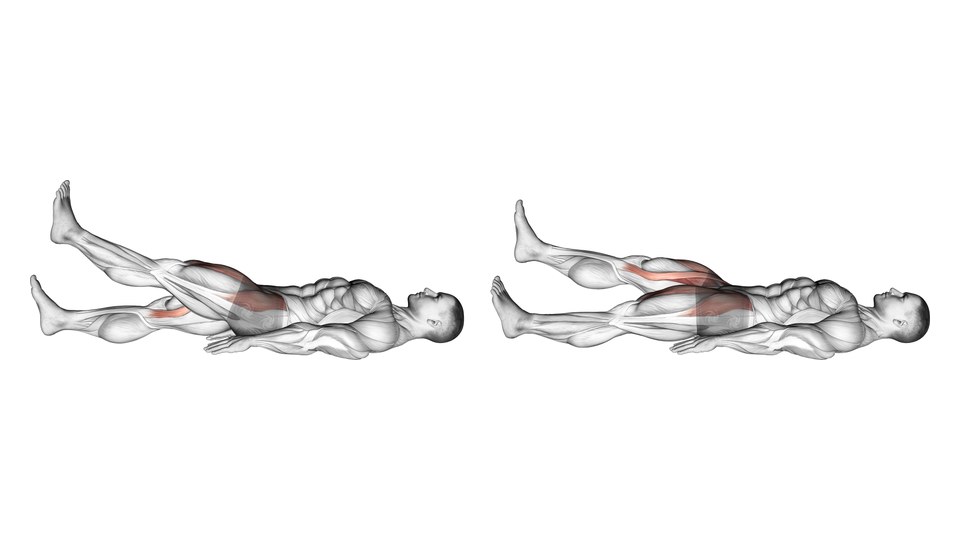
- Lying knee raise — Knees bent to shorten the lever. The usual scaling step when the lower back will not stay flat.
- Single leg raise — One leg at a time, roughly halving the load on the pelvis.
- Flat bench leg raise — Holding the bench above your head, so the legs can travel below the level of your hips.
- Decline bench leg raise — Head at the high end of the bench, which lengthens the range at the bottom.
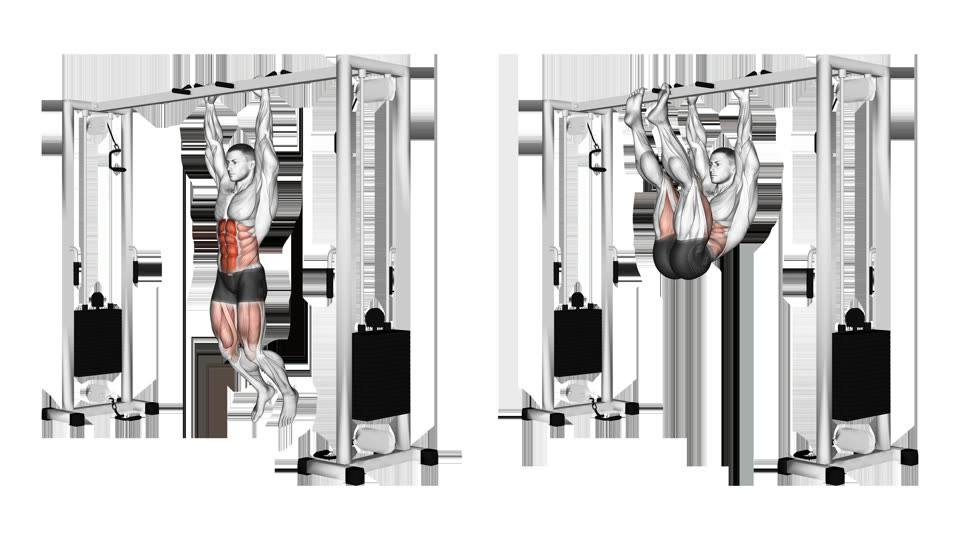
- Captain's chair leg raise — Forearms on the pads and back supported, which removes the grip demand of hanging.
- Weighted leg raise — A dumbbell or medicine ball squeezed between the feet, or ankle weights.
- Flutter kicksKeeps both legs hovering and alternates them through a small range instead of raising them together.
Related tools
Frequently asked questions
What muscles do lying leg raises work?
The hip flexors move your legs while the abdominal wall helps control your pelvis and trunk. Iliopsoas is the main hip flexor; rectus femoris, sartorius and pectineus assist. Rectus abdominis and the other abdominal muscles help hold your position. These are different roles, not a measured ranking of which muscle works hardest.
Do leg raises work the lower abs?
Leg raises involve the abdominal wall. Some studies find a relative shift toward lower rectus abdominis activity, but other protocols show no clear regional difference. That is not evidence that moving straight-leg raises isolate the lower abs or make them grow more than the upper region.
Why does my lower back come off the floor during leg raises?
As your legs lower, controlling the pelvis and trunk can become harder. A back arch is a change in position, not proof that your abs have switched off. Keep the guide’s stop signal: end the descent when your back starts to lift. A shorter range or a fixed knee bend can make the movement easier to control.
Should I do leg raises on the floor or on a bench?
Either. This is a preference, not a technique point, and the illustration on this page can only show one of them. The floor is the more common choice and it gives you an immediate signal, because you feel the moment your back lifts. A flat or decline bench lets you hold on above your head and take the legs below the level of your hips, which adds range at the hard end. Where you put your hands is a preference too: beside your hips, or tucked under your glutes, which tips the pelvis slightly and makes a flat back easier to hold.
Are leg raises better than crunches?
They emphasise different movements. A crunch curls the trunk; a leg raise moves the legs while you control the pelvis and trunk. Muscle-activity studies do not establish a universal winner for growth. In RepCount, crunches are the exercise most often logged in the same session as leg raises.
Should my legs be completely straight?
Straighter legs mean a longer lever and a harder exercise, so straight is the harder version rather than the correct one. A small fixed bend is fine, and it is the sensible choice if hamstring length is what stops you rather than your midsection. What matters is that the angle does not change during the set: knees that bend a bit more with each rep quietly turn the exercise into a knee raise.
How many sets of leg raises should I do?
Workouts containing leg raises average just under three sets in RepCount. Use your controlled reps to judge progress: count the ones that follow your chosen range and stop when your back starts to lift. This is a consistent technique standard, not a test of whether the abdominal muscles are active at all.
Are lying leg raises worth doing?
About a third of regular RepCount users have logged them at some point, and they show up in roughly one workout in thirty. The company they keep is the interesting part: apart from crunches, the movements that most often share a session with them are leg extensions, squats, leg curls and the leg press. That is a lower-body day, not an ab session. Treated that way — a few sets of honest reps at the end of leg training — they load the abdominal wall in a position nothing else in that session does.
Sources
- Anatomy, Bony Pelvis and Lower Limb: Iliopsoas Muscle. StatPearls. https://www.ncbi.nlm.nih.gov/books/NBK531508/
- Anatomy, Abdomen and Pelvis: Abdominal Wall. StatPearls. https://www.ncbi.nlm.nih.gov/books/NBK551649/
- Anatomy, Abdomen and Pelvis, Rectus Sheath. StatPearls. https://www.ncbi.nlm.nih.gov/books/NBK537153/
- Anatomy, Bony Pelvis and Lower Limb: Anterior Thigh Muscles. StatPearls. https://www.ncbi.nlm.nih.gov/books/NBK538425/
- Anatomy, Abdomen and Pelvis, Rectus Femoris Muscle. StatPearls. https://www.ncbi.nlm.nih.gov/books/NBK539897/
- Andersson EA et al. Abdominal and hip-flexor activation. 1997. https://pubmed.ncbi.nlm.nih.gov/9118976/
- Marchetti PH et al. Regional rectus abdominis activation. 2011. https://pubmed.ncbi.nlm.nih.gov/24149878/
- Clark KM et al. Upper and lower rectus abdominis EMG. 2003. https://pubmed.ncbi.nlm.nih.gov/12930172/