Chest-to-bar pull-up
What is a chest-to-bar pull-up?
A chest-to-bar pull-up brings the chest into contact with the bar instead of stopping when the chin clears it. This guide covers strict repetitions, starting from a still hang and using no deliberate swing.
How do you perform a chest-to-bar pull-up?
Set up
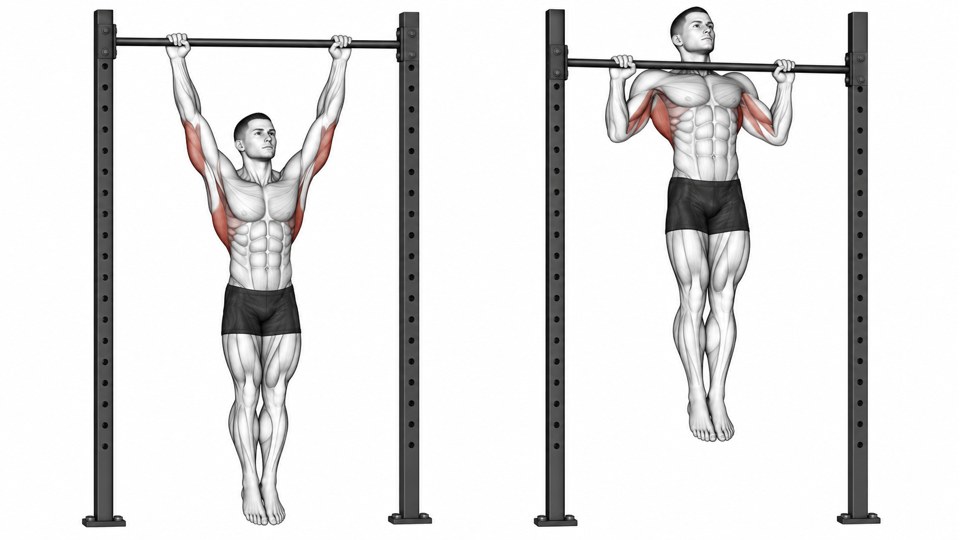
- Choose a secure bar and leave room to approach it with your chest. Use a box for access if necessary.
- Take an overhand grip slightly outside shoulder width and hang with straight elbows, shoulders engaged and legs quiet.
Execution
- Begin the pull by drawing the elbows down and back while keeping the body controlled.
- Continue until your chest touches the bar below the collarbones. A small lean back lets your chest approach without craning your neck.
- Lower smoothly to straight elbows, let any sway settle and repeat from a still position.
- Use the box or clear landing area to leave the bar after your final repetition.
Common mistakes
Reaching with the neck while the chest stays away
Use an assisted version that lets you achieve chest contact without jutting the head forward.
Kicking to complete the last few reps
End the strict set or deliberately switch to a separately tracked kipping version.
Where it fits in a session
Practice this movement while you can control the required positions and finish each repetition deliberately.
Select assistance that allows controlled chest contact. Finish the set when you can only achieve the target by kicking or throwing the head forward.
Muscles worked
Primary
Secondary
- None listed in this guide
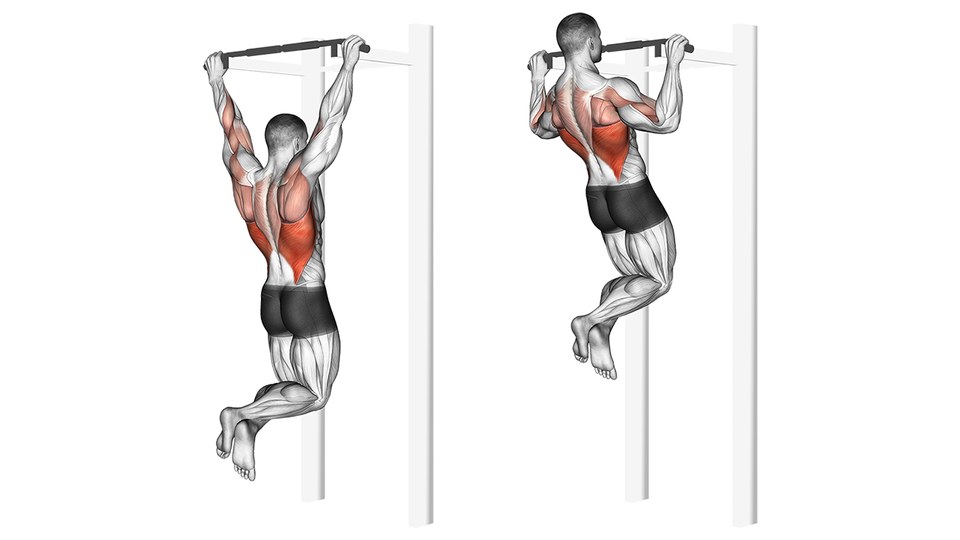
Schematic surface view. Some muscles are partly visible or not shown.
Variations
- Kipping chest-to-bar pull-up — Adds an intentional kip to help reach chest contact; log it separately.
Frequently asked questions
How do I scale chest-to-bar pull-ups?
Use a foot on a box or another controlled assistance method and keep the same chest-contact target. Ring rows provide a lower starting point for practising a bodyweight pull.
Are chest-to-bar pull-ups always kipping?
No. Both strict and kipping versions exist. This guide teaches strict repetitions; the kipping version requires learning the swing and return as separate skills.
Sources
- Betts et al. Anatomy and Physiology 2e. OpenStax, 2022. https://openstax.org/books/anatomy-and-physiology-2e/pages/11-5-muscles-of-the-pectoral-girdle-and-upper-limbs