Clean
Also called full clean, squat clean, barbell clean.
What is a clean?
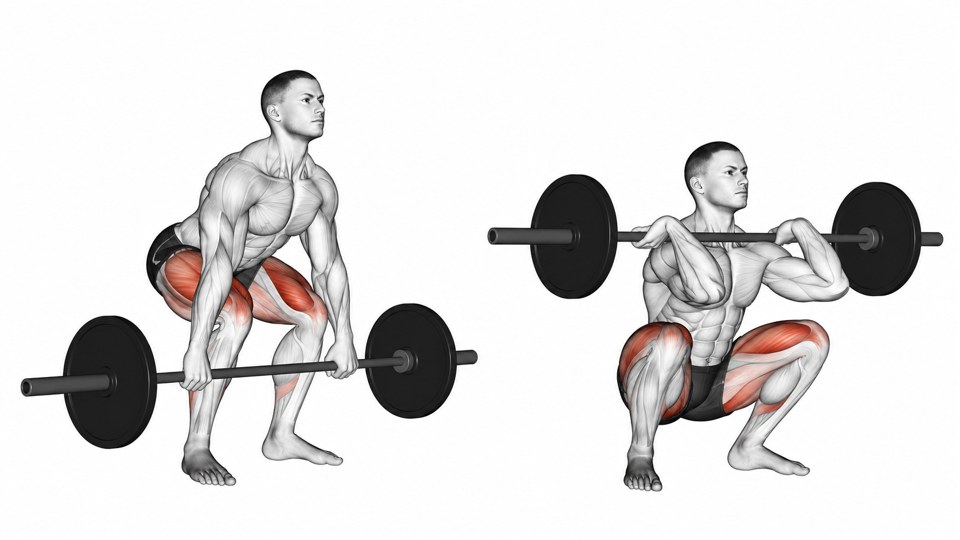
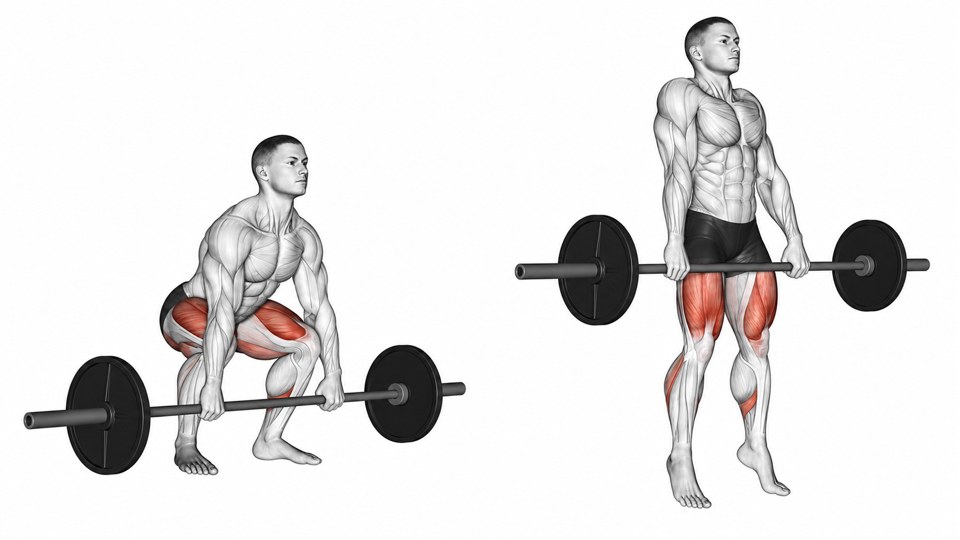
A clean takes a barbell from the floor to the front of your shoulders. This guide covers the full clean: receive the bar in a squat with the hip crease below the top of the knees, then stand to finish. The power version uses a higher receiving position.
How do you perform a clean?
Set up
- Use bumper plates on a platform where dropping the bar is permitted. Leave the landing area clear and practice releasing a missed lift with a coach before adding weight.
- Stand with the bar over your midfoot and take a grip just outside your legs. Bend your knees and hips, brace your trunk and set your shoulders slightly ahead of the bar.
Execution
- Lift the bar from the floor with your arms long, keeping it close as it passes your knees.
- As the bar reaches your upper thighs, push forcefully through the floor and extend your legs and hips. Move under the rising bar rather than trying to curl or slowly press it up.
- Turn your elbows forward and meet the bar in a supported front rack as you move into a full squat. Let the shoulders bear the bar rather than catching it in your hands.
- Once stable, stand fully upright. Return the bar to the platform using the controlled return or safe release you have practiced, then reset your stance and grip for another repetition.
Common mistakes
Bending the elbows during the first pull
Keep the arms long while your legs start the bar. Reduce the load if you need to pull it with bent arms off the floor.
Sending the bar forward
Stay balanced over the feet and guide the bar close to your body. Chasing it forward is a reason to stop and reset.
Rushing the recovery
Hold the receiving position long enough to establish balance before standing.
Where it fits in a session
Practice this near the start of the session, after your planned warm-up and before tiring assistance work.
Use a technique bar or light barbell while learning. Work in short sets with a fresh setup for each repetition; stop when the receiving position or bar path becomes inconsistent.
Muscles worked
Primary
Secondary
Schematic surface view. Some muscles are partly visible or not shown.
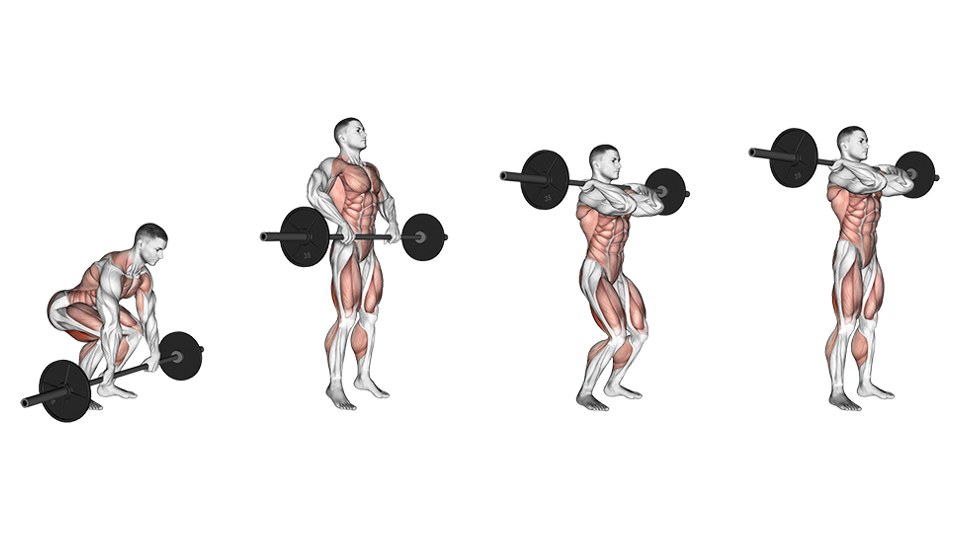
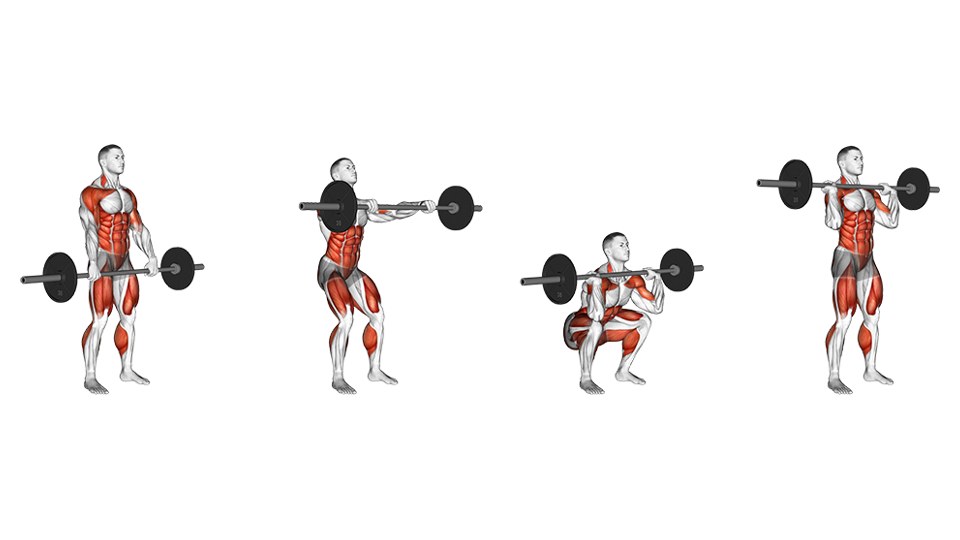
Variations
Frequently asked questions
Is this a squat clean?
Yes. “Squat clean” and “full clean” describe the full-depth receiving version covered here. Start from the floor; the hang version has its own guide.
What is the difference between a clean and a power clean?
The receiving depth distinguishes them. A power lift is received above parallel; this guide receives below parallel. Starting from the floor or the hang is a separate distinction.
How should I learn to miss a repetition?
Use an unloaded or very light bar and a qualified coach to practice releasing it onto a clear platform. Do not try to rescue an unstable catch or keep hold of a falling bar.