Clean pull
Also called barbell clean pull.
What is a clean pull?
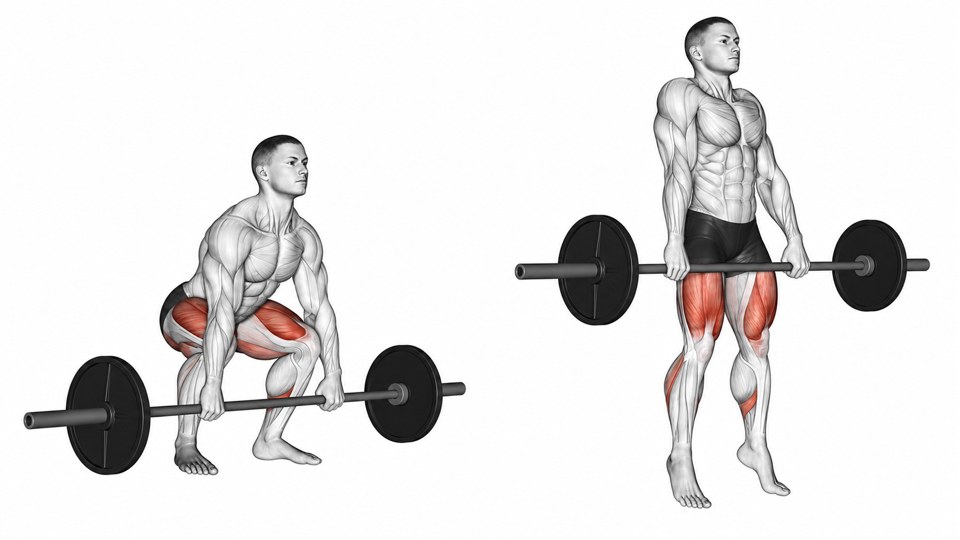
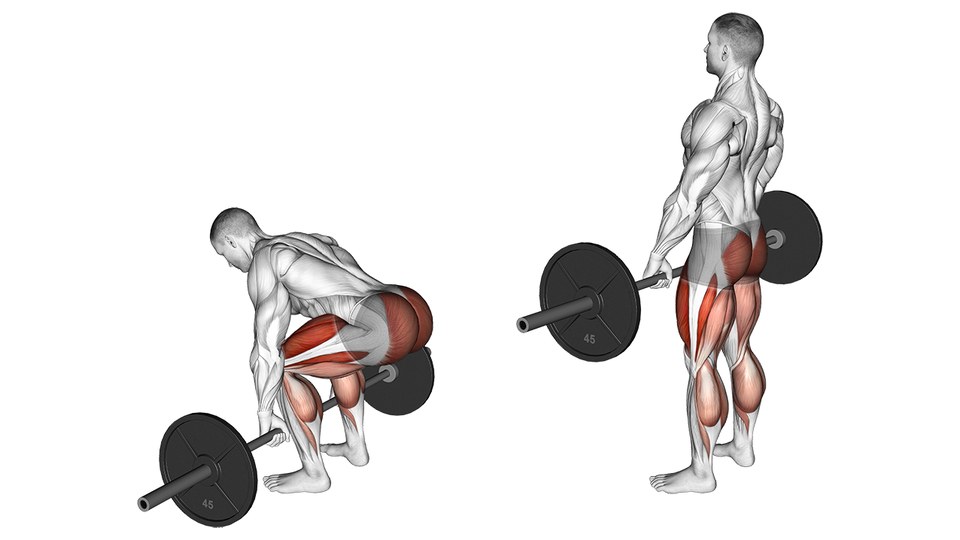
A clean pull uses the floor start and grip of a clean, followed by an accelerated extension of the legs and hips. You finish standing with relaxed arms instead of moving under the bar to receive it. This guide covers the pull, not a high pull with a deliberate arm lift.
How do you perform a clean pull?
Set up
- Use bumper plates on a platform where dropping the bar is permitted. Leave the landing area clear and practice releasing a missed lift with a coach before adding weight.
- Set the bar over your midfoot and grip it just outside your legs. Bend at the hips and knees, brace and place your shoulders slightly ahead of the bar.
Execution
- Push against the platform to lift the bar, keeping your arms long and the bar near the shins as it passes your knees.
- Continue into the upper-thigh position, then accelerate by extending the legs and hips. Keep the bar close without knocking it away from you.
- Finish the extension with a shoulder rise and relaxed arms, allowing a small natural elbow bend as needed to keep the bar near you. Do not curl it or deliberately pull the elbows high.
- Lower under control or use your practiced safe release onto the platform. Settle the bar and rebuild the start before the next repetition.
Common mistakes
Turning the pull into an arm lift
Avoid deliberately lifting the elbows into an upright-row finish. A small natural bend as the bar rises is different from pulling it higher with the arms.
Hitching the bar up the thighs
Use a manageable load and one continuous upward movement. Do not rest the bar on your thighs and restart.
Jumping away from the platform
Aim to finish balanced over your feet. A forceful drive does not require deliberately jumping high.
Where it fits in a session
For technique practice, use it while fresh after warming up. In a weightlifting session, place heavier pulls after the main snatch or clean work and before tiring assistance exercises.
Use short sets with a reset on the floor. If the lift becomes a slow deadlift or a bent-arm high pull, reduce the load or finish the set.
Muscles worked
Primary
Secondary
Schematic surface view. Some muscles are partly visible or not shown.
Variations
Frequently asked questions
Is this the same as a high pull?
A high pull deliberately lifts the elbows after the extension. This guide ends with the leg-and-hip drive and shoulder rise; a little natural elbow flexion to keep the bar close does not turn it into a high pull.
Do my heels have to stay down?
Let the finish follow the upward drive; the heels may rise as you extend. Do not make getting onto your toes the goal or roll forward before the bar passes the knees.
How heavy should the pull be?
Choose a load that preserves the floor start, close bar path and decisive finish. Begin light; heavier pulls belong in a planned weightlifting program rather than being chosen by how much you can drag upright.
Sources
- Bruno Bordoni; Matthew A. Varacallo. Anatomy, Bony Pelvis and Lower Limb: Thigh Quadriceps Muscle. 2023. https://www.ncbi.nlm.nih.gov/sites/books/NBK513334/
- Adel Elzanie; Judith Borger. Anatomy, Bony Pelvis and Lower Limb, Gluteus Maximus Muscle. 2023. https://www.ncbi.nlm.nih.gov/sites/books/NBK538193/
- Mohammed A. Miniato; Prashanth Anand; Matthew A. Varacallo. Anatomy, Shoulder and Upper Limb, Shoulder. 2023. https://www.ncbi.nlm.nih.gov/sites/books/NBK536933/