
Decline push-up
Also called feet-elevated push-up, elevated-feet push-up.
What is a decline push-up?
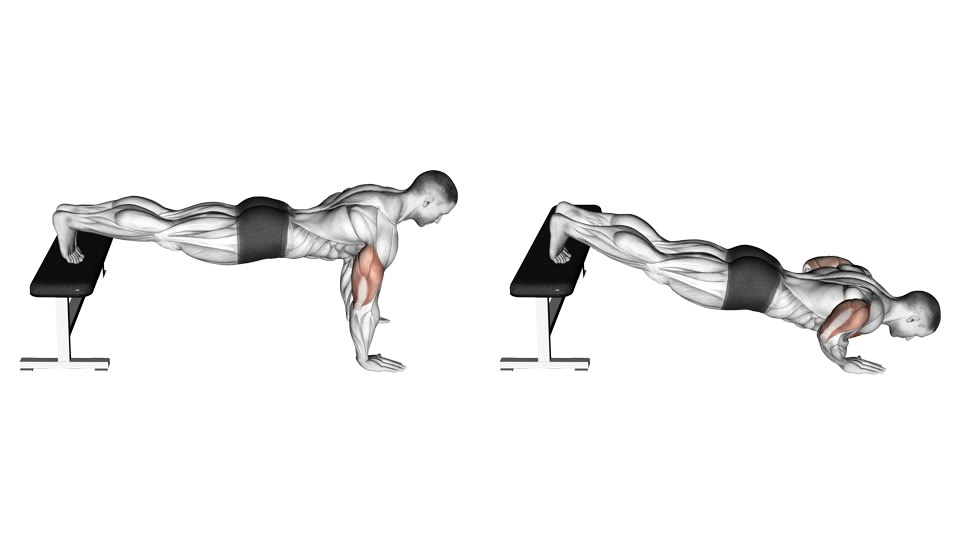
A decline push-up is a push-up with your feet raised on a bench or box and your hands on the floor. The elevation shifts more of your bodyweight toward the hands, making the press harder while the chest, front deltoids and triceps perform the movement.
How do you perform a decline push-up?
Set up
- Place both feet on a stable bench and set your hands on the floor slightly wider than shoulder width.
- Straighten the legs and arms, brace the trunk and form one line from shoulders through hips to heels.
Execution
- Bend the elbows and lower the chest between the hands while the body stays rigid.
- Stop when the chest is near the floor or before the shoulders lose a comfortable position.
- Press the floor away until the arms are straight, keeping the hips from sagging or rising first.
Common mistakes
Letting the hips sag
Brace the trunk and use a lower foot support if you cannot keep the body in one line.
Raising the feet too high
A higher support increases the demand and can turn the movement into a steep shoulder press. Use a height you can control.
Leading with the head
Lower the chest between the hands so the neck stays in line with the torso.
Where it fits in a session
Use as a harder bodyweight press or after heavier chest and shoulder work.
Progress by keeping the same bench height and full controlled range before adding repetitions or load.
Muscles worked
Primary
Secondary
Schematic surface view. Some muscles are partly visible or not shown.
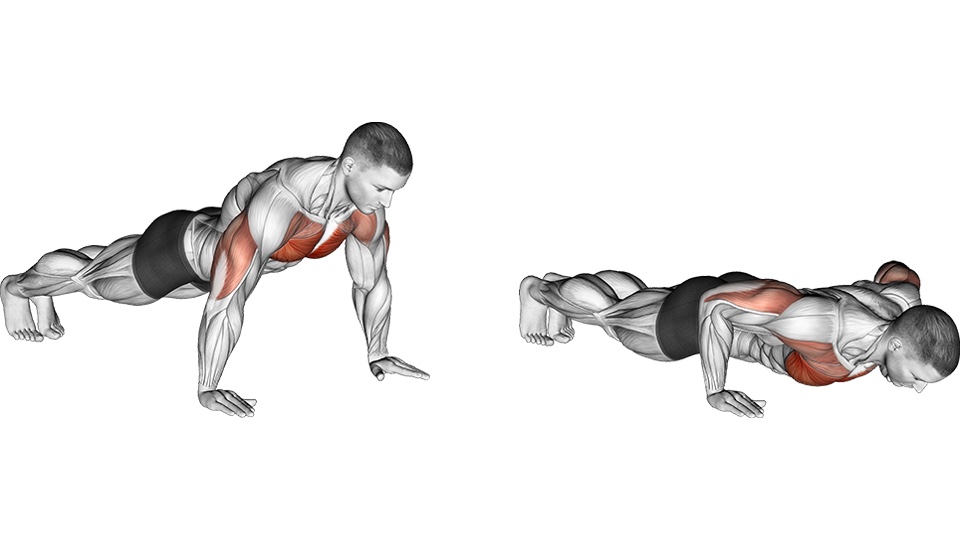
Elevating the feet shifts more bodyweight toward the hands, but the movement still uses the same chest, front-deltoid and triceps pressing action as a standard push-up.
Variations
- Lower decline push-up — Uses a lower foot support to reduce the share of bodyweight shifted toward the hands.
- Higher decline push-up — Uses a higher foot support and creates a steeper pressing angle.
Frequently asked questions
What muscles do decline push-ups work?
They train the pectoralis major, with the anterior deltoid and triceps assisting the press.
Are decline push-ups harder than regular push-ups?
Usually, because raising the feet shifts more bodyweight toward the hands. The exact difference depends on the support height and your body proportions.
How high should your feet be?
A stable bench or low box is enough. Use a height that lets you keep a straight body and lower the chest under control.
Where should your hands go?
Start slightly wider than shoulder width with the fingers forward or slightly outward, then adjust only enough to keep the wrists and shoulders comfortable.