
Dumbbell upright row
What is a dumbbell upright row?
A standing shoulder exercise that raises two dumbbells close to the torso with the elbows leading.
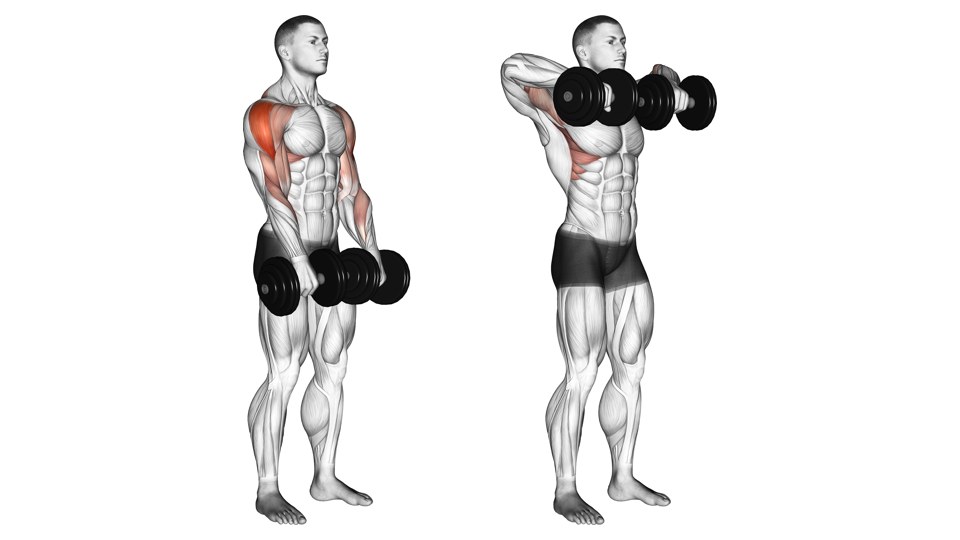
How do you perform a dumbbell upright row?
Set up
- Stand with a dumbbell in each hand in front of your thighs, palms facing you.
- Brace your trunk and let your arms hang without shrugging.
Execution
- Raise the dumbbells close to your body by leading with your elbows.
- Stop at a comfortable height without forcing the elbows above your shoulders.
- Lower smoothly to the starting position without swinging.
Common mistakes
Forcing a painful height
Use a comfortable range; stop the set if the movement hurts.
Where it fits in a session
Use for shoulder work in an upper-body session; choose the load around a comfortable endpoint.
Use a comfortable range; stop the set if the movement hurts.
Muscles worked
Primary
Secondary
Schematic surface view. Some muscles are partly visible or not shown.
Variations
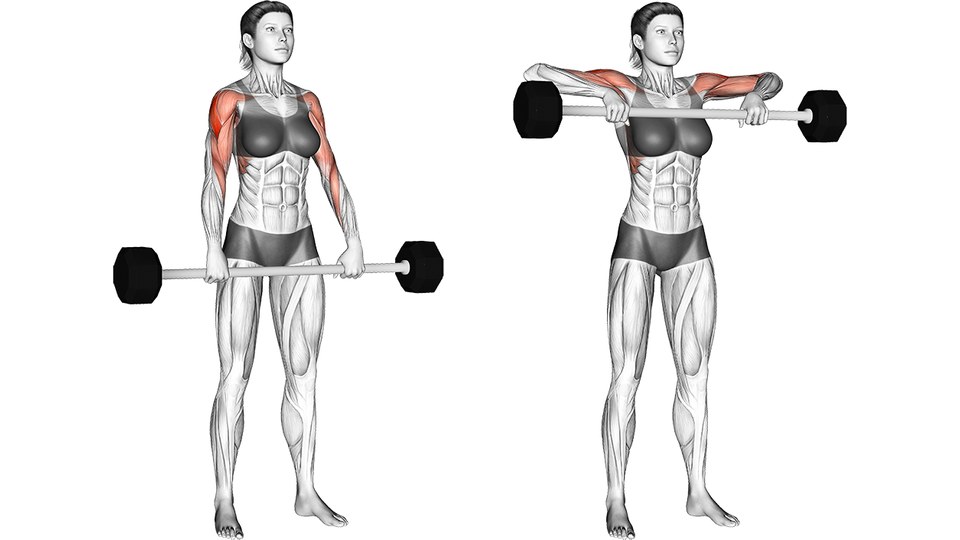
Related tools
Frequently asked questions
How high should I lift the dumbbells?
Stop at a comfortable height without forcing the elbows above your shoulders.
Should I keep going if my shoulders hurt?
Use a comfortable range; stop the set if the movement hurts.