
Flutter kicks
Also called flutter kick, supine flutter kicks, alternating leg kicks.
What are flutter kicks?
Flutter kicks are a floor exercise performed face up with both legs straight and hovering while they alternate through a small up-and-down range. The hip flexors move the legs as the abdominal muscles help keep the pelvis and trunk controlled.
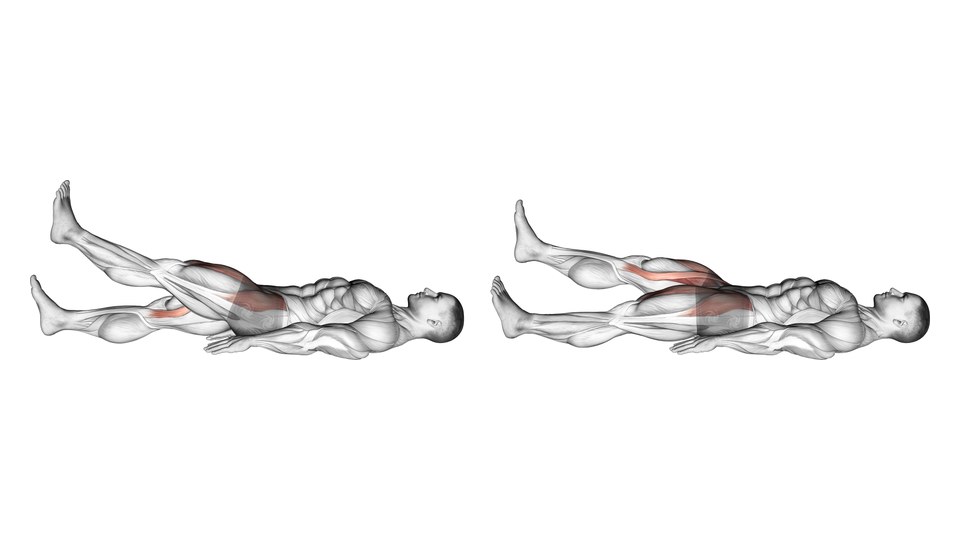
How do you perform flutter kicks?
Set up
- Lie on your back with your legs straight and your arms resting beside you. Keep your head down unless a small lift is more comfortable.
- Brace gently and raise both heels just off the floor, stopping higher if your lower back begins to lift.
Execution
- Raise one straight leg a short distance while the other lowers, keeping both heels off the floor.
- Switch the legs smoothly without bending the knees or rocking the pelvis.
- Continue alternating at a pace that lets your lower back and torso stay controlled, then lower both legs to finish.
Common mistakes
Lowering the legs past your controllable range
When the lower back lifts, the pelvis is no longer staying in the position this version asks you to hold. Raise the whole kick range.
Bending and straightening the knees
That turns the movement into a cycling action. Keep the knees straight and alternate from the hips.
Kicking faster than the torso can stay still
A rocking pelvis makes each side use a different range. Slow down or make the kicks smaller.
Where it fits in a session
As trunk-and-hip-flexor accessory work near the end of a session or in a bodyweight circuit.
Choose leg height, kick size and set duration by how long the pelvis stays controlled. Lowering the legs is progression only when the same trunk position remains repeatable.
Muscles worked
Primary
Secondary
Schematic surface view. Some muscles are partly visible or not shown.
The hip flexors alternate the legs up and down. The abdominal wall helps control the pelvis and trunk rather than creating the movement at the hip.
Variations
- Bent-knee flutter kick — Shortens the lever by keeping a small bend in the knees.
- Scissor kick — Moves the legs across each other side to side rather than only up and down.
- Prone bench flutter kick — Lies face down on a bench and alternates the legs behind the body, making it a different hip action.
Frequently asked questions
What muscles do flutter kicks work?
The iliopsoas and rectus femoris move the legs at the hips. The rectus abdominis, obliques and deeper abdominal wall help control the pelvis and trunk.
Should your lower back stay on the floor?
Keep the back position steady for this version. If it begins to lift as the legs descend, raise the kick range or shorten the set.
How high should your legs be?
Only as low as you can keep the pelvis and lower back controlled. The exact height varies; lower is not automatically better.
Are flutter kicks the same as leg raises?
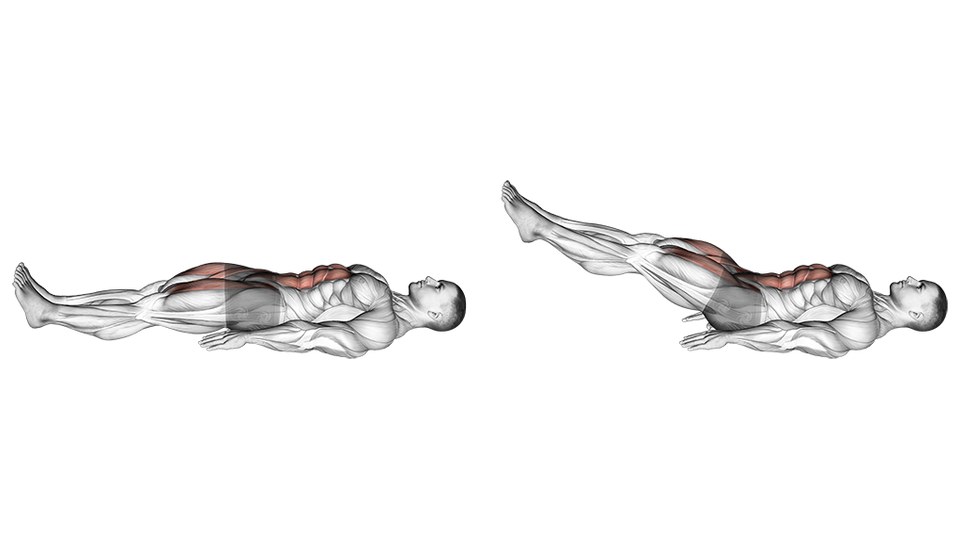
No. Leg raises move both legs together through a larger range. Flutter kicks keep both legs hovering and alternate them through a small range.
Should you lift your head?
It is optional. The illustration shows the head resting down. A small head lift can change how the position feels, but it is not required for the alternating hip movement.