
GHD sit-up
What is a gHD sit-up?
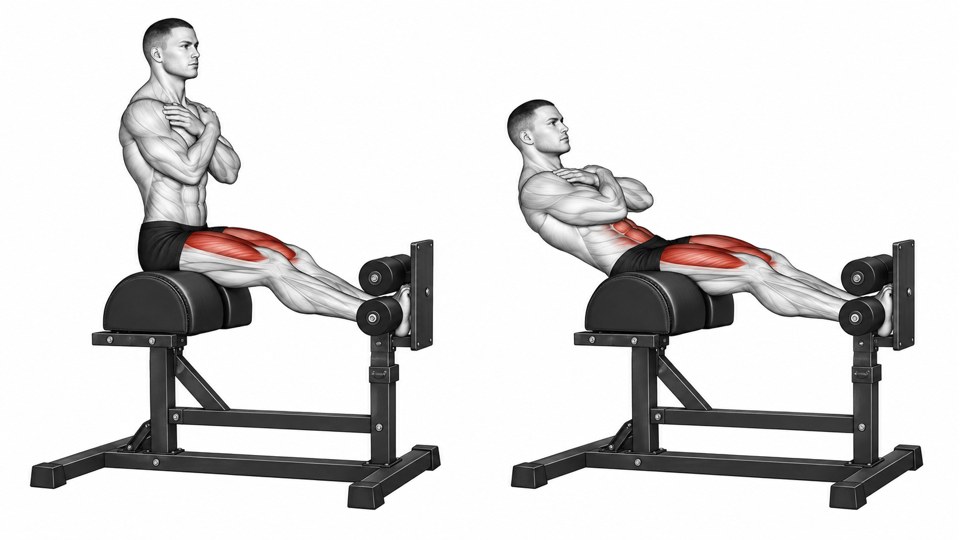
A GHD sit-up uses a glute-ham developer to hold the feet while the torso lowers backward from sitting and returns upright. This guide starts with a limited range; reaching far below horizontal is an advanced progression, not a required starting depth.
How do you perform a gHD sit-up?
Set up
- Check the machine and foot restraint, then adjust it so your pelvis sits just behind the middle of the pad and can move freely. Have a coach check the setup and spot your first short-range attempts.
- Sit facing the foot restraint with your legs extending toward it. Test the restraint gently and choose a short range you can reverse without assistance.
Execution
- Lower the torso backward under control, allowing the knees to bend slightly while keeping the torso steady. Do not throw your head or arms behind you.
- Stop at your planned range while you can still return deliberately. Start above horizontal if this movement is unfamiliar.
- Straighten the knees as you bring the torso back to sitting, coordinating the leg action with the return. Keep the head in line with your torso rather than snapping it forward.
- Reset in the seated position. After the set, support yourself before releasing the feet and leaving the machine.
Common mistakes
Using the floor as a mandatory first-session target
Begin with a limited range and expand it only after the shorter movement remains controlled.
Dropping backward and snapping up
Reduce the range or use a floor exercise until both directions are deliberate.
Where it fits in a session
Practice this movement while you can control the required positions and finish each repetition deliberately.
Introduce this unfamiliar movement with a small amount of controlled practice. Do not copy a competition repetition count or range before you have built tolerance to your chosen version.
Muscles worked
Primary
Secondary
- None listed in this guide
Schematic surface view. Some muscles are partly visible or not shown.
Variations
- Partial-range GHD sit-up — Limits the backward travel while the feet remain secured.
Frequently asked questions
Do I have to touch the floor?
No. This guide teaches a controlled, limited-range starting version. A workout may prescribe a different range, which should not replace gradual practice of the movement.
What should I use if I have never done GHD sit-ups?
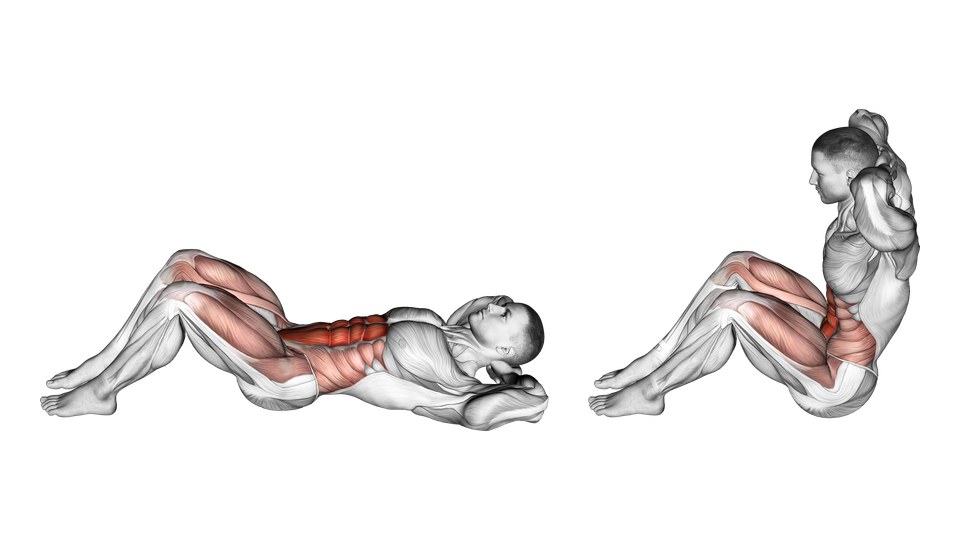
Begin with familiar floor-based abdominal work and learn the machine adjustment with a coach. Try a few short-range repetitions rather than jumping into a high-volume workout.
Sources
- Betts et al. Anatomy and Physiology 2e. OpenStax, 2022. https://openstax.org/books/anatomy-and-physiology-2e/pages/11-4-axial-muscles-of-the-abdominal-wall-and-thorax
- Betts et al. Anatomy and Physiology 2e. OpenStax, 2022. https://openstax.org/books/anatomy-and-physiology-2e/pages/11-6-appendicular-muscles-of-the-pelvic-girdle-and-lower-limbs